Last Updated: November 7, 2026
Quick Summary
The best storage bins for office supplies are chosen by matching the container to what you store, how much you store, and where it sits. Lidded bins protect paper from dust, latching bins suit items that get moved or stacked, and stackable bins use vertical space well. Measure your shelf or drawer before buying.
- Measure the shelf or drawer first and list the supplies you need to store.
- Latching lids suit bins that get moved, stacked, or left where dust collects for weeks.
- Subtract an inch from shelf clearance to find your maximum stack height.
- Put heavy items like printer paper in the bottom bin and lighter supplies on top.
- Never stack more than two high unless the bin is rated for it.
Table of Contents
- Why the Right Storage Bin Matters for Office Supplies
- How We Evaluated the Best Storage Bins for Office Supplies
- Quick Comparison: Top Storage Bins for Office Supplies
- Office Storage Bins with Lids: Best Picks for Dust and Dry Protection
- Stackable Storage Bins for Office Shelves and Closets
- Clear Storage Bins for Office Supplies: Visibility and Inventory
- Office Supply Organization Ideas: Matching Bins to Your Workspace
- Choosing Your Office Storage Bins: Next Steps for Your Workspace
- Frequently Asked Questions
Why the Right Storage Bin Matters for Office Supplies
Choosing the best storage bins for office supplies comes down to matching the container to what you store, how much you store, and where it sits. A bin that works for paper clips will fail under a box of printer paper. Office Furniture Warehouse has spent more than 35 years helping businesses set up workspaces, and a small storage decision can affect daily work considerably. Clutter slows people down, and loose supplies get lost or damaged.
The right bin does three things well. It keeps small items contained, it protects supplies from dust, and it stacks or slides into the space you actually have. Get those three right and your desk stays usable for years.
Many offices buy bins in a rush and then replace them within a year. A short planning step prevents that. Measure the shelf or drawer first, list the supplies you need to store, and decide whether you need open access or a lid. That one check saves money and frustration later.
How We Evaluated the Best Storage Bins for Office Supplies
We judged each option on five practical criteria: capacity, material, lid design, stackability, and visibility. Capacity matters because a bin that holds 13 quarts of pens is far more useful than one that holds a handful. Material affects durability, since thin plastic cracks under weight while sturdier construction holds up to daily handling.
We also considered fit. Office storage often lives in drawers, closets, and under-shelf spaces with tight dimensions, so we looked at whether each bin stacks cleanly and fits common shelving. Lids and latches came next, because a secure closure keeps dust off paper and contents from spilling when a bin gets moved.
Finally, we weighed price against value. A low price means little if the bin cracks in six months. Current pricing depends on quantity and retailer, so check the product page before buying.
Quick Comparison: Top Storage Bins for Office Supplies
Quick Picks:
- Best Overall for Office Use: IRIS USA 4-Pack 13 Quart Storage Bins with Lids, for sorting smaller supplies with lids
- Best for Stacking: IRIS 13 Gallon Stackable Storage Bins with Latching, for bulk stock
- Best Budget Option: IKEA SAMLA 6-gallon box, for affordable stackable storage
| Bin | Capacity | Lid | Stackable | Price | Best For |
|---|---|---|---|---|---|
| IRIS USA 4-Pack 13 Quart | 13 quarts each | Yes | Yes | Not shown in our research | Sorting small supplies |
| IRIS 13 Gallon Latching | 13 gallons | Latching | Yes | Not shown in our research | Bulk supply stock |
| IKEA SAMLA 6-gallon | 6 gallons | Not specified | Yes | Not shown in our research | Budget storage |
Confirm current costs with the seller before ordering.
Office Storage Bins with Lids: Best Picks for Dust and Dry Protection
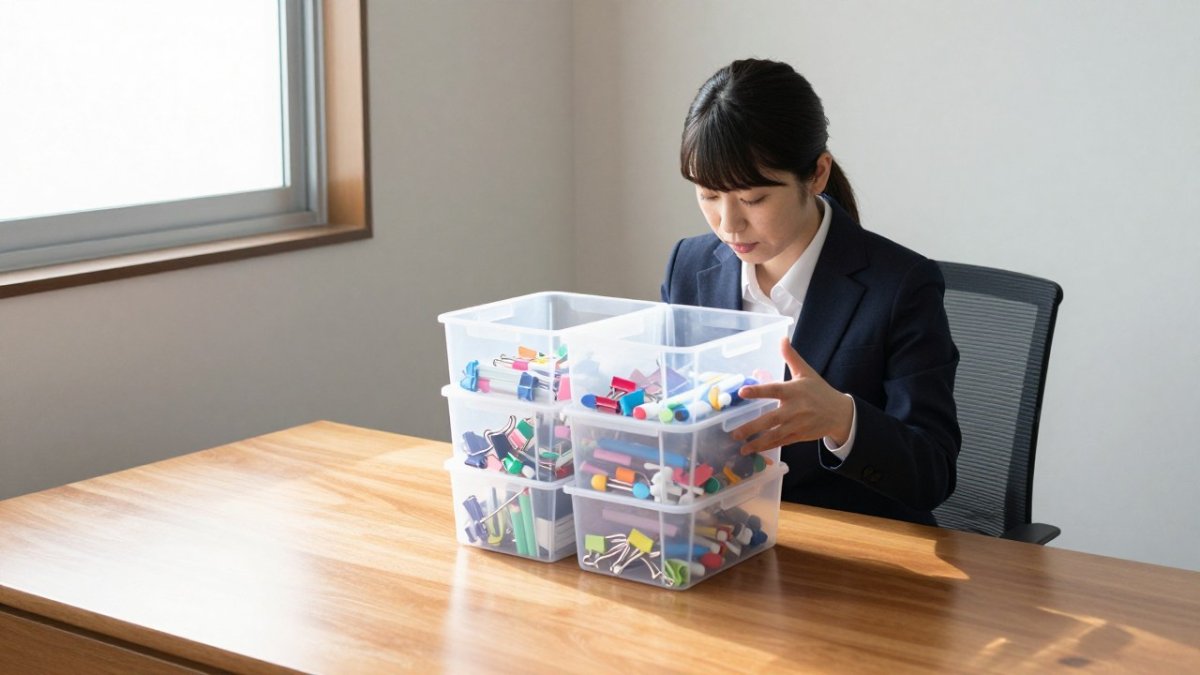
Lidded bins protect paper, envelopes, and sensitive supplies from dust and moisture. A lid also keeps small items from spilling when a bin is carried or shifted on a shelf. The practical question is not whether you want a lid, but which lid style matches how often you open the bin and what you store inside.
There are three lid styles worth knowing. A snap lid presses down and stays put with friction, which is fine for a bin that sits on a shelf and gets opened weekly. A latching lid has hinged tabs that clamp the lid to the rim, which is the right choice for a bin that gets moved, stacked, or stored where dust collects for weeks. A hinged or attached lid stays connected to the bin, so you never set the lid down and lose it, but the hinge is the first part to fail on a cheap bin.
Choose a latching bin when you store items you do not want exposed to dust for weeks at a time, or when the bin will be stacked and shifted.
Match the lid to the supply, not the other way around. Paper and envelopes want a flat, dust-tight lid so the top sheet does not curl. Small stationery such as binder clips and pushpins wants a lid with a snug rim so nothing escapes when the bin is tipped. Cables and chargers want a lidded bin with enough depth that coiled cords do not press against the lid.
Watch out: a lid that snaps on loosely will not protect against dust. Press each lid down and check that it seals before you load the bin, and test the latch a few times in the store or on arrival, because a latch that pops open under a stacked bin defeats the purpose.
Stackable Storage Bins for Office Shelves and Closets
Stackable bins make better use of vertical space, which is useful in small offices. Stacking keeps the floor clear and lets you store more supplies in the same footprint.
Start with your shelf clearance. Measure the gap between shelves, then subtract an inch so you can slide the top bin out without scraping. That number is your maximum stack height.
Load from the bottom up. Heavy supplies such as full reams of printer paper, toner cartridges, and binders go in the bottom bin, because the bottom bin carries the weight of everything above it. Lighter supplies such as envelopes, sticky notes, and packing materials go on top.
Stack the heavier items on the bottom and place lighter supplies on top to keep the stack stable, and never stack more than two high unless the bin is rated for it.
For a compact desk or a shared workspace, a vertical plan beats a horizontal one. Put a two-bin stack at the end of a desk run, keep the most-used bin at waist height, and reserve the top bin for monthly restock items. In a shared workspace, label the front of each bin and keep the stack against a wall or partition so it cannot be knocked from both sides.
Watch out: tapered bins stack into each other and can wedge tight under weight. If a stack sticks, unload the top bin before pulling, because yanking a wedged bin is how cracked rims and spilled supplies happen.
For a broader look at storage options, see our guide to Best Office Storage Solutions for Decluttering Small Spaces.
Clear Storage Bins for Office Supplies: Visibility and Inventory
Clear bins let you see contents without opening the lid. That speeds up restocking and helps you spot when you are running low on a supply.
Clear bins also suit shared workspaces, where colleagues need to find items quickly. Label each bin with its contents on the front, so anyone can locate supplies without searching through every container.
Keep in mind that clear plastic shows dust and fingerprints more readily than colored bins. If the bin sits in a visible spot, plan on wiping it down periodically.
Office Supply Organization Ideas: Matching Bins to Your Workspace
Start by grouping supplies by how often you use them. Keep daily items such as pens, sticky notes, and paper clips in small bins within arm’s reach. Store monthly items such as printer paper and envelopes in larger bins on a shelf or in a closet.
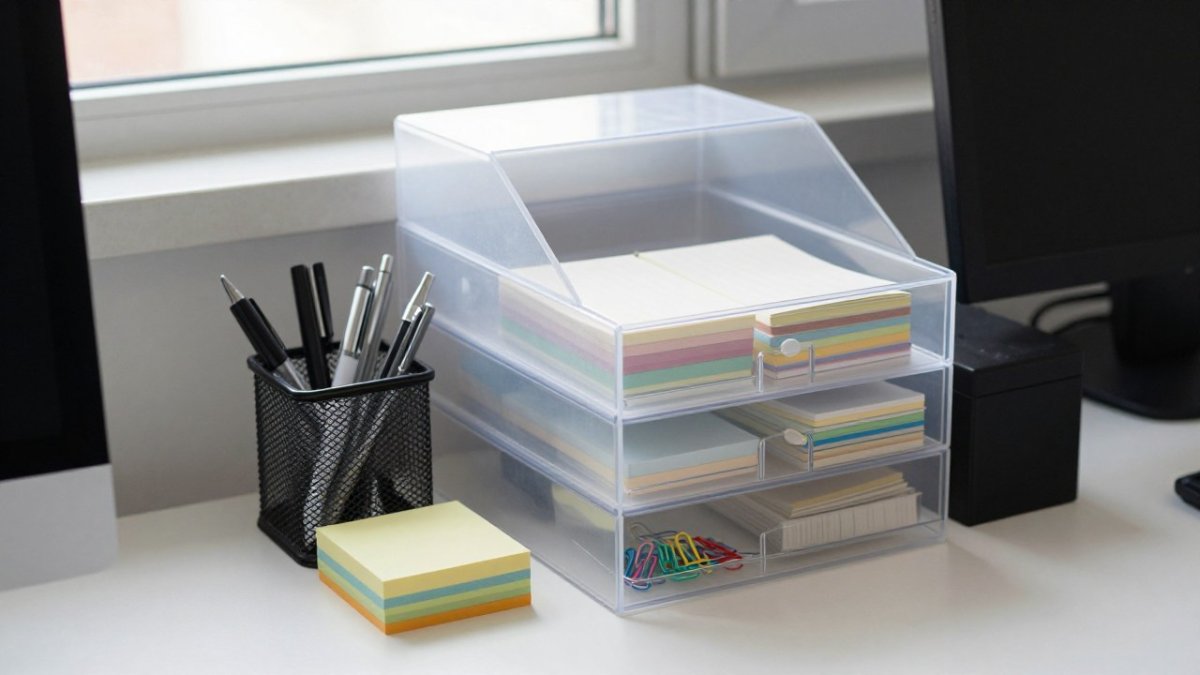
A tidy desk with clear and lidded storage bins holding pens, sticky notes, and paper clips, shot in natural daylight, shows how this sorting works in practice.
Use a few simple rules to keep the system working:
- Assign one bin per supply category
- Label each bin on the front
- Keep heavy items on lower shelves
- Leave a little room in each bin so items fit back in easily
For a complete plan on fitting bins to a compact office, read How to Organize a Compact Home Office Step by Step. If your home office also needs paper storage, Space Saving Filing Systems: Best Picks for Home Offices covers filing options that work alongside bins.
Choosing Your Office Storage Bins: Next Steps for Your Workspace
Before you buy, measure your shelf, drawer, or closet and write down the supplies you need to store. Pick a bin size that fits the largest category and check whether the bins stack where you plan to use them. Then decide whether you need a lid, a latch, or open access.
Once your bins are in place, cable clutter often becomes the next problem on the same desk. 7 Steps to Manage Cables in a Home Office walks through tidying those loose cords so the whole workspace looks as organized as your storage.
Office Furniture Warehouse offers seating, desks, and storage options, with delivery and pickup available. Visit us to compare storage pieces and find a setup that fits your space and budget.
Frequently Asked Questions
What are the best storage bins for office supplies?
The best choice depends on what you store and where. For small items like pens, clips and sticky notes, a multi-compartment lidded bin keeps things sorted. For letter-size paperwork, look for bins sized to hold standard file folders. Stackable bins with lids suit shelves and closets, while clear bins help you see inventory at a glance. Compare capacity, lid design and stackability before you buy, and check current pricing on the Office Furniture Warehouse website.
Are clear storage bins best for organizing office supplies?
Clear bins are a strong choice when you need to see what is inside without opening them, which saves time when restocking. They work well for frequently used supplies like pens, staples and labels. Opaque bins are a better fit for items you want hidden or protected from light, such as backup paper stock. Many offices use a mix of both, with clear bins for daily supplies and solid bins for overflow.
What size storage bins work best for office supplies?
Size should match what you store. Small desk bins in the 1 to 3 quart range hold pens and clips. Mid-size bins around 13 quarts hold binders and notebooks. For letter-size paper and legal-size files, measure your shelf depth and width first, then choose bins that fit with room to lift them out. Measure the shelf space and the items before ordering, since exact dimensions vary by manufacturer.
Should office supply storage bins have lids?
Lids are worth it for supplies you do not use daily, such as extra paper, toner-adjacent items and spare cables. They keep dust off, protect contents from spills and make stacked bins safer to move. Open-top bins are fine for everyday items at the front of a desk drawer or shelf. Latching lids are useful for storage that gets carried between rooms.

