Last Updated: October 25, 2026
Quick Summary
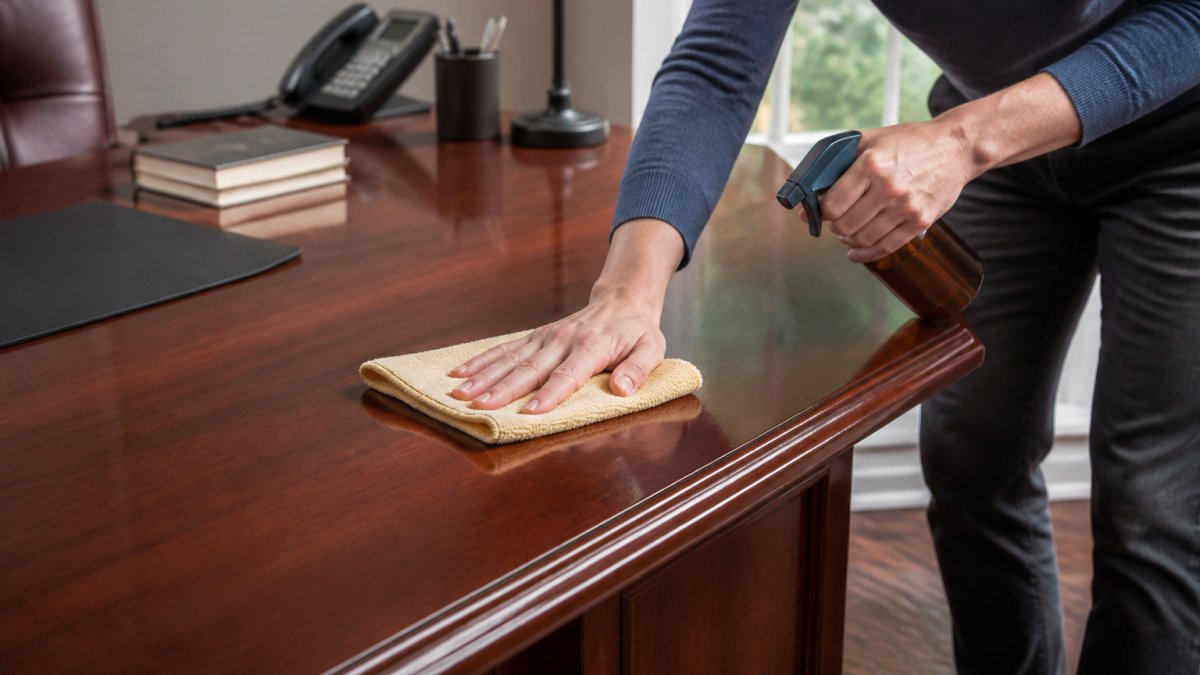
Wood furniture care starts with cleaning gently and often: dust weekly with a soft, dry cloth, wipe with a barely damp cloth wrung out until almost dry, and dry the surface right away. Skip abrasive materials, corrosive cleaners, and anything with ammonia or bleach, which strip protective finishes.
- Damp wipe and dry wood surfaces monthly, a task that takes about 30 minutes.
- Polish or condition wood every 2-3 months, allowing about 1 hour.
- Test any new product on a hidden spot and wait 24 hours before full use.
- Blot spills promptly rather than rubbing, since tea and coffee stains set fast.
- Keep furniture a few inches from direct heat sources and rotate pieces away from drafty windows.
Table of Contents
- How to Clean Wood Office Furniture Without Damaging the Finish
- How to Protect a Wooden Desk from Scratches and Daily Wear
- Choosing the Best Polish for Wood Furniture
- Wood Furniture Humidity and Temperature: Managing Seasonal Shifts
- Preventing Spills, Stains, and Sun Damage
- Repairing Scratches, Dents, and Water Rings
- Building a Maintenance Schedule for Your Office Furniture
- Choosing Wood Office Furniture Built to Last
- Frequently Asked Questions
How to Clean Wood Office Furniture Without Damaging the Finish
Wood furniture care starts with one rule: clean gently, and clean often. A soft, dry cloth removes most dust before it scratches a wood surface.
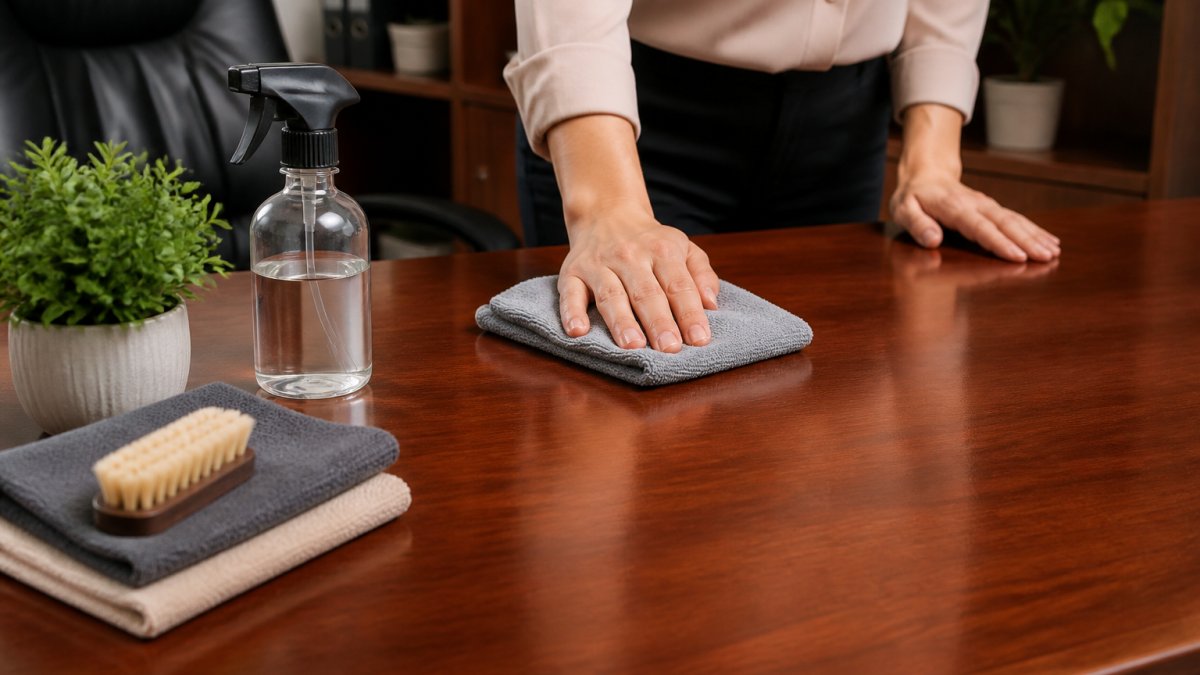
Here’s the short version of tips for maintaining wood office furniture longevity: dust weekly, wipe with a barely damp cloth, and never soak the wood.
Wood furniture care is the practice of cleaning and protecting a wood surface so its finish stays intact for decades. It comes down to three habits: dusting, damp wiping, and choosing mild products over harsh chemicals.
Dusting, Damp Cloths, and the Right Cleaning Products
Start with a microfiber cloth or another soft, lint-free cloth. Dry-dust the whole surface first, including the edges and legs.
Then dampen a second cloth. Wring it out until it’s almost dry. Wipe with the grain, not across it. Dry the surface right away with a clean cloth.
For routine cleaning, a mild detergent mixed with water handles most marks. Skip abrasive materials, corrosive cleaners, and anything with ammonia or bleach.
Watch out: a dripping wet cloth is the fastest way to swell a wood edge and lift a finish.
For a deeper walkthrough, see our guide on how to clean used office furniture.
How to Protect a Wooden Desk from Scratches and Daily Wear
The best scratch protection is prevention, not repair. A wooden desk takes more abuse than any other piece in the office: keyboards, mugs, keys, and chair arms all leave marks.
Use these habits to protect a wood surface:
- Add a protective mat under monitors, keyboards, and desk lamps
- Use coasters for every drink, every time
- Lift items instead of sliding them across the wood
- Keep sharp objects in a tray, not loose on the desktop
- Check chair armrests and casters for rough edges that catch the finish
A common mistake is covering a scratch with a heavy coat of polish. That traps dirt and makes the damage harder to fix later. Light surface scuffs usually fade with a gentle cleaning and a thin layer of the right product.
Choosing the Best Polish for Wood Furniture
The best polish for wood furniture matches the finish already on the piece. A polish that sits on top of a sealed finish does little. A polish made for oiled wood feeds the grain instead. Most office furniture falls into one of four finish families, and each one reacts differently to cleaners and conditioners.
Match the Product to the Finish
| Finish Type | Best Product | Frequency | What to Avoid |
|---|---|---|---|
| Sealed or lacquered | Cream polish, thin coat | Every 2-3 months | Oil-based polishes that leave a film; ammonia cleaners |
| Oiled wood | Conditioning oil | Every 1-2 months | Wax or silicone products that seal the grain |
| Waxed | Paste wax | Every 3-6 months | Water-based cleaners that strip wax |
| Veneer | Finish-matched cream or spray | Every 2-3 months | Excess moisture at edges; abrasive pads |
| Unknown | Test a small hidden spot first | As needed | Anything with a strong solvent smell |
Read the Label Before You Buy
Product selection is where most damage happens. Check the ingredients list and avoid these common offenders:
- Silicone and petroleum distillates: they build up in the grain and make future refinishing difficult.
- Ammonia and bleach: they dull sealed finishes and dry out oiled wood.
- Abrasive powders and pads: they scratch the topcoat, even when labeled “gentle.”
- Excess water: a damp cloth is fine, but a wet one swells edges and lifts veneer.
A safer default is a pH-neutral cleaner for routine wiping and a finish-specific conditioner for periodic feeding. If a product claims to clean, polish, and protect in one step, test it first; multi-purpose products often leave residue that attracts dust.
Test Discreetly, Then Apply Thin
Test any new product on an unseen area, like the underside of a desk or the inside of a drawer face. Apply a small amount, wait 24 hours, and check for dulling, stickiness, or color change. If the test spot looks even and dry, proceed.
What most guides miss is that more polish isn’t better. A thick layer attracts dust and turns gummy. A thin, even coat worked with the grain does the job. Buff off any excess with a clean, dry cloth before it sets.
Keep a small labeled kit for each finish type in your office. A cream polish for sealed desks, a conditioning oil for oiled tables, and a pH-neutral cleaner for daily wipes cover most needs without guesswork.
Wood Furniture Humidity and Temperature: Managing Seasonal Shifts
Wood moves with the air around it. When indoor humidity swings, a wood surface expands and contracts, and that stress shows up as drying, cracking, and separating joints.
Aim for steady indoor conditions year-round. Keep office humidity in a moderate range and avoid placing wood furniture near heating vents, radiators, or exterior doors that let in drafts.
Seasonal tips:
- Winter: add a humidifier if the air gets very dry
- Summer: run the AC to keep humidity from climbing
- Keep furniture at least a few inches from direct heat sources
- Rotate pieces away from drafty windows
Stable humidity does more for furniture lifespan than any polish on the shelf.
Preventing Spills, Stains, and Sun Damage
Spills and sunlight cause the most permanent damage to wood office furniture. Both are easy to prevent and expensive to undo.
Wipe spills promptly. Blot, don’t rub. Tea stains and coffee stains set fast, so treat them within minutes, not hours. Use a barely damp cloth and dry the area right away.
Direct sunlight is the slow killer. UV light fades a wood finish and causes uneven discoloration. Move desks out of direct sun, or use blinds and window film during peak hours.
Watch out: a wet ring left under a plant pot can soak into the finish overnight. Use a saucer or a protective mat under every plant.
Repairing Scratches, Dents, and Water Rings
Most minor damage is fixable without a professional, but the method depends on the finish. A technique that works on oiled wood can cloud a lacquered surface. Repairing small issues early stops them from becoming permanent, and knowing when to stop is as important as knowing how to start.
Finish-Aware Repair Steps
- Light scratches on sealed or lacquered finishes: rub with a cloth and a matching touch-up product, working with the grain. Avoid abrasive pads, which dull the sheen around the scratch.
- Light scratches on oiled wood: a drop of conditioning oil worked into the scratch often blends it. Wipe off excess and let it dry.
- Water rings: gently warm the spot with a hair dryer on low, then treat with polish. On waxed finishes, a paste wax buff can lift the ring.
- Small dents: a damp cloth and a warm iron can lift a shallow dent in some finishes. Place the cloth over the dent, press briefly with the iron on low, and check often. This works best on solid wood, not veneer.
- Deep gouges: use a wood filler matched to the color, then blend with polish. On veneer, deep gouges often need professional repair because the thin top layer can tear.
Safety and Testing
Test every method on a hidden spot first, such as the underside of a desk or the back of a leg. Wait a day before treating the visible area. Keep heat sources moving; holding an iron in one spot can scorch the finish. Never mix repair products unless the labels say they are compatible.
If the damage is deep, the finish is lifting, or the repair area is larger than a coin, a professional refinisher is the safer call. Attempting a DIY fix on veneer or a high-gloss lacquer can turn a small scratch into a costly refinishing job.
When to Call a Professional
Call a refinisher when you see lifting veneer, white cloudy patches that don’t fade, or cracks that run with the grain. These signal moisture or structural movement, not surface wear. A professional can also advise on whether a piece is worth repairing versus replacing, which matters for office furniture that takes daily abuse.
Building a Maintenance Schedule for Your Office Furniture
A simple schedule beats occasional deep cleaning. Preventive maintenance keeps wood furniture care manageable and spreads the work across the year.
| Task | Frequency | Time |
|---|---|---|
| Dust all surfaces | Weekly | 15 min |
| Damp wipe and dry | Monthly | 30 min |
| Polish or condition | Every 2-3 months | 1 hour |
| Inspect joints and hardware | Quarterly | 30 min |
| Check humidity levels | Monthly | 5 min |
Add a routine inspection to catch loose hardware and adjustable parts before they fail. Tighten screws, check drawer glides, and look for new scratches. A cleaning checklist posted in the supply closet keeps the whole team on the same page.
If your office is relocating, plan ahead to avoid damage in transit. Our guide on hiring professional office furniture movers covers the steps.
Choosing Wood Office Furniture Built to Last
Longevity starts at purchase. A well-built piece with a solid protective finish will outlast a cheap one by years, even with identical care.
When you’re shopping, check these points:
- Solid wood or quality veneer over particleboard
- A sealed, protective finish, not bare wood
- Tight joints and sturdy hardware
- Replaceable parts, like glides and casters
For a full checklist, see what to look for when buying used executive office desks. And if you’re weighing options, our used vs new office furniture comparison breaks down the trade-offs.
At Office Furniture Warehouse, we stock new and pre-owned pieces from brands like Steelcase and Herman Miller, and our team can help you pick wood furniture with a finish built to survive daily office use.
Frequently Asked Questions
How often should you clean a wooden desk?
Dust a wooden desk two to three times a week with a soft, lint-free cloth to keep grit from scratching the surface. Wipe with a slightly damp cloth once a week, then dry immediately. Deep-clean and polish every two to three months, or more often in high-touch office settings. In shared workspaces, add a quick wipe-down at the end of each day to remove hand oils and food residue before they settle into the finish.
Can you use furniture polish on wood office furniture?
Yes, but match the polish to the finish. Cream or paste wax polishes suit sealed and oiled wood, while silicone-based sprays can build up and dull the surface over time. Apply a small amount to a soft cloth, work it in along the grain, and buff off the excess. Avoid polishing more than every two to three months, since over-application attracts dust and creates a sticky film that traps grit.
How do you remove water rings from a wooden desk?
Place a dry cloth over the ring and press briefly with a warm iron on low heat, checking every few seconds. For stubborn rings, rub a small amount of non-gel toothpaste or a mix of equal parts white vinegar and olive oil along the grain, then wipe clean and dry. Treat rings early, since moisture that has soaked deep into the wood may need light sanding and refinishing to fully disappear.
How can you prevent wood furniture from drying out or cracking?
Keep indoor humidity between 40 and 60 percent and avoid placing wood desks near heating vents, radiators, or direct sunlight. Use a humidifier in winter and a dehumidifier in humid summer months. Oiled wood benefits from re-oiling once or twice a year to replenish moisture. Cracks usually start at joints and edges, so inspect those areas monthly and address small splits before they widen.
Caring for wood office furniture takes minutes a week, not hours a month. The offices that get it right build simple habits: dust often, control humidity, and treat spills fast. Office Furniture Warehouse has spent 35+ years helping teams furnish workspaces that hold up, with a 4-acre inventory of new and pre-owned desks, seating, and storage, plus design guidance to match. Visit our showroom and let our team help you choose wood furniture built for the long haul.

