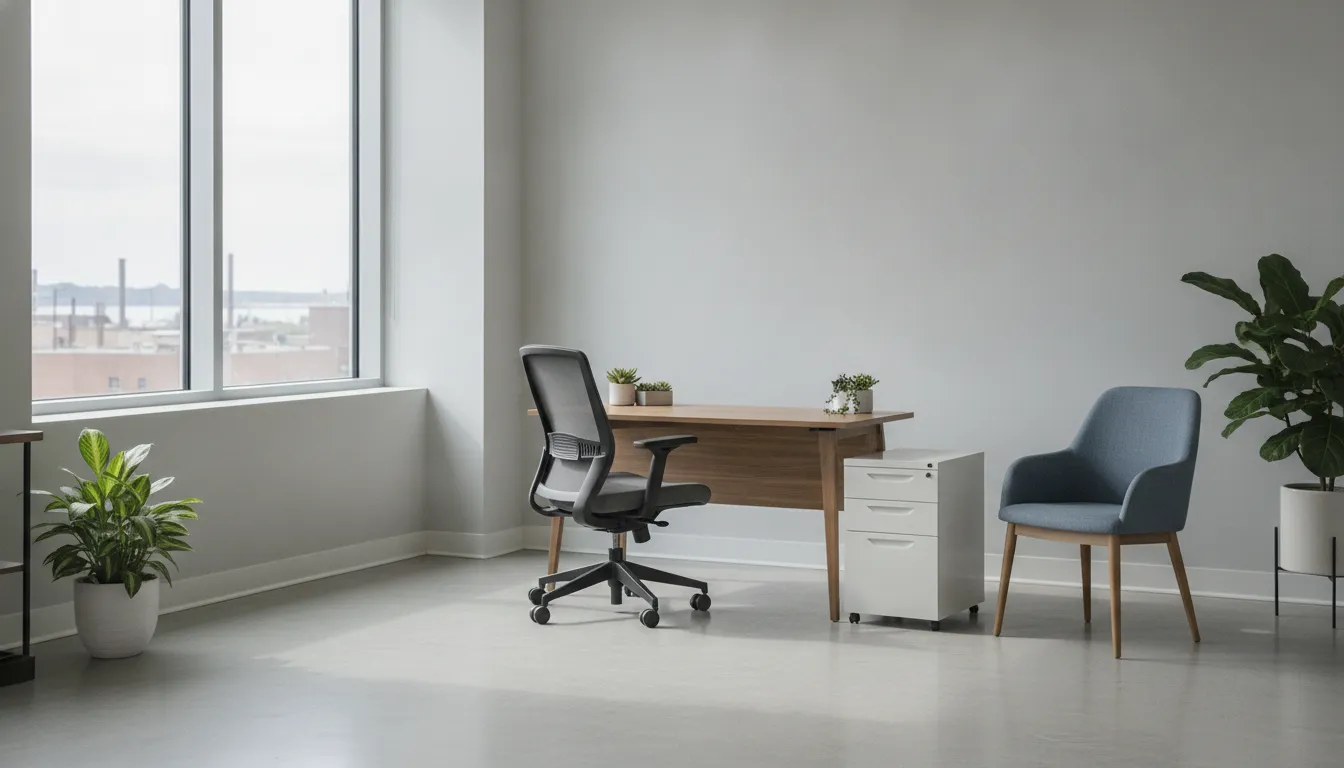
How to Furnish an Office on a Budget
A tight budget does not mean buying the cheapest office furniture. Make the right decisions in the right order by defining who will use the space, what work they need to do, and which furniture supports those tasks every day.
Need help planning a Cleveland-area office? Call Office Furniture Warehouse at 216-431-2700 before you start shopping.
Knowing how to furnish an office on a budget starts with measuring the space, ranking essential purchases, comparing new and pre-owned options, and accounting for delivery and setup before ordering. Northeast Ohio buyers can also use local space-planning help to avoid layout mistakes that cost more later.
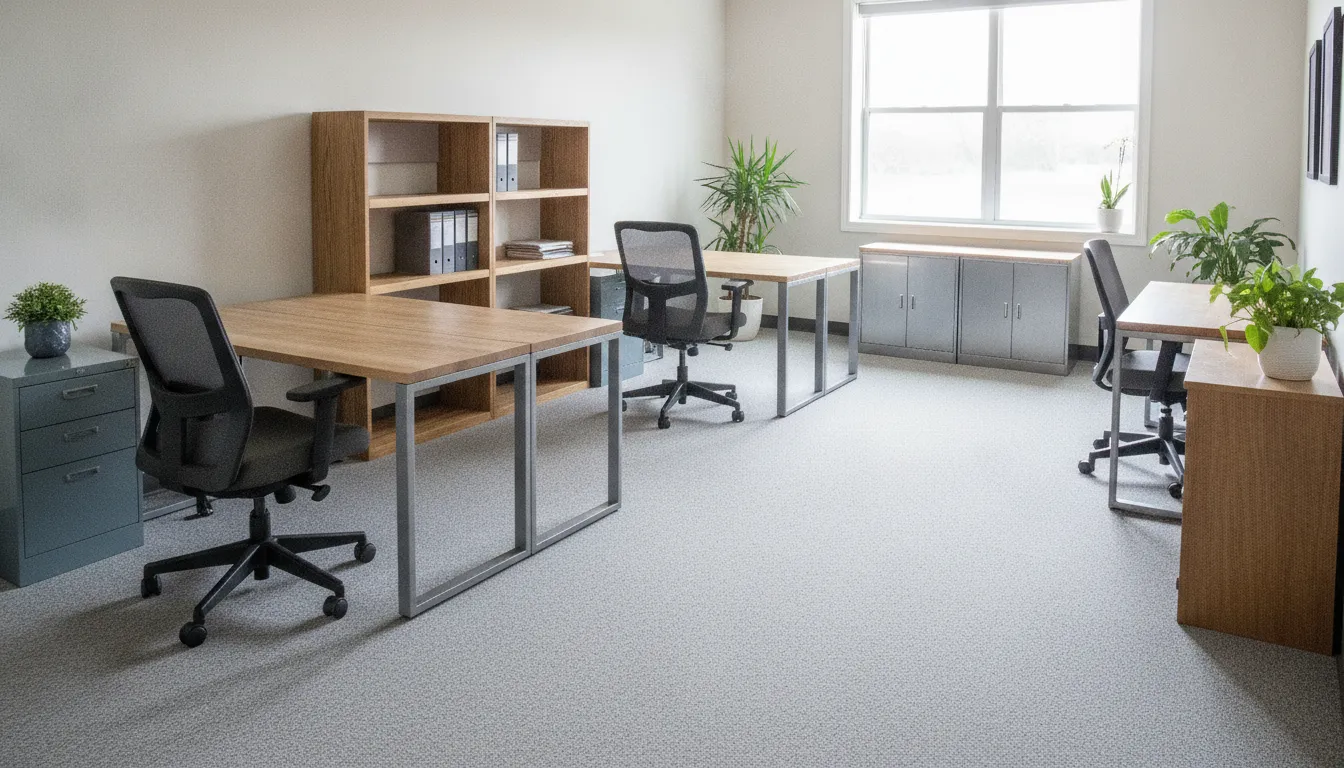
Whether you are furnishing a Cleveland home office, expanding a workplace in Akron, or updating a Canton office, a clear plan keeps limited funds focused on useful furniture. Office Furniture Warehouse provides office furniture services in Cleveland, including furniture guidance and project support. Begin by turning your room, staff, and workflow into a practical furniture plan.
How to furnish an office on a budget without wasting money
The most reliable way to control an office furnishing budget is to plan the space before shopping. Start with the room, the people using it, and the work that must happen there. This keeps a limited budget focused on useful furniture instead of attractive pieces that create crowded walkways or unused corners.
1. Measure the room and map the working space
Record the length and width of each room, door and window locations, outlets, columns, and any areas that must remain accessible. Note the route furniture will take from the entrance to its final position. Then sketch workstations, storage, visitor seating, and circulation areas before choosing specific products.
Next, consider how the desk will support the actual equipment. A work surface should accommodate the monitor, keyboard, and input device, with additional room for the tasks performed there. If employees use laptops for extended periods, plan for an external keyboard and input device. These details help prevent a low-cost desk from becoming an expensive replacement later.
For a larger project, office furniture services in Cleveland can help assess workflow, traffic flow, ergonomics, storage, growth needs, and layout options before you commit to an order.
2. Count users and identify their work
List each employee, workstation, shared area, and occasional user. A one-person home office may need only a desk, chair, and storage. A growing business may also need reception furniture, conference seating, filing, or shared work surfaces. Describe what each person does at the desk, including computer work, paperwork, meetings, calls, or equipment use. Buy for those work patterns rather than for an imagined ideal office.
3. Rank purchases before comparing products
Put daily-use items first: supportive seating, an appropriately sized desk or work surface, and the storage required for current operations. Add shared tables, guest seating, accessories, and decorative pieces only after the essential workstations function well.
A properly designed desk should provide leg clearance and support sensible equipment placement. A well-designed, adjustable chair can better support different users and sitting positions. OSHA recommends trying different chairs before purchasing when possible, so comfort and fit should be part of the decision, not an afterthought. Review OSHA chair guidance when setting your seating criteria.
Finally, compare new or pre-owned office furniture for each priority instead of assuming every item must be bought the same way. Office Furniture Warehouse carries both options, with inventory ranging from budget to premium choices. Check current availability and pricing, then reserve the remaining budget for delivery, installation, or future additions. This step-by-step plan is different from simply searching for deals: it connects every purchase to a measured space and a real business need.
Which office furniture should you buy new, and which can be pre-owned?
The best answer is usually a mix. Buy new when a piece needs to match a specific requirement, support a new warranty expectation, or serve a user whose comfort is especially important. Choose pre-owned when the furniture is structurally sound, available now, and delivers the function your office needs without paying for a brand-new finish. You can also refresh what you already own instead of replacing it.
That approach makes how to furnish an office on a budget a decision process rather than a search for the lowest price on every item. Compare condition, fit, availability, and total project needs. Office Furniture Warehouse offers both new and pre-owned furniture, so you can evaluate those options together. The guide to new or pre-owned furniture can help you weigh the tradeoffs in more detail.
| Furniture type | Consider buying new when… | Consider pre-owned or refreshed when… |
|---|---|---|
| Chairs | A user needs a precise fit, current adjustments, or a chair that will be shared by different people. Try chairs in person when possible, since support and comfort vary. | A quality commercial chair is clean, stable, and all adjustments work. Inspect the seat, backrest, armrests, base, and casters before committing. |
| Desks | You need a specific size, finish, configuration, or feature to support the work and layout. | The surface, frame, and leg clearance fit the workspace. A sound pre-owned desk can handle daily work without needing a new finish. |
| Storage | You need a coordinated system, a particular capacity, or new pieces to complete an expanding setup. | Existing filing cabinets, bookcases, or storage units remain sturdy and functional. Reuse them before buying replacements. |
| Conference and common areas | The room has a specific design, capacity, or client-facing appearance requirement. | A pre-owned conference table, reception piece, or lounge item meets the room’s purpose and fits the available space. |
| Furniture you already own | Damage affects safety, stability, or function and repair is not practical. | Wood furniture may be restored through refinishing. Structurally sound metal furniture may be updated through electrostatic painting, extending its useful life instead of replacing it immediately. |
Pre-owned premium brands can sometimes provide meaningful savings compared with buying new. Treat any savings figure as item-specific, not a promise for every piece. Inventory and condition change, so inspect furniture, confirm current pricing, and ask whether delivery or installation fits your project before making a final choice.
Build the office around the essentials first
A budget office does not need every possible furniture piece on day one. Start with the items that support the work itself, then add convenience and appearance upgrades as the space develops. This approach works for a one-person home office and for an office manager furnishing several workstations.
1. Start with the work surface
Choose the desk or table based on the work performed there. A person handling a laptop and paperwork may need a different surface than someone using multiple monitors, meeting with visitors, or sharing documents with a coworker. Leave enough room for the equipment used every day, and check that the desk leaves comfortable leg clearance. For multiple workstations, repeat the same practical assessment instead of buying identical desks simply because they look uniform.
Browse office desks by the work each person needs to complete. A straightforward, durable desk can be the right choice when the budget is limited. More specialized pieces can be added later if the team’s work or layout requires them.
2. Prioritize seating where people spend the most time
After the work surface, select a chair that fits the person and the daily task. OSHA identifies the backrest, seat, armrests, and base as important chair elements, and recommends trying different chairs before purchasing when possible. That makes chair selection especially important for a shared office, where one model may not suit every user.
Use the office seating category to compare available options, then test the fit when you visit the showroom. For a one-person office, buy the chair that best supports the work before spending on decorative pieces. For multiple workstations, keep the core chair standard consistent when it makes sense, while allowing for different user needs.
3. Add storage and protect circulation
Once desks and chairs are planned, add only the storage needed for current files, supplies, and equipment. Filing cabinets and other storage pieces should sit where they can be reached without blocking a doorway, shared route, or another person’s workspace. In a small office, use available wall or vertical space carefully rather than filling the center of the room with extra cabinets.
Finally, add accessories that solve a real problem, such as a task light, monitor support, keyboard, cable-management item, or modest privacy screen. Walk the planned route before ordering. If a piece makes it harder to enter, sit, open a drawer, or move between workstations, it is not a budget choice. It is a future layout problem. Furnish the essential work areas first, keep circulation open, and expand only when the office’s actual needs justify the next purchase.
Furnishing more than one workstation? Call 216-431-2700 to discuss space planning, current furniture options, and a practical order sequence before you commit the budget.
How do you control the total cost beyond the furniture price?
The price on a desk or chair is only one part of the project. When furnishing an office on a budget, account for the work required to get each piece into the room, assembled, positioned, and ready for use. A lower sticker price can lose its advantage if the furniture does not fit through the building, blocks a traffic path, or requires extensive staff time to install.
Plan delivery, setup, and installation before you buy
Ask what happens after the purchase. Will your team pick up the furniture, or will it be delivered? If several workstations, storage units, or conference pieces are involved, decide who will carry, assemble, and position them. Staff labor is still a project cost, even when it does not appear on the invoice. Professional setup can also reduce the risk of damaged pieces, incorrect assembly, or a layout that needs to be taken apart and rebuilt.
Custom orders may involve longer lead times than furniture available for immediate pickup or delivery. Confirm the expected availability before committing to a move-in date, opening, or expansion. If timing matters, compare the total project plan with currently available new and pre-owned options rather than looking only at the unit price.
Use space planning to prevent expensive mistakes
Measure the rooms, doorways, elevators, and intended work areas before ordering. Then consider circulation, storage, power access, employee growth, and the way people actually move through the office. A desk that fits on paper may still create a bottleneck when chairs are occupied or doors open into the work area. Buying fewer pieces that work well together is often more economical than replacing furniture after a poor layout becomes obvious.
Space planning can evaluate workflow, growth needs, layout options, furniture recommendations, traffic flow, ergonomics, and storage. Office Furniture Warehouse offers office furniture services in Cleveland to help connect those decisions. You can also review the company’s office furniture services for delivery, setup, installation, and related support.
Compare the complete project, not isolated items
For buyers in Cleveland, Akron, Canton, and surrounding Northeast Ohio, compare pickup and service options alongside furniture selection. Ask for a clear understanding of delivery, setup, installation, and any site conditions that could affect the work. That approach makes the budget more realistic and helps you choose a plan that your business can execute without unpleasant surprises.
Where can Northeast Ohio buyers furnish an office on a budget?
For Cleveland-area buyers, a practical place to start is the Cleveland office furniture showroom and warehouse at 4100 Payne Avenue in Cleveland, Ohio. Office Furniture Warehouse has served Northeast Ohio since 1990, giving business owners, office managers, and home-office shoppers a local option for comparing new and pre-owned furniture before committing to a setup.
Shop locally, then compare the complete cost
Start online by reviewing the available product categories and noting the pieces that fit your plan. Then visit the showroom when you need to compare finishes, sizes, chair comfort, condition, and overall value in person. The Cleveland facility includes more than four acres of showroom and warehouse space, so buyers can evaluate more than one type of solution instead of assuming that every item must be new.
Ask the team to show you comparable new and pre-owned options for each priority item. A pre-owned desk may solve an immediate need, while a new chair or storage piece may better fit a specific requirement. The right mix depends on how the furniture will be used, the condition of each item, and how well it fits the room. Inventory changes, so confirm current availability, pricing, condition, and any matching pieces before building your final list.
Plan pickup or delivery across Northeast Ohio
Local shopping also makes it easier to choose the most practical next step. If the furniture is available and your vehicle and team can handle it, ask about pickup. For a larger order, multiple workstations, or furniture that needs careful placement, ask about delivery, setup, and installation. Office Furniture Warehouse serves Cleveland, Akron, Canton, and surrounding Northeast Ohio counties. So the showroom visit can be the beginning of a complete furnishing plan rather than just a single purchase.
Bring room measurements, doorway dimensions, a list of users, and your must-have pieces when you call or visit. That information helps the team check whether current inventory will work for your space and identify alternatives when a specific item is unavailable. This process is one of the most reliable ways to learn how to furnish an office on a budget without wasting money on furniture that does not fit. If you are unsure what to prioritize, call the team with your measurements before you visit.
What should an office manager do before placing the order?
A final order check helps you avoid buying furniture that does not fit the room, support the work, or match the way your team operates. Use this checklist before committing funds, whether you are furnishing one office or coordinating a larger Cleveland-area workplace.
- Measure the space and access points. Record the length and width of each room, doorways, hallways, elevators, columns, windows, and fixed equipment. Note where people need to walk and where doors, drawers, and cabinet doors must open. A piece that fits on paper may still be difficult to bring into the building or position safely.
- List the people, workstations, and tasks. Count current users and identify what each area supports. A private office, reception point, shared workstation, conference area, and storage zone may need different furniture. Plan for the team you have now, while noting any near-term growth that could affect the layout.
- Prioritize the essentials. Separate must-have items from upgrades that can wait. Desks or work surfaces, supportive chairs, and necessary storage usually come before decorative pieces or secondary meeting furniture. Make sure every essential item supports the actual work instead of buying for an imagined office.
- Compare new, pre-owned, and refresh options. Review both new and pre-owned furniture before deciding where to spend. A quality pre-owned piece may provide useful value, while structurally sound furniture you already own may be suitable for refinishing or refreshing. Compare condition, function, appearance, and expected use rather than judging by age alone. The guide to new or pre-owned furniture can help organize that decision.
- Inspect each item and confirm the details. Check surfaces, casters, drawers, adjustment points, hardware, finish, and overall stability. Confirm dimensions and whether the item works with your equipment and layout. Ask the showroom to verify current availability and pricing, since inventory changes.
- Plan pickup, delivery, and installation. Decide who will receive the order, where it will be unloaded, and whether furniture needs setup, assembly, or installation. Share building rules, access restrictions, and preferred timing before the order is finalized. Delivery and installation planning can prevent last-minute labor or scheduling problems.
- Reserve a practical contingency. Leave room in the plan for an overlooked accessory, a replacement item, a layout adjustment, or a delivery-related need. You do not need to spend the entire budget on the first order. A little flexibility makes it easier to complete the office without compromising the essentials.
Ready to review your options? Call Office Furniture Warehouse at 216-431-2700 before the FAQ below, or bring your measurements to the Payne Avenue showroom for a practical next step.
Frequently Asked Questions
What should I buy first when furnishing an office on a budget?
Start with the pieces that affect daily work: a suitable desk, a supportive chair, and enough storage for essential supplies or files. Measure the room and identify the people, tasks, equipment, and circulation paths before shopping. This keeps you from spending on furniture that does not fit the way the office operates.
Is pre-owned office furniture a good way to reduce costs?
Yes, when the condition, dimensions, and fit match your needs. Comparing new and pre-owned inventory lets you balance appearance, durability, availability, and budget in one purchase plan. Premium pre-owned brands may be available for up to 80 percent below retail. But savings and inventory vary, so confirm the current item and price before making a decision: learn about new and pre-owned office furniture.
How can I avoid hidden costs when buying office furniture?
Account for delivery, assembly, installation, floor protection, and the time required to move or configure each piece. Confirm what is included before ordering, especially for multiple workstations or a tight building access route. Local delivery, setup, and installation are available across Cleveland, Akron, Canton, and surrounding Northeast Ohio counties.
Should I get help planning a budget office layout?
Professional space planning can be worthwhile if you are furnishing several workstations, moving into an unfamiliar space, or trying to plan for growth. A plan can address workflow, traffic flow, ergonomics, storage, and furniture recommendations before you buy. That can prevent an expensive layout mistake and help you phase purchases around current priorities.
Get started with a practical office plan
A local furniture review can help you compare current new and pre-owned options, confirm what fits your space, and plan delivery or installation before you order. Office Furniture Warehouse serves Cleveland, Akron, Canton, and Northeast Ohio from its Payne Avenue showroom in Cleveland. Call Office Furniture Warehouse at 216-431-2700 to check current furniture, pricing, delivery, installation, and space-planning options for your office project.
