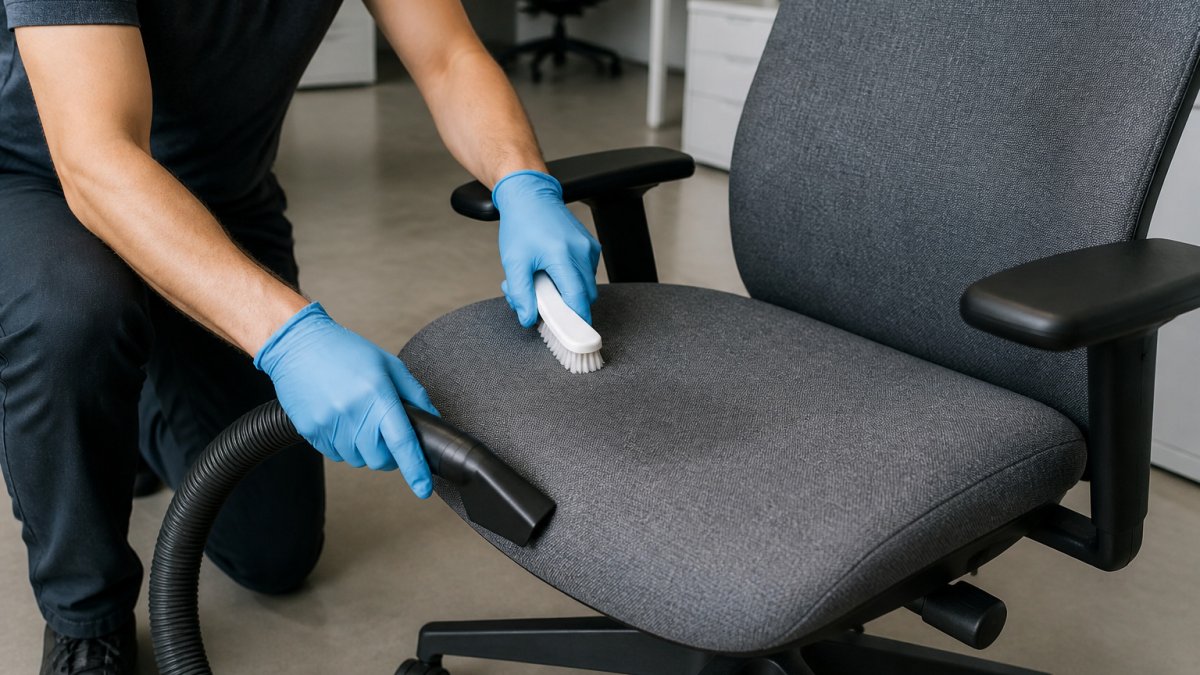
Quick Summary
To keep office chair upholstery looking good, vacuum and wipe the chair weekly, clean each material with a mild method that suits it, and treat stains quickly. Keep the chair out of direct sunlight and away from heaters to slow fading, drying and cracking.
- Vacuum the seat and back weekly with a soft brush attachment.
- Test any cleaner on a hidden spot, such as under the seat, before using it on the chair.
- Use mild soap and water on fabric, leather and faux leather, and avoid bleach, alcohol and oil-based products.
- Condition leather once or twice a year, and condition only after cleaning.
- Repair small damage early, reupholster when the frame is sound but the cover is worn, and replace when structure or support fails.
Table of Contents
- Why Office Chair Upholstery Wears Out and How to Slow It Down
- Routine Maintenance: Dusting, Vacuuming and Wipe-Downs
- How to Clean Office Chair Upholstery by Material
- Stain Removal: A Decision Guide for Spills and Marks
- How to Prevent Vinyl Upholstery From Peeling, Cracking and Fading
- How Often to Clean and Maintain Your Chairs
- When to Repair, Reupholster or Replace Your Office Chair
- Frequently Asked Questions
Why Office Chair Upholstery Wears Out and How to Slow It Down
Last Updated: October 29, 2026
Office chair upholstery takes more punishment than most furniture. It gets sat on for hours, rubbed by clothing, bumped by bags, and wiped with whatever cleaner is nearby.
Most wear comes from a few predictable causes. Body oils and friction wear down the seat and armrests first. Dust works into fabric and acts like sandpaper. Sunlight fades color and dries out leather and vinyl. Harsh cleaners strip the protective finish.
Here is the basic plan:
- Vacuum and wipe down the chair every week
- Clean each material with the method it needs, following a detailed step-by-step cleaning guide for used office furniture
- Treat stains quickly instead of letting them set
- Keep the chair out of direct sunlight and away from heaters
- Repair or replace worn parts before the damage spreads
Each step below covers one part of that plan.
Routine Maintenance: Dusting, Vacuuming and Wipe-Downs
Routine care is the cheapest way to extend upholstery life. Dust and grit cause more long-term damage than most people expect, so a light weekly routine does more good than an occasional deep clean.
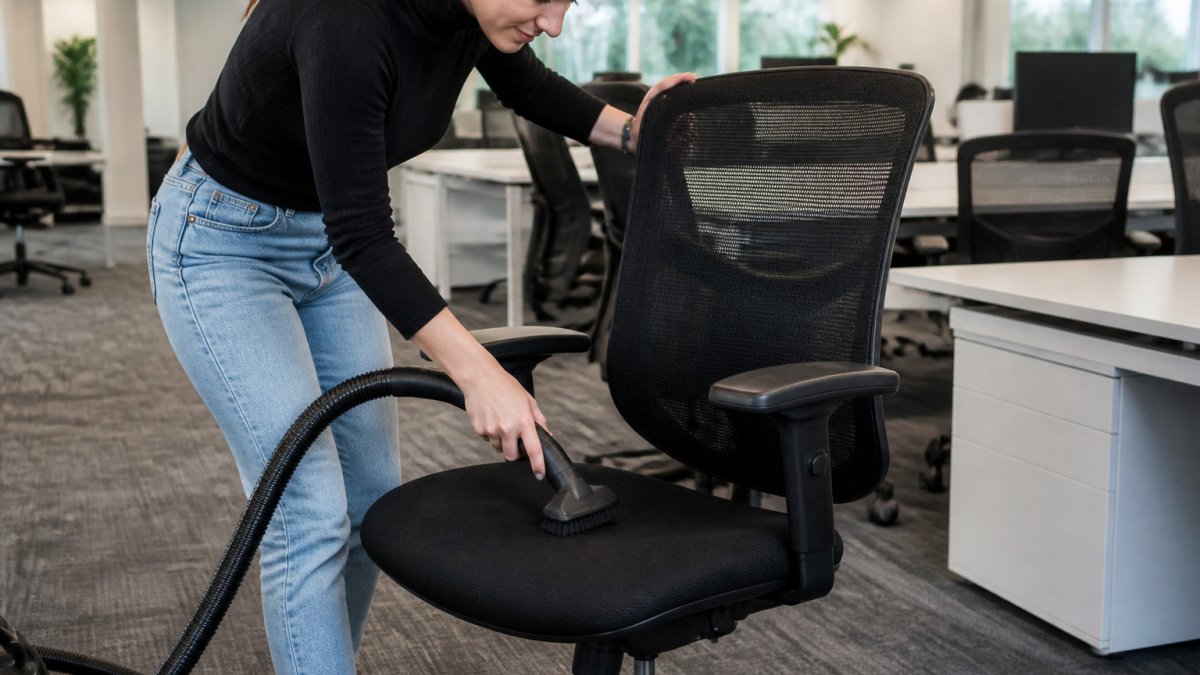
Start by vacuuming the seat, back, and crevices with a soft brush attachment. Lower suction works best for fabric and mesh.
A simple weekly routine:
- Vacuum the seat and back with a soft brush attachment
- Wipe the chair arms and base with a dry or barely damp soft cloth
- Clean the wheels and remove hair or debris wrapped around them
- Check for loose threads or small tears and note them for repair
Watch out: Pressing hard with a cloth can push grit deeper into the fabric. Use light, steady strokes.
How to Clean Office Chair Upholstery by Material
Different materials need different care, and using the wrong product is one of the fastest ways to ruin a chair. Before you touch any cleaner to the seat, find the manufacturer’s care label (usually under the seat or on a tag near the base) and run a spot test on a hidden area, such as the underside of the seat or the back edge.
Fabric and Mesh Upholstery
Fabric and mesh respond well to a mild detergent and water solution. Mix a few drops of gentle dish soap into a bowl of warm water.
Do not soak the fabric. Too much water can seep into the foam and cause odor or mildew.
Do not use on fabric or mesh: bleach, strong solvents, abrasive scrubbing brushes, or all-purpose sprays with harsh surfactants.
Leather
Leather needs gentle cleaning and conditioning. Wipe it with a soft cloth dampened with water and a small amount of mild soap, then dry it right away with a clean towel.
Do not use on leather: oil-based products, furniture polish, household all-purpose sprays, alcohol, or abrasive pads. These can leave a sticky film, break down the finish, or cause the leather to dry and crack.
Faux Leather and Vinyl
Faux leather and vinyl are more tolerant of cleaning, but they still need care. A damp cloth with mild soap works well for routine cleaning. Wipe in the direction of the grain and dry immediately so moisture does not sit at the seams.
Do not use on faux leather or vinyl: abrasive pads, alcohol-based cleaners, acetone, or oil-based conditioners. Alcohol and acetone can dull the surface and weaken the coating, which is the first step toward peeling.
When in doubt, test first and start mild. A cleaner that works on one chair can damage another because finishes vary by manufacturer and year. Keep a small notebook or phone note of which product you used on each chair so you can repeat what worked and avoid what didn’t.
Quick Reference: Safe vs. Avoid by Material
| Material | Safe routine cleaner | Avoid |
|---|---|---|
| Fabric | Mild dish soap + warm water, dabbed | Bleach, solvents, scrubbing brushes |
| Mesh | Vacuum with soft brush; mild soap spot clean | Hard scrubbing, soaking, harsh sprays |
| Leather | Mild soap + water, then conditioner | Polish, alcohol, oil-based products |
| Faux leather / vinyl | Mild soap + water, dried immediately | Alcohol, acetone, abrasive pads, oils |
If the care label lists a specific product or method, follow it over any general guide, including this one. The label is written for that chair’s exact finish.
Stain Removal: A Decision Guide for Spills and Marks
Speed matters more than strength. Work through these steps in order:
- Blot, don’t rub. Press a dry cloth on the spill to lift as much as possible.
- Identify the material. Fabric, mesh, leather, and vinyl each need a different approach.
- Test first. Try any cleaner on a hidden spot, such as under the seat.
- Start mild. Use water and mild soap before anything stronger.
- Rinse and dry. Remove soap residue and let the area dry completely.
If a stain remains after two gentle attempts, stop. Repeated scrubbing usually causes more damage than the stain itself. For deep or stubborn marks, professional upholstery cleaning or reupholstery may be the better choice.
How to Prevent Vinyl Upholstery From Peeling, Cracking and Fading
Vinyl fails in predictable ways. It peels at the seams, cracks at flex points, and fades under sun exposure. Prevention is easier than repair.
- Limit sun exposure. Position chairs away from windows, or use blinds during the brightest hours.
- Keep away from heat. Radiators, space heaters, and hot vents dry vinyl out fast.
- Clean regularly with mild products. Harsh chemicals strip the protective top layer.
- Dry after cleaning. Trapped moisture weakens the bond at the seams.
- Watch seat edges. Early lifting near the edges is the first sign of peeling. Press it back gently and address it soon.
Vinyl that is already cracked will not heal. Prevent further damage by cleaning and drying the area, then decide whether repair or replacement makes sense.
How Often to Clean and Maintain Your Chairs
Use-based schedules work better than fixed rules. A chair used all day by one person needs more attention than a guest chair used a few times a week.
A practical schedule:
- Weekly: Vacuum and wipe down high-contact surfaces
- Monthly: Clean the full chair with the right method for its material
- Every 6 to 12 months: Condition leather and check seams, stitching, and foam for early wear
- As needed: Treat spills immediately
Heavily used chairs in shared or high-traffic offices benefit from more frequent cleaning. Chairs kept mostly in storage need less, but check them for dust and mildew before use.
When to Repair, Reupholster or Replace Your Office Chair
Not every worn chair should be thrown out. Often the frame and mechanism are still sound and only the upholstery has failed. Our signs of wear to check on used office furniture can help you spot what has actually failed. The decision comes down to three questions: what failed, what it costs to fix, and whether the chair still supports you correctly.
Step 1: Diagnose What Actually Failed
Look past the surface. Check these points in order:
- Upholstery only: small tears, loose seams, stains, or fading with a firm cushion underneath. This is a repair or reupholstery candidate.
- Cushion foam: flattened seat, bottoming out, or a visible dip where you sit. Foam replacement is possible but often costs as much as reupholstery.
- Frame and mechanism: cracks, a wobbling base, a gas cylinder that sinks, or arms that no longer adjust. These are structural failures.
- Seams and stitching: splitting along stress points (front seat edge, armrest tops) usually means the cover is at end of life even if the rest looks fine.
Step 2: Match the Fix to the Failure
- Repair if the damage is small and localized, such as a loose seam or a minor tear. Fabric patches and vinyl adhesive kits can handle many small problems for a modest cost. This is the right call when the chair is otherwise sound and you want to avoid replacement.
- Reupholster if the cushion is still firm but the cover is worn, stained, or faded. Reupholstery often costs far less than a new chair of comparable quality and keeps a good frame in use. Choose a cover material suited to the chair’s use: tightly woven fabrics and quality vinyl hold up well in busy offices, while delicate leather suits lighter-use areas better.
- Replace if the frame is cracked, the mechanism no longer adjusts, the base is unstable, or the foam has collapsed. Repairing these parts often does not make financial sense, and a chair that no longer supports you correctly is an ergonomic problem, not just a cosmetic one.
Step 3: Weigh Repair Against Replacement
A simple rule of thumb: if the repair cost approaches half the price of a comparable new chair, replacement usually wins, especially if the chair is already several years old and other parts are near failure.
Get a quote before deciding. Upholstery shops price by the job, and a quote turns a vague comparison into a real one. For a chair with a quality frame, reupholstery is often the better long-term value because the mechanism and base are the expensive parts to replace.
The Ergonomics Link
Upholstery longevity is not only about cleaning. How you sit and how the chair is adjusted affect how fast the cushion, seams, and cover wear. A chair set too low or too high concentrates pressure on the seat edge and front seam.
Adjust the chair so your feet rest flat, your knees are near hip height, and your back is supported by the lumbar curve. Distribute your weight evenly rather than perching on one edge.
Repair small damage early, reupholster when the frame is sound but the cover is worn, and replace when structure or support fails. Pair that decision with correct chair adjustment to slow wear at the stress points.
Need replacement chairs or ready-to-use options? Visit our website for current availability on pre-owned and new office seating, or contact us for a quote.
Frequently Asked Questions
How often should you clean office chair upholstery?
Vacuum fabric and mesh chairs every one to two weeks in a busy office, and wipe leather, faux leather and vinyl surfaces with a damp cloth weekly. Chairs used by several people or in shared spaces may need more frequent cleaning. Do a deeper clean every few months, and always test any cleaner on a hidden spot first to confirm it does not discolor or dry out the material.
What is the best way to clean fabric office chair upholstery?
Start by vacuuming with a soft brush attachment to remove dust and debris from the seat and back. Mix a few drops of mild detergent into warm water, dampen a soft cloth or sponge, and gently dab the stained area rather than scrubbing. Blot with a dry cloth afterward and let the chair air dry completely before sitting on it again to prevent mildew and water rings.
How do you prevent vinyl office chair upholstery from peeling?
Peeling usually starts with heat, UV exposure and harsh cleaners that dry out the vinyl. Keep chairs away from sunny windows and heating vents, clean with a mild soap-and-water solution instead of strong chemicals, and avoid alcohol or abrasive pads. Wipe down spills promptly and rotate chairs in shared spaces so wear spreads evenly.
When should you repair or reupholster an office chair instead of replacing it?
Reupholstering makes sense when the frame, base, wheels and mechanism are sound but the cushion or covering is torn, sagging or worn through. If the gas lift, base or seat structure is damaged, or the repair cost approaches the price of a comparable chair, replacing it is usually the better choice. Consider the chair’s ergonomic support and warranty status before deciding.
Looking after your office chairs pays off in comfort, appearance, and budget. With a steady routine and the right care for each material, most upholstery lasts far longer than people expect. Office Furniture Warehouse can help you decide when a chair is worth keeping and when it is time to upgrade.

