Last Updated: October 30, 2026
Quick Summary
To sanitize second hand office furniture, first inspect each piece outdoors for pests, mold, and debris, then remove loose parts and dust. Clean with a product made for the material, and disinfect only with a product whose label lists that surface as safe. Follow the label’s contact time, ventilate the room, and wear the required gloves.
- Inspect every piece outdoors for bed bugs, mold, and debris before it enters your building.
- Remove cushions, drawers, and loose parts, then shake out fabric and knock dust off hard surfaces.
- Vacuum fabric chairs thoroughly before using any liquid, and soaking fabric can cause mold.
- Disinfectant must stay visibly wet for the full contact time on the label, or it has not worked.
- Never mix cleaners, since combining bleach with ammonia or acidic cleaners releases harmful fumes.
Table of Contents
- What to Check Before You Bring Used Office Furniture Indoors
- Step 1: Remove Loose Debris and Dust
- How to Clean Fabric Office Chairs and Upholstery
- How to Disinfect an Office Chair Without Damaging It
- How to Clean Wood Office Furniture Safely
- Choosing Office Furniture Cleaning Products by Material
- Ventilation, Contact Time, and Safe Handling
- When to Call a Professional or Discard the Piece
- Frequently Asked Questions
Used office furniture can be a smart buy, but it can also carry dirt, germs, and pests into a workplace you care about, so you need to sanitize second hand office furniture before it goes near your team. Before anything goes near your team, you need a clear process for inspecting, cleaning, and sanitizing it. This guide walks you through that process from intake to first use, so your space stays clean and safe from day one.
What to Check Before You Bring Used Office Furniture Indoors
Inspect every piece before it enters your building. Look at it outside, in good light, and take your time. A quick glance can miss the signs that matter most.
Check these areas first:
- Seams, folds, and cushion edges where dirt and debris collect
- Under the seat and along the frame, where pests hide
- Drawer tracks, casters, and the underside of desktops
- Any musty smell, discoloration, or dark spots that could mean mold
If you find signs of a problem, do not bring the item inside. Set it aside and decide whether it is worth treating at all.
Spotting Bed Bugs, Pests, and Mold
Bed bugs and other pests are the biggest worry with used seating. Look for small dark specks along seams, shed skins, or tiny rust-colored stains on fabric. Check the joints and the underside of the seat with a flashlight.
Mold usually shows up as fuzzy spots or a damp, earthy smell. It often hides under cushions and on the back of upholstery. If you see mold, consider professional help or discarding the piece, since surface cleaning alone may not fix it.
Step 1: Remove Loose Debris and Dust
Start by getting rid of everything that is not part of the furniture itself. Work outside or in a space you can easily clean afterward.
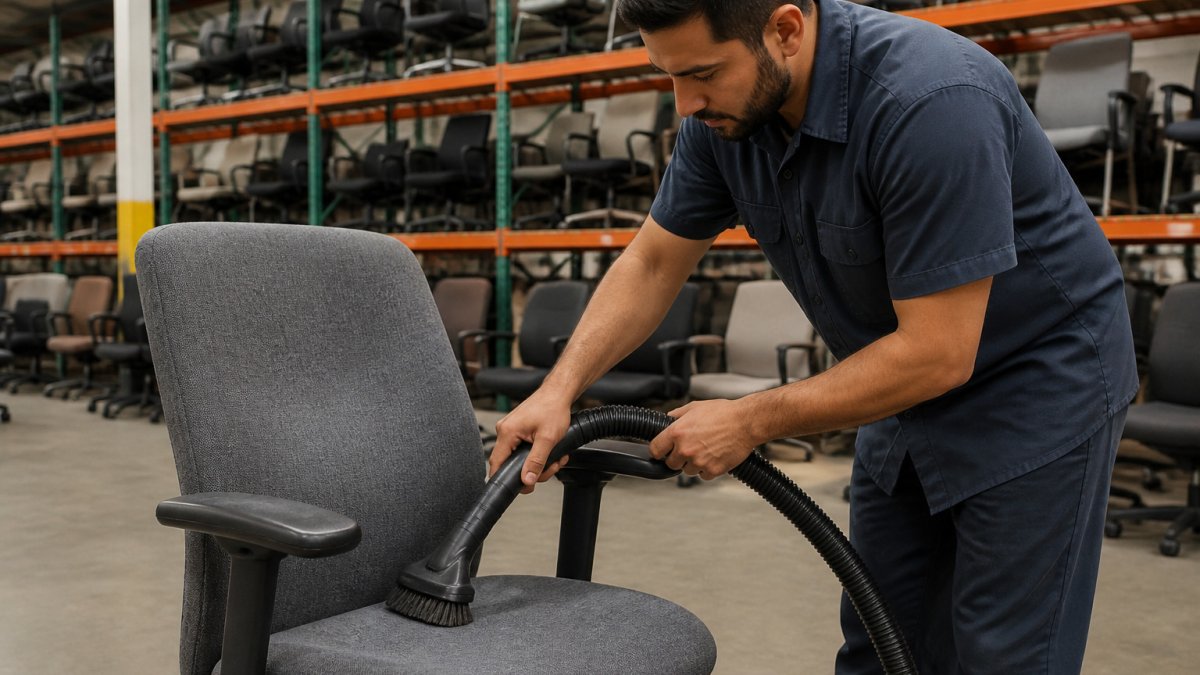
- Remove cushions, drawers, and any loose parts so you can properly sanitize the furniture.
- Shake out fabric and knock dust from hard surfaces.
- Scrape off stuck-on gum or debris with a plastic card.
- Wipe away crumbs and visible dirt with a dry cloth.
Removing loose debris first makes every later step work better. Cleaning products cannot reach dirt that is still sitting on the surface.
How to Clean Fabric Office Chairs and Upholstery
Fabric chairs hold more dirt and moisture than hard surfaces, so they need extra attention. Vacuum thoroughly before you use any liquid.
- Vacuum the seat, back, and armrests with an upholstery attachment.
- Pay close attention to seams and crevices, where dust builds up.
- Test your upholstery cleaner on a hidden spot first.
- Spot-clean stains with a soft cloth and a small amount of cleaner.
- Let the fabric air dry fully before you use the chair.
For a full walkthrough of cleaning used chairs step by step, see our guide on how to clean used office chairs.
Watch out: Soaking fabric leaves moisture that can cause mold. Use light amounts of cleaner and dry the piece completely.
How to Disinfect an Office Chair Without Damaging It
Cleaning removes dirt, but disinfecting kills germs. These are different jobs, and you should not treat them as the same.
Start with a clean surface. Disinfectant cannot work well on grime. Then apply a product made for the material, and follow the label exactly. Pay attention to the contact time, which is how long the surface must stay wet for the product to work. Wiping too early wastes the product.
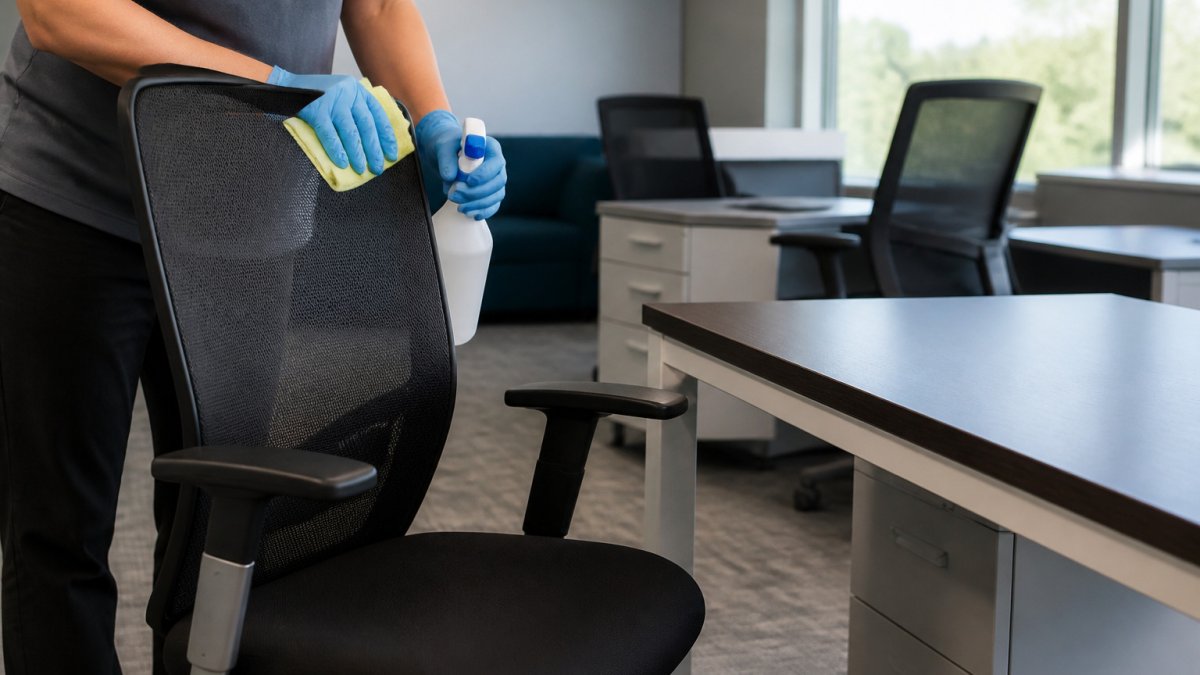
Focus on high-touch points, such as armrests, seat edges, and the backrest handle. Ventilate the room while you work, and let the surface dry before anyone sits down.
How to Clean Wood Office Furniture Safely
Wood needs gentler treatment than upholstery or metal. Harsh chemicals can strip the finish and leave the wood dull or damaged.
Use a soft cloth dampened with a mild cleaning solution. Wipe with the grain, not against it. Dry the surface right away so water does not soak in. Avoid strong disinfectants on bare or delicate wood unless the product label says it is safe for that finish. For guidance on long-term wood care that protects the finish, see are you caring for wood office furniture correctly.
Choosing Office Furniture Cleaning Products by Material
Match the product to the material, and read the label before anything touches the furniture. The label tells you which surfaces the product is registered for, what contact time it needs, and whether it can damage a finish. A product that is safe on metal can ruin fabric, leather, or wood.
Use this material-by-material guide to choose the right approach.
- Fabric and upholstery: Use a water-based upholstery cleaner or a foam cleaner labeled for fabric. Avoid bleach and solvent-heavy cleaners, which can discolor or weaken fibers. Test on a hidden spot under the seat first, and blot rather than soak.
- Mesh chairs: Use a mild soap solution and a soft brush or microfiber cloth. Mesh snags easily, so skip stiff brushes and abrasive pads. Do not saturate the mesh, since moisture can wick into the frame.
- Leather and faux leather: Use a cleaner made for leather, then apply a conditioner if the label calls for it. Avoid alcohol, ammonia, and all-purpose sprays, which strip the finish and cause cracking. Wipe with a barely damp cloth and dry immediately.
- Wood and wood veneer: Use a finish-safe cleaner or a cloth dampened with mild soapy water. Wipe with the grain and dry right away. Avoid harsh disinfectants, acetone, and abrasive cleaners on bare or delicate finishes unless the label explicitly says they are safe.
- Laminate and melamine: Most mild disinfectants and sanitizing wipes are safe, but avoid abrasive pads and standing water at seams, which can swell the core. Follow the label contact time, then wipe dry.
- Metal and powder-coated steel: Mild disinfectants and wipes work well. Avoid chlorine bleach on bare or coated metal unless the label approves it, since it can pit or discolor the surface over time.
- Hard plastic: Most sanitizing wipes and mild disinfectants are fine. Avoid solvents and harsh abrasives that cloud the plastic.
Never mix cleaners. Combining bleach with ammonia or with acidic cleaners releases harmful fumes (the CDC). Use one product at a time, and rinse or allow the surface to dry between products.
A simple rule: clean first with a product made for the material, then disinfect only with a product whose label lists that material as safe. If the label does not mention the material, test a hidden area or choose a different product.
Ventilation, Contact Time, and Safe Handling
Disinfectants are regulated as pesticides under federal law, and their labels are legally binding directions (the EPA). The label tells you the contact time, the surfaces the product is registered for, the required personal protective equipment, and the ventilation needed. Follow it exactly.
Contact time is not optional. Contact time, sometimes called dwell time, is how long the surface must stay visibly wet for the product to kill the germs listed on the label (the EPA). If the surface dries before that time, the product has not done its job.
Ventilate before, during, and after. Open windows and run fans or the HVAC system on fresh-air mode while you work. Many disinfectants carry label warnings about inhaling vapors, and some require ventilation for a set period after application.
Wear the right PPE. At minimum, wear gloves rated for the product you are using, and add eye protection and a mask or respirator when the label requires it. Gloves made for dishwashing are not necessarily resistant to solvents or concentrated disinfectants. Wash hands after removing gloves, and change gloves between heavily soiled items.
Handle and store products safely. Keep products in their original containers with labels intact. Never transfer disinfectant into an unlabeled spray bottle. Store them out of reach of children and away from food and break areas. Dispose of used wipes and empty containers according to the label and local rules.
Before you start, read the label and note three things: the contact time, the required PPE, and the ventilation and reoccupancy instructions. Post those three facts where the work is happening so anyone helping you follows the same rules.
If you are cleaning a large lot of furniture, work in a well-ventilated staging area and rotate pieces so each surface gets its full contact time before it is moved into service.
The article’s safety rules for disinfectants can be scanned quickly in this summary.
| Safety item | What to do | Note |
|---|---|---|
| Contact time | Keep surface visibly wet for full label time | Reapply if it dries early |
| Ventilation | Open windows or run fans and HVAC fresh-air mode | Keep people out until dry |
| Gloves | Wear gloves rated for the product | Dishwashing gloves may not be enough |
| Eye and face protection | Add eye protection and a mask when the label requires it | Follow label PPE directions |
| Mixing products | Never combine cleaners | Bleach with ammonia or acids releases harmful fumes |
| Storage | Keep products in original labeled containers | Store out of reach of children |
| Post-use | Wash hands after removing gloves | Change gloves between heavily soiled items |
When to Call a Professional or Discard the Piece
Some used furniture is not worth saving. Discard any item with active bed bugs, heavy mold, or cracked frames that could hide contamination. A piece that smells strongly of smoke or chemicals may also be hard to clean fully.
For valuable or large pieces with light contamination, consider a professional cleaning service. Pest or mold problems in an entire lot of furniture often call for a licensed pest control or remediation company. When in doubt, it is safer to walk away from a deal than to bring a problem into your office.
For more help picking good used pieces from the start, read 7 signs of wear on used office furniture to check and how to verify used office furniture quality in 2026 before you buy.
Frequently Asked Questions
How do you clean and sanitize used office furniture before bringing it indoors?
Start by inspecting the piece for bed bugs, pests, mold, and damaged upholstery, and keep anything with signs of infestation out of the building. Remove loose debris with a vacuum and soft brush, then clean hard surfaces with a mild detergent solution to lift grime. Once the surface is clean and dry, apply an EPA-registered disinfectant labeled for hard, nonporous surfaces, and follow the label’s contact time. Ventilate the room while you work and wear gloves. Clean first, then disinfect, because disinfectant works poorly on dirty surfaces.
How do I disinfect an office chair without damaging it?
Check the manufacturer’s care label or the material first, since fabric, mesh, leather, and plastic each tolerate different products. For plastic and metal parts, an EPA-registered disinfectant wipe or diluted solution usually works well. Avoid soaking upholstery, and test any product on a hidden spot. Keep the surface wet for the full contact time printed on the label, then let it air dry. Rinse or wipe away residue on surfaces that touch skin.
Which cleaning products are safe for office furniture materials?
Mild dish soap diluted in warm water is a safe starting point for most finishes and upholstery. Use an upholstery cleaner for fabric seats, and a wood-specific polish or cleaner for wood surfaces. Avoid ammonia, bleach, and strong solvents on wood, leather, and painted finishes, since they can strip color and dry out materials. Always follow product directions and test in an inconspicuous area first.
When should you discard used office furniture instead of cleaning it?
Discard or have a professional remove furniture with active bed bug or pest infestation, visible mold growth that penetrates upholstery or particleboard, or structural damage that makes it unsafe to sit on. Stains that will not come out after spot cleaning and foam that is crumbling are also reasons to let a piece go. Office Furniture Warehouse offers removal and disposal services for decommissioning projects if you have a larger quantity to clear.

