Table of Contents
- What Professional Office Furniture Installation Cost Actually Covers
- Commercial Furniture Installation Hourly Rates: What to Expect
- Factors Affecting Office Furniture Installation Pricing
- DIY vs. Professional Office Furniture Installation: A Direct Comparison
- Installation Timeline: How Long Should Your Project Take?
- How to Get an Accurate Office Furniture Installation Quote
- Conclusion
Last Updated: August 23, 2026
What Professional Office Furniture Installation Cost Actually Covers
Professional office furniture installation cost is one of the most misunderstood line items in any commercial build-out budget. At Office Furniture Warehouse, we’ve helped facility managers and procurement officers plan hundreds of workspace projects over 35 years, and the same confusion comes up every time: people assume installation is just assembly. It isn’t.
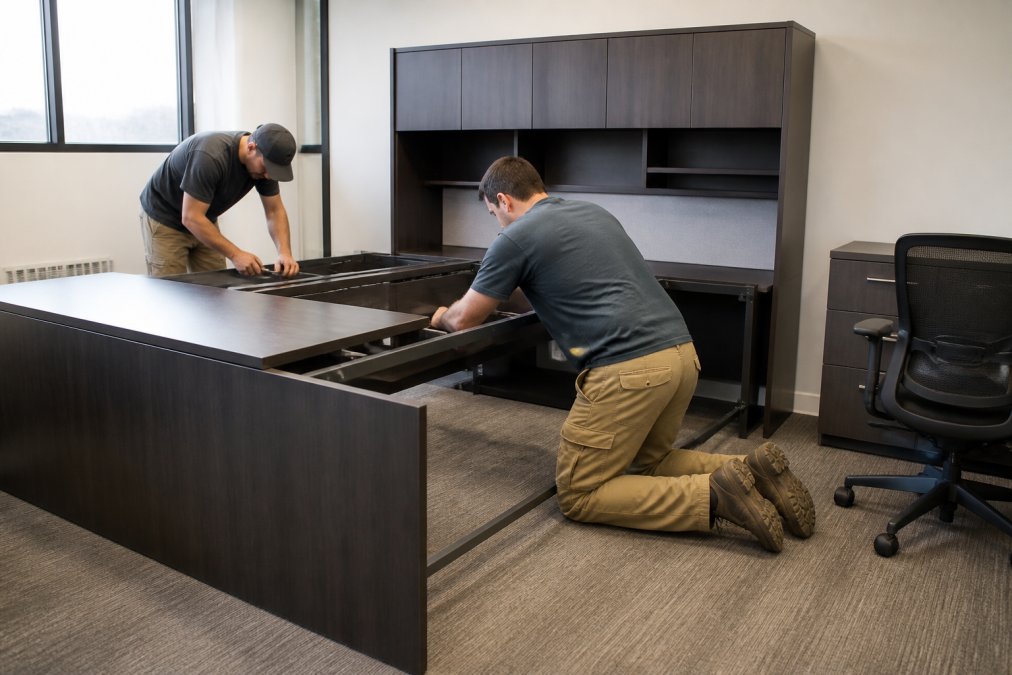
Installation encompasses far more than tightening bolts and sliding panels together. A full-service installation crew handles delivery coordination, site preparation, furniture assembly, layout execution per approved floor plans, debris removal, and final quality inspection.
Labor-Only vs. Full-Service Installation
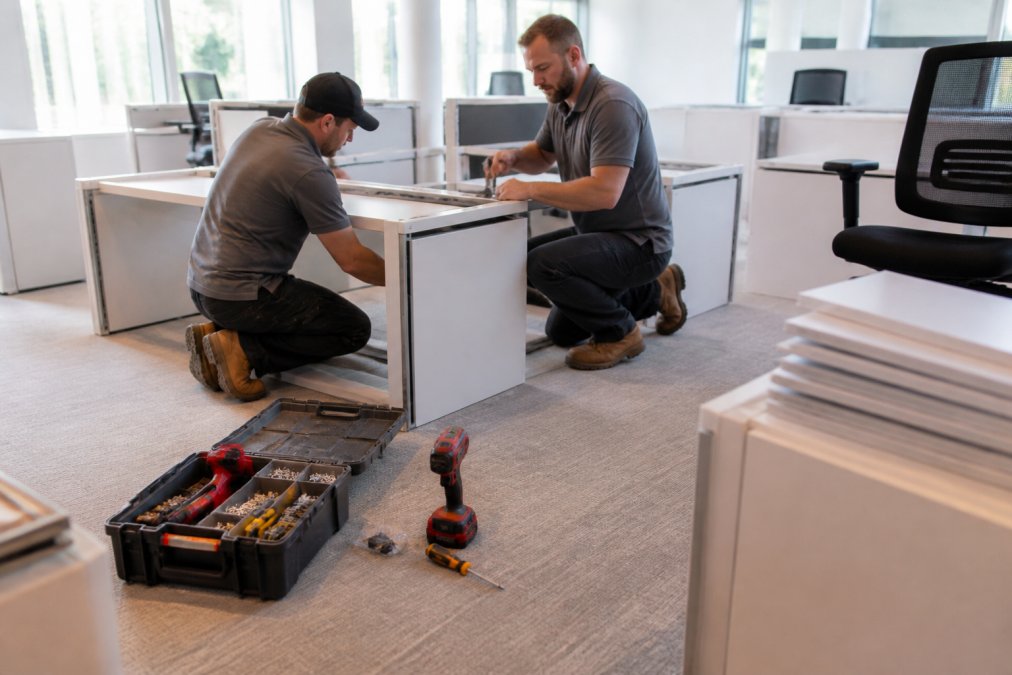
Labor-only installation means you supply the furniture, hardware, and floor plan. The crew assembles and leaves. This works well when you’ve coordinated delivery, confirmed measurements, and have a clear layout diagram ready.
Full-service installation bundles project management, furniture logistics, on-site assembly, and cleanup into a single contract. The team handles coordination with building management, freight receiving, and provides a dedicated project manager for larger buildouts. Many organizations find the premium worth it simply to eliminate coordination overhead.
The distinction matters for budgeting. Labor-only services have predictable costs. Full-service pricing varies based on scope, timeline, and project management hours.
Hidden Costs to Budget For
Most installation quotes don’t surface these until the contract or invoice stage.
- Freight receiving and staging fees: Commercial buildings often charge per delivery.
- After-hours or weekend premiums: Occupied buildings require off-hours work at higher labor rates.
- Elevator or stair access surcharges: Multi-floor installations with limited freight elevator access add time and cost.
- Punch-list and return visits: Damaged or missing parts require separate re-assembly visits unless explicitly included.
- Debris removal: Confirm whether carton removal and packing material disposal are included.
According to BIFMA’s commercial furniture installation guidelines, a complete scope of work document is the single most effective tool for preventing cost overruns on commercial installation projects.
Commercial Furniture Installation Hourly Rates: What to Expect
Commercial furniture installation hourly rates vary based on region, crew certification, project complexity, and union status. The most reliable approach is to request itemized quotes from at least three certified installers and compare line by line.
Installation services are typically billed as hourly labor per installer, a flat fee per piece or workstation, or a blended project rate. Larger projects often shift to project-based fees that bundle labor and project management into a single number.
Cost Per Piece vs. Cost Per Hour
The cost-per-piece model is common for straightforward assembly work: chairs, desks, and freestanding storage. It’s predictable and easy to compare. The tradeoff is that it doesn’t account for site conditions. A clean quote can balloon if the building has difficult access or requires multi-floor staging.
The hourly labor rate model is more transparent for complex projects like cubicle installation and systems furniture. You pay for actual time, so efficiency directly affects your total. This model rewards hiring experienced crews who move faster and make fewer errors.
For projects under 10 pieces, cost-per-piece is usually simpler. For full office buildouts involving modular workstations or systems furniture, hourly or project-based pricing gives you a more accurate budget baseline.
Bulk Installation Discounts and Project Minimums
Most professional installation services set project minimums, typically expressed as minimum labor hours or a minimum total fee. Bulk discounts become available at meaningful scale, generally when furnishing 20 or more workstations.
When requesting bulk pricing, ask specifically for a “project rate” rather than a per-piece rate. Project rates often include project management, debris removal, and a punch-list visit, which makes the effective cost-per-unit lower.
Factors Affecting Office Furniture Installation Pricing
Furniture installation cost is an output of several variables that interact with each other. Understanding these factors lets you anticipate where your project sits on the cost spectrum.
Project Scope and Assembly Complexity
The most direct driver of installation cost is assembly complexity. A freestanding desk takes a fraction of the time that a full cubicle system requires. Systems furniture, modular walls, and height-adjustable workstations involve more components, hardware, and precision.
Project scope also includes the number of pieces, installation phases, and coordination with other trades. Multi-trade coordination adds project management overhead that shows up in the installation contract.
Site Conditions and Geographic Location
Site conditions affect labor costs in ways that don’t appear on a floor plan. Buildings with limited freight elevator access, narrow corridors, or strict installation hour rules require more time and coordination. High-rise installations consistently run longer than ground-floor buildouts.
Geographic location impacts hourly rates through local labor market conditions, union requirements, and prevailing wage rules. Urban markets with strong union presence typically carry higher labor costs than suburban or rural markets.
Installer Certification and Insurance Requirements
Certified installers carry manufacturer certifications for specific furniture lines, particularly for systems furniture brands like Steelcase and Herman Miller. Certification matters because it affects warranty validity. Many manufacturers void product warranties if furniture is assembled by uncertified technicians.
Insurance requirements typically include general liability coverage and workers’ compensation. As documented in OSHA’s general industry standards for workplace safety, employers are responsible for maintaining safe work environments, which extends to contractors operating on-site. Verify that any installation crew carries current certificates of insurance before work begins.
Never allow an installation crew to begin work without receiving a current certificate of insurance. If a worker is injured on your premises and the contractor lacks workers’ compensation coverage, your organization may bear the liability.
DIY vs. Professional Office Furniture Installation: A Direct Comparison
DIY installation is tempting on paper. For a small home office or a handful of freestanding pieces, it’s reasonable. For commercial office furniture installation, the calculus is different.
| Factor | DIY Installation | Professional Installation |
|---|---|---|
| Upfront cost | Lower (no labor fees) | Higher (labor + service fees) |
| Time required | Significant internal staff time | Handled by installation crew |
| Assembly quality | Variable, skill-dependent | Consistent, certified |
| Warranty validity | May be voided | Preserved with certified installers |
| Liability coverage | None | Covered by installer’s insurance |
| Scalability | Impractical above 10 pieces | Scales to any project size |
| Project management | Falls on your team | Included in full-service contracts |
| Punch-list resolution | Internal coordination | Handled by installation company |
The real cost of DIY isn’t the labor savings. It’s the internal staff time diverted from their actual jobs, the risk of assembly errors that compromise furniture function, and the warranty exposure on premium furniture lines.
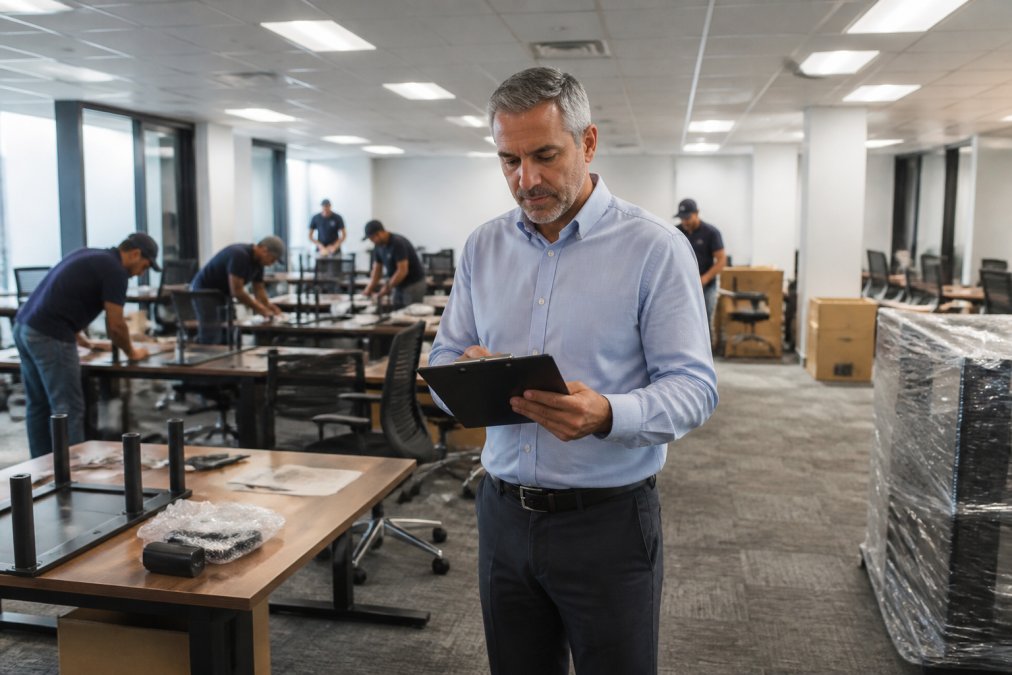
For any commercial office furniture installation involving systems furniture, cubicles, or more than 10 workstations, professional installation is the financially sound choice when you account for total cost of ownership.
Installation Timeline: How Long Should Your Project Take?
Installation timeline is one of the most underplanned aspects of commercial office furniture projects. Delays cascade into delays in occupancy, which carry real business costs.
A general framework for estimating installation timelines:
- 1-5 workstations: 1 day or less
- 6-20 workstations: 1-3 days depending on furniture complexity and site conditions
- 21-50 workstations: 3-7 days, often requiring a multi-person crew working in phases
- 50+ workstations: Multi-week projects with phased installation and dedicated project management
The biggest source of timeline slippage is furniture arriving incomplete or damaged, requiring re-orders that push the entire schedule. A reliable installation company will build a project schedule with buffer days. If a provider quotes you a timeline with no contingency, that’s a red flag.
The pre-installation phase often takes longer than installation itself. Confirming floor plans, coordinating with building management, scheduling freight receiving, and verifying furniture inventory can add days to the front end of a project.
How to Get an Accurate Office Furniture Installation Quote
Getting an accurate installation quote requires preparation on your end. Providers who quote without a site visit or detailed scope of work are pricing risk into their numbers, which means you pay more for less certainty.
What a Complete Installation Quote Should Include
A professional installation quote should specify every component of the work:
- Scope of work: Exact list of furniture pieces, quantities, and assembly requirements
- Labor rate structure: Hourly rates per installer or flat project fee, with crew size specified
- Project management fees: Whether a project manager is included and at what cost
- Timeline and phasing: Start date, estimated completion, and phase breakdown for large projects
- Debris removal: Whether carton and packing material removal is included
- Punch-list policy: How return visits for corrections are handled and billed
- Insurance documentation: Certificate of insurance provided before work begins
- Payment terms: Deposit requirements and final payment schedule
According to GSA guidelines on commercial furniture procurement and installation, a complete statement of work is the foundation of any successful installation contract, particularly for government and institutional projects.
Preparing Your Workspace Before the Crew Arrives
The single most effective thing you can do to control furniture installation cost is to have your workspace ready before the crew arrives. Unprepared sites burn labor hours on tasks that shouldn’t be part of the installation scope.
A pre-installation checklist:
- Floor plan finalized and approved, with a copy provided to the installation crew
- Freight receiving area cleared and accessible
- Freight elevator reserved for the installation dates
- Building management notified and access credentials arranged
- Existing furniture removed or staged out of the work area
- IT and electrical rough-in complete if workstations require power access
- Furniture inventory received, counted, and verified against the purchase order
- Contact information for building management and on-site coordinator shared with the installation company
Office Furniture Warehouse provides layout planning services as part of the procurement process, which means clients arrive at installation day with verified floor plans rather than last-minute guesswork. That kind of pre-project alignment consistently shortens installation timelines and reduces the likelihood of costly on-site changes.
Frequently Asked Questions
What is the average hourly rate for professional furniture installers?
Hourly rates for certified commercial furniture installers vary based on region, crew size, and project complexity. Single-piece residential assembly runs lower than commercial workstation or cubicle installation, which often involves specialized hardware and systems furniture. For an accurate figure tied to your specific project scope, request a written quote from your installation service provider. Rates can also shift depending on whether the job requires union labor, overtime, or after-hours access to the building.
What factors influence the total cost of commercial furniture installation?
The biggest drivers of professional office furniture installation cost are project scope, assembly complexity, site conditions, and installer certification level. Cubicle systems and height-adjustable workstations take longer to assemble than basic desks and chairs. Difficult site access, elevator restrictions, or multi-floor layouts add time to the job. Geographic location affects labor market rates. Finally, full-service contracts that include delivery coordination, debris removal, and project management cost more than labor-only services.
Is it cheaper to hire a professional installer or use in-house staff?
In-house assembly appears cheaper upfront but often costs more when you account for lost productivity, longer timelines, and the risk of incorrect assembly that voids manufacturer warranties. Professional installers complete commercial furniture installation faster and with fewer errors, especially on systems furniture like cubicles or ergonomic workstations from brands like Herman Miller or Steelcase. For projects involving 10 or more workstations, certified installers typically deliver a faster, lower-risk result than redirecting your own team.
What should be included in a professional furniture installation quote?
A complete installation quote should itemize labor hours, crew size, estimated timeline, scope of assembly, debris and packaging removal, and any project management fees. It should also specify what happens if the project runs over schedule or if furniture arrives damaged. Ask whether the quote covers liability insurance and whether installers carry workers' compensation coverage. Quotes that bundle delivery, on-site assembly, and post-installation inspection give you the clearest picture of your total professional office furniture installation cost.
Does the complexity of furniture brands like Herman Miller affect installation costs?
Yes. Systems furniture from premium brands like Herman Miller or Steelcase involves more components, tighter tolerances, and brand-specific hardware than standard desks. Certified installers trained on these systems work faster and reduce the chance of mis-assembly, but their specialized expertise is reflected in higher labor rates. For complex ergonomic or modular workstation setups, using certified installers is strongly recommended to protect your warranty and ensure the furniture performs as designed.
What hidden costs should I watch for in an office furniture installation project?
Common hidden costs include after-hours or weekend access fees if your building restricts daytime installation, elevator or freight dock reservation charges, debris and packing material removal, and re-assembly fees if furniture arrives out of sequence. If your floor plan changes after the installation contract is signed, change-order fees apply. Projects in multi-tenant commercial buildings may also require a certificate of insurance from the installation crew before they can enter the space.
Planning a commercial office buildout and need guidance on furniture procurement alongside professional installation? Office Furniture Warehouse brings over 35 years of experience to every project, with a 4-acre inventory of new and pre-owned Steelcase and Herman Miller furniture and expert layout planning built into the process. Visit our showroom today to discuss your project scope and get a clear picture of what your installation will actually require.
This article was written using GrandRanker
