Last Updated: October 27, 2026
Quick Summary
To reupholster office chairs, photograph the underside, remove the seat’s four mounting bolts and detach the back, then trace the old fabric onto solution-dyed polyester or vinyl, staple it taut corner to corner, and reassemble with bolts tightened in a cross pattern. Choose chairs with a metal frame, removable panels, and foam that still springs back.
- Photograph the underside and bag all fasteners by location before removing anything.
- Solution-dyed polyester and vinyl resist stains and clean up with a damp cloth.
- Staple one edge, pull the fabric taut, then staple the opposite edge.
- If a staple will not hold, move the staple line a half inch over.
- Tighten all bolts in a cross pattern so the frame sits even.
Table of Contents
- Is Reupholstering a Used Office Chair Worth It?
- Tools to Reupholster an Office Chair: The Complete Checklist
- How to Remove an Office Chair Seat and Back Panels
- Choosing Office Chair Upholstery Fabric That Lasts
- Office Chair Foam Replacement: Inspect, Reuse, or Swap
- Cutting Fabric and Reupholstering the Seat and Back
- Fixing Wrinkles, Loose Fabric, and Staple Failures
- Reassembling Your Chair and Testing the Reupholstery
- Frequently Asked Questions
Is Reupholstering a Used Office Chair Worth It?
At Office Furniture Warehouse, we have over 35 years of experience and over 4 acres of new and pre-owned furniture. The chairs that survive reupholstery share three traits: a metal frame, removable panels, and foam that still springs back when you press it. Signs of wear on used office furniture can help you judge whether a chair is worth saving. How to clean used office chairs before you start.
Keep reading for seven steps to reupholster used office chairs, from tear-down to final test.
Tools to Reupholster an Office Chair: The Complete Checklist
Must-have tools:
- Screwdriver set (Phillips and flathead)
- Allen key set (metric and standard)
- Adjustable wrench or socket set
- Staple puller or stiff putty knife
- Heavy-duty staple gun with 1/4-inch and 3/8-inch staples
- Needle-nose pliers
- Sharp fabric scissors or rotary cutter
- Tape measure and marker
- Camera or phone for reference photos
Nice-to-have tools:
- Pneumatic staple gun for large jobs
- Sewing machine for seams
- Hot glue gun for edge tacking
No-sew alternative:
How to Remove an Office Chair Seat and Back Panels
- Photograph the underside before touching anything.
- Remove the seat by unscrewing the four mounting bolts that connect it to the mechanism.
- Detach the back by removing the bolts at the back bracket, or by lifting it off the spine if it slides.
- Take off the armrests if they block access to the fabric edges.
- Label and bag all fasteners by location.
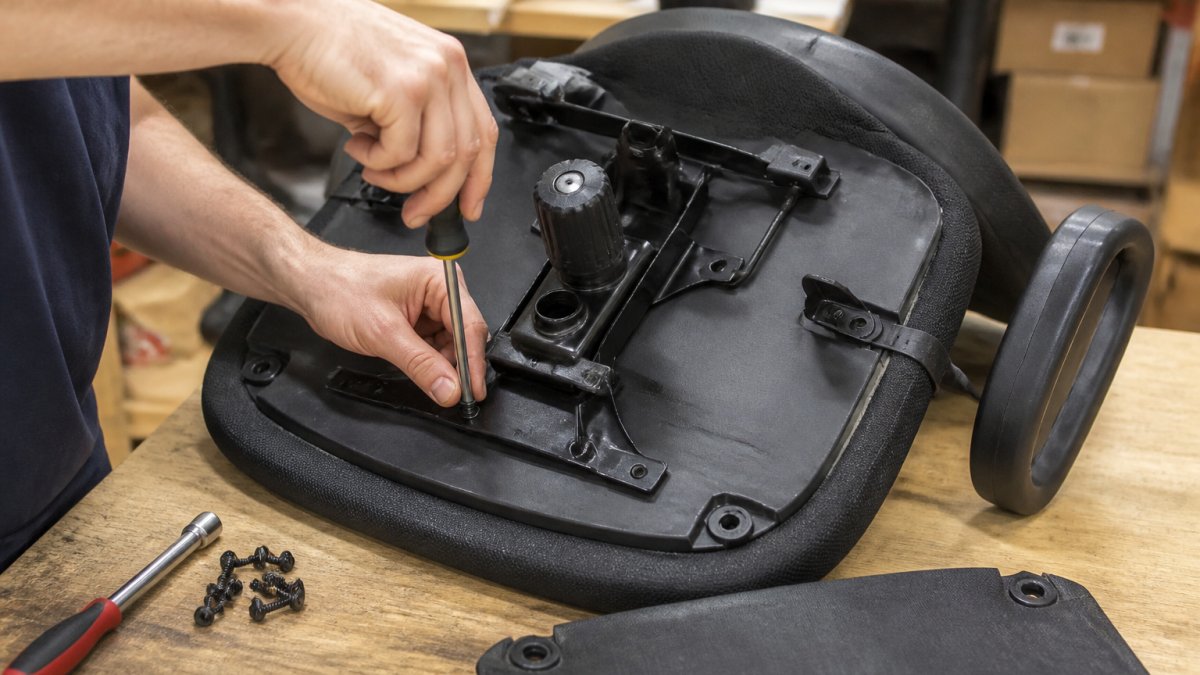
Here is the teardown sequence to follow before any new fabric goes on.
| Step | What to do |
|---|---|
| 1 | Photograph the underside before touching anything |
| 2 | Remove the seat by unscrewing four mounting bolts |
| 3 | Detach the back at the back bracket or lift off spine |
| 4 | Take off armrests if they block fabric edges |
| 5 | Label and bag all fasteners by location |
Choosing Office Chair Upholstery Fabric That Lasts
For daily office use, solution-dyed polyester or vinyl are the safest picks. They resist stains, hold color, and clean up with a damp cloth. Linen and cotton look great but stain fast in a shared office. Avoid fabrics labeled “dry clean only” for a chair that sees daily use.
Office Chair Foam Replacement: Inspect, Reuse, or Swap
If you would rather not cut foam yourself, a memory foam cushion for an office chair can sit over worn foam as a quick fix, and a ready-made seat cushion works if you want comfort without a full rebuild.
Cutting Fabric and Reupholstering the Seat and Back
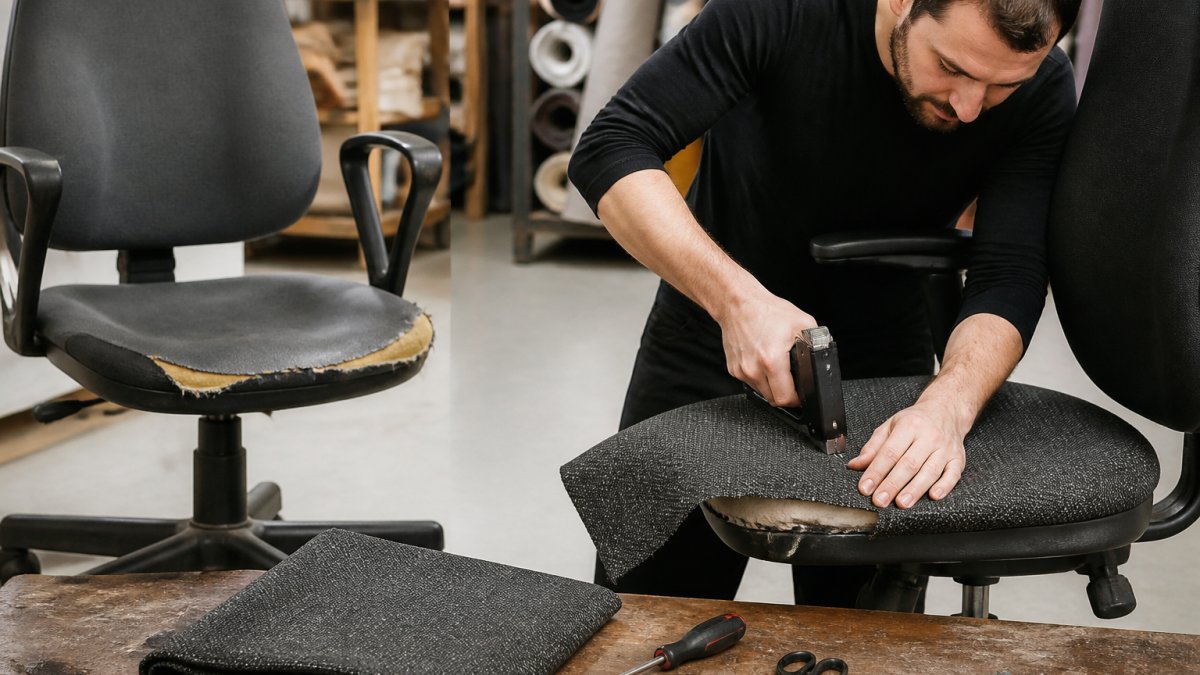
- Trace the old fabric onto the new material, matching the grain direction.
- Cut with sharp scissors and keep the edges straight.
- Center the fabric on the panel, pattern side out.
- Staple one edge, pull the fabric taut, then staple the opposite edge.
- Work corner to corner, pulling firmly as you go.
- Fold and staple the corners neatly, trimming bulk where needed.
- Trim excess fabric close to the staples.
Fixing Wrinkles, Loose Fabric, and Staple Failures
A staple that will not hold usually means the wood or plastic beneath is soft. Move the staple line a half inch over and try again.
Reassembling Your Chair and Testing the Reupholstery
- Seat the back panel and tighten bolts finger-tight first.
- Attach the seat to the mechanism and snug the bolts.
- Reinstall armrests and check alignment.
- Tighten everything in a cross pattern so the frame sits even.
- Test the gas lift and tilt mechanism through full range.
If tear-down reveals a frame you would rather not rebuild, Office Furniture Warehouse offers premium brands like Steelcase and Herman Miller at up to 80% off new, with over 35 years of experience and expert design guidance. Visit our showroom today to explore our selection of new and pre-owned furniture.
Frequently Asked Questions
Can you reupholster an office chair without removing the old fabric?
Yes, some people stretch new fabric directly over the old cover, but it is not recommended for daily-use chairs. Layering fabric over worn material can trap debris, hide loose foam, and create uneven tension that wrinkles within weeks. Removing the old fabric lets you inspect the foam and frame, replace worn padding, and staple into clean mounting points. The extra hour of removal work produces a tighter, longer-lasting result, especially on chairs used eight hours a day.
How much fabric do you need to reupholster an office chair?
Most standard task chairs need about 1.5 to 2 yards of 54-inch-wide upholstery fabric to cover both the seat and back. Chairs with large backs, headrests, or armrest pads can need up to 3 yards. Measure your largest panel, add 4 to 6 inches of margin on every side for stretching and stapling, then sketch the pieces on paper before buying. Order 10 to 15 percent extra to allow for pattern matching and cutting mistakes.
What tools do you need to reupholster an office chair?
You need a staple gun with 1/4-inch and 3/8-inch staples, a staple remover or flathead screwdriver, Phillips and flathead screwdrivers, an Allen key set, and a wrench for the gas lift and armrest bolts. Add fabric scissors, a tape measure, chalk or a fabric marker, and a utility knife for trimming foam. A rubber mallet helps reseat panels. For no-sew methods, fabric adhesive and a hot glue gun cover seams that would otherwise need stitching.
Is it worth reupholstering a used office chair?
It is usually worth it when the frame, gas lift, and mechanism are solid. A quality used chair from a brand like Steelcase or Herman Miller can be recovered for the cost of fabric, foam, and staples, far less than a comparable new chair. Skip the project if the frame is cracked, the gas lift fails, or the mechanism is loose, since those repairs add cost and complexity. Check those parts before you buy fabric.

