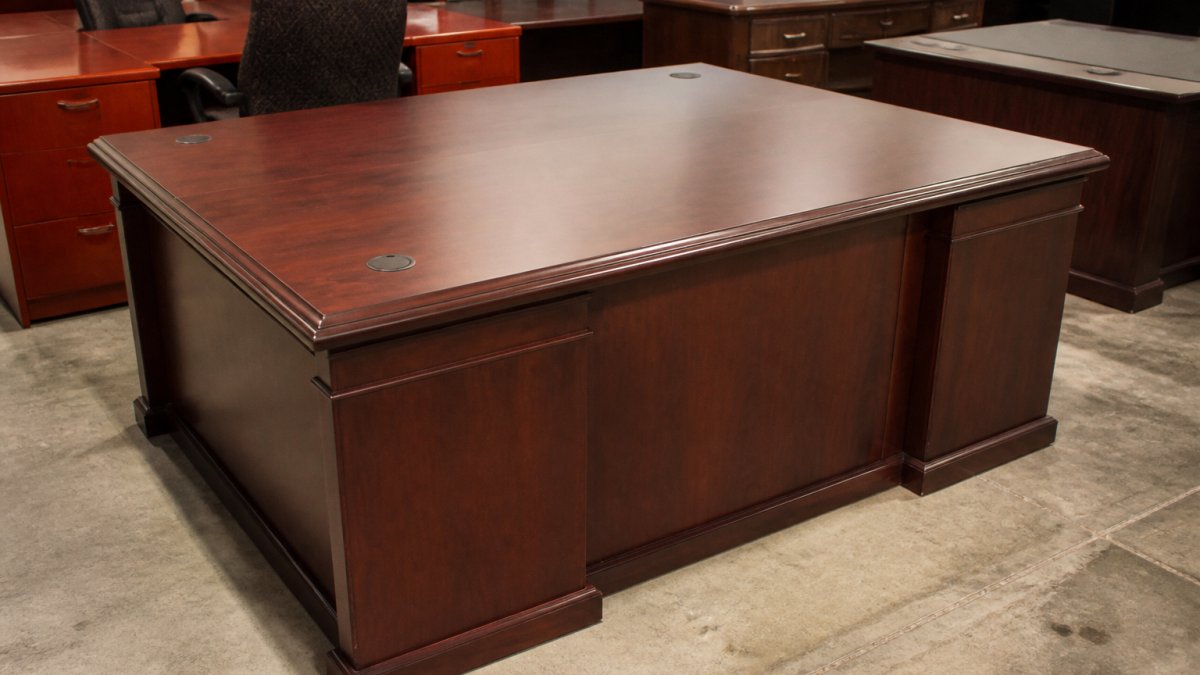
Table of Contents
- Why Executive Desks Matter for Your Workspace
- How to Inspect a Used Office Desk: The Complete Walkthrough
- Executive Desk Dimensions and Fit for Your Office Space
- Materials and Construction Quality
- Used Desk Condition Checklist Before You Buy
- Storage, Drawers, and Organization Features
- Pricing, Negotiation, and Value Assessment
- Delivery, Setup, and Long-Term Care
- Frequently Asked Questions
Last Updated: October 10, 2026
Why Executive Desks Matter for Your Workspace
An executive desk is the centerpiece of a professional workspace. When evaluating used executive office desks, you’re making a decision that affects both your budget and daily work environment. A quality desk provides surface area, storage, and durability for focused work; a poorly chosen one frustrates you for years.
At Office Furniture Warehouse, we help professionals find the right pre-owned executive desk. A well-maintained used desk delivers years of reliable service at a fraction of new furniture cost. But hidden damage or structural problems cost far more in frustration and replacement expenses.
This guide covers critical inspection points, surface condition, structural integrity, and functional testing, so you can distinguish solid investments from costly mistakes.
How to Inspect a Used Office Desk: The Complete Walkthrough
The most important step when buying used executive office desks is thorough physical inspection. You cannot assess condition from photos; you must see, touch, test functionality, and look for hidden damage.
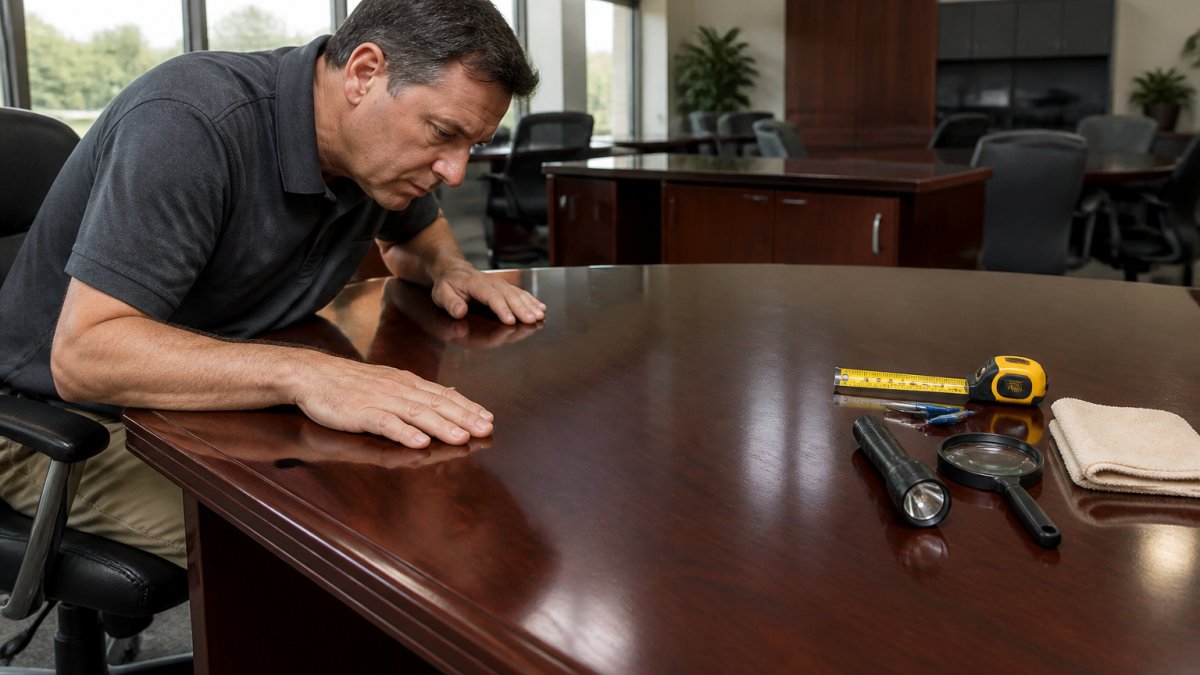
Surface and Finish Inspection
Examine the work surface carefully. Run your hands across the top, feeling for rough spots, deep gouges, or peeling finish. Look for water rings, stains, or discoloration indicating poor care. Minor scratches are normal; deep gouges exposing underlying material are red flags.
Check edges and corners for wear. On laminate or veneer desks, look for peeling, bubbling, or lifting edges, these worsen over time. On solid wood, inspect for cracks, splits, or significant grain damage. Quality finishes maintain uniform appearance despite age.
Frame and Structural Integrity
Inspect the frame, legs, supports, and cross-bracing, for bending, warping, or rust. Metal frames should be straight and dent-free; wooden frames should show no swelling, cracking, or insect damage. Press down on different areas; the desk should feel solid and stable, not wobbly.
Check underneath for loose bolts, missing hardware, or stressed welds. A bent frame indicates the desk was dropped or mishandled. Test stability by applying firm downward pressure at the edge; quality desks remain rock-solid.
Hardware and Functional Testing
Open and close every drawer multiple times. They should slide smoothly without sticking, grinding, or derailing. Test locks for smooth engagement. Check that pulls are secure and unbroken. Damaged drawer mechanisms are expensive to repair.
Examine hinges, handles, and moving parts for rust, corrosion, or stripped screws. Test cable management features and adjustable height mechanisms to ensure smooth operation and firm positioning.
Executive Desk Dimensions and Fit for Your Office Space
Verify the desk fits your space. Measure carefully, accounting for door width, hallway turns, and placement location. Many buyers discover desks cannot be delivered or positioned properly.
Standard executive desks range from 48-72 inches wide, 24-36 inches deep, and 28-30 inches high. Confirm measurements with the seller. Too-deep desks consume excessive space; too-shallow ones lack adequate work surface. Height should allow feet flat on floor when seated, with elbows at desk height.
Consider positioning relative to windows, doors, and outlets. Verify the desk’s design accommodates your cable management and equipment needs.
Materials and Construction Quality
Used executive office desks are typically constructed from high-pressure laminate (durable, easy to clean), solid wood (traditional, long-lasting), or veneer over plywood (middle ground in cost and appearance).
Quality construction shows in panel thickness, edge banding, and weight. A flimsy desk feels light and unstable; a well-built desk has substantial heft and solid joinery. Edges should be properly sealed; exposed plywood absorbs moisture and deteriorates. Premium brands like Steelcase and Herman Miller are known for durability.
Finish quality affects appearance and durability. High-quality finishes resist scratches and stains better. The surface should feel smooth and uniform; rough or uneven finishes indicate poor manufacturing or maintenance.
Used Desk Condition Checklist Before You Buy
Before finalizing your purchase, work through this systematic checklist to avoid costly surprises:
- Surface is free of deep gouges, large stains, or extensive damage
- Finish is intact without peeling, bubbling, or rough spots
- Frame is straight and shows no bending, warping, or rust
- All drawers open and close smoothly without sticking
- Drawer locks function properly if equipped
- All hardware is present, secure, and undamaged
- Desk passes the stability test, no wobbling under pressure
- Dimensions match your space and placement requirements
- Cable management features are intact and functional
- No signs of water damage, swelling, or structural compromise
- Overall appearance meets your professional standards
A desk that passes all these checks is likely a solid investment. If you find issues in multiple categories, the desk may not be worth the risk, regardless of price.
Storage, Drawers, and Organization Features
Executive desks typically offer substantial storage through drawers, shelves, or filing cabinets. Evaluate whether the storage configuration meets your actual needs. Some desks have three or four drawers; others have lateral filing cabinets integrated into the design. Consider what you need to store and whether this particular desk accommodates it.
Test drawer capacity by fully loading them and ensuring they still operate smoothly. Overloaded drawers can bind or derail. Check that drawer dividers or organizers are present and functional if you need them. Some desks have keyboard trays, monitor stands, or cable management built in, verify these features work as intended.
Storage quality matters as much as quantity. Quality drawers have reinforced sides, smooth slides, and proper weight distribution. Inspect interiors for damage, stains, or odors indicating water damage or poor conditions.
Pricing, Negotiation, and Value Assessment
Understanding how condition, brand, materials, and age affect value is essential to negotiating a fair price and avoiding overpaying.
Comparable Market Pricing
Research what similar desks are selling for in your market. Check online marketplaces, liquidators, and classifieds. Note asking and actual sale prices; they often differ significantly on used furniture.
Premium brands like Steelcase and Herman Miller in good condition often offer significant savings compared to new furniture. The actual price will depend on the specific brand, condition, and market demand. Search online or ask the seller for original retail price.
Size and configuration affect price. Larger desks, those with integrated filing cabinets or cable management, and desks with substantial storage command higher prices than basic models.
Condition-Based Pricing Adjustments
Use condition as your primary negotiation lever. A desk in excellent condition (minimal visible wear, all hardware functional, no damage) will typically be priced higher than a desk in fair or poor condition.
Document specific defects and use them to justify your offer. If the desk has a scratched work surface, point this out. If drawers stick or locks are broken, estimate the repair cost and deduct it from your offer. If the finish is worn or discolored, factor in the cost of professional refinishing or touch-up work.
Age and Depreciation
Age affects value, but quality construction can offset age-related depreciation. A well-maintained 15-year-old Steelcase desk may be worth more than a poorly maintained 5-year-old generic desk. However, very old desks (20+ years) may have outdated cable management, no grommets for modern equipment, or finishes that are difficult to match if repairs are needed.
Ask the seller when the desk was manufactured and how long it was in use. A desk that is 10 years old but was used in a light-traffic executive office for 5 years is likely in better condition than a 5-year-old desk that was heavily used in a busy workspace. Usage history matters as much as age.
Material and Construction Premiums
Solid wood desks often command a premium over laminate desks of the same size and brand, assuming both are in comparable condition. Veneer-over-plywood desks typically fall between solid wood and laminate in price. High-quality finishes (lacquer, polyurethane) are generally more durable and can justify a higher asking price.
Desks with integrated cable management, adjustable height mechanisms, or modesty panels are worth 10-25% more than basic rectangular desks. If these features are broken or missing, deduct the repair or replacement cost from your offer.
Negotiation Strategy
Make your first offer below the asking price if the desk is in good condition and the asking price is at or above the market comparable. If the desk has defects, make a lower opening offer and justify it with specific damage or repair costs.
Be prepared to walk away. If a seller refuses to negotiate or if the desk’s condition doesn’t justify the asking price, there are other desks available. Overpaying for a used desk eliminates the cost advantage of buying used in the first place.
Total Cost of Ownership
Don’t evaluate price in isolation. Factor in delivery, disassembly, reassembly, and any repairs or refinishing you’ll need to perform. Consider the total cost, including delivery and any necessary repairs.
Consider the desk’s expected lifespan in your workspace. A premium desk that will serve you reliably for 10+ years is a better investment than a bargain desk that will need replacement in 3-5 years. Calculate the cost per year of use to understand the long-term value.
Red Flags in Pricing
Be cautious of desks priced significantly below market comparables without clear explanation. Such a desk may have hidden damage, structural problems, or other issues the seller is not disclosing. Always inspect such desks thoroughly before committing to purchase.
Conversely, don’t assume a high price reflects quality. Some sellers overprice used furniture based on original retail cost rather than current market value. Research comparable sales, not just asking prices, to ground your negotiation in reality.
Delivery, Setup, and Long-Term Care
Before finalizing your purchase, clarify delivery and setup logistics. Some sellers offer delivery; others require you to arrange it yourself. Disassembly may be necessary to fit the desk through doorways or up stairwells. Confirm whether the seller will disassemble the desk or whether you’re responsible for that work.
Once the desk is in place, proper care extends its lifespan. Clean the surface regularly with appropriate products for its material, laminate cleaners for plastic surfaces, wood conditioner for solid wood. Avoid placing hot objects directly on the surface and use coasters for beverages. Keep drawers organized to prevent overloading, which strains the hardware.
Check bolts and fasteners periodically to ensure nothing has loosened. Address minor damage promptly before it worsens. A well-maintained used desk can look and function nearly as well as new furniture, delivering exceptional value for years to come.
Finding the right used executive office desk requires careful inspection and realistic assessment of condition and value. The checklist and inspection techniques in this guide help you identify desks worth buying and avoid costly mistakes. When you’re ready to shop, visit Office Furniture Warehouse to explore our extensive inventory of pre-owned executive desks from premium brands. Our team can help you find a desk that fits your space, matches your budget, and delivers the durability and professional appearance your workspace deserves. Get started today and discover how much you can save on high-quality office furniture.
Frequently Asked Questions
How can I tell if a used office desk is in good condition?
Inspect the work surface for deep gouges, peeling laminate, or swelling that indicates water damage. Check the frame for bending or rust, test all drawers and locks for smooth operation, and verify the desk sits level on the floor. Look for edge banding that’s intact and hardware that functions without sticking. Minor surface scratches are normal wear; focus on structural issues that affect daily use.
What executive desk dimensions should I measure before buying?
Measure the desk width, depth, and height to ensure it fits your office space and aligns with your monitor setup. Standard executive desks range from 48 to 72 inches wide and 24 to 36 inches deep. Account for legroom, cable management space, and clearance from walls or windows. Verify the workspace will accommodate your equipment without crowding, and confirm doorways and hallways allow delivery access.
Are used executive desks worth buying?
Yes, when purchased from reputable sources and properly inspected. Used executive desks from quality brands like Steelcase or Herman Miller often offer significant savings compared to new while maintaining durability and professional appearance. The key is verifying condition through systematic inspection, confirming dimensions fit your space, and understanding warranty or return policies. Budget-conscious businesses can achieve professional workspaces without compromising quality.
What should I check on a used desk before buying it?
Use a condition checklist covering surface finish, frame stability, drawer functionality, and hardware condition. Test each drawer for smooth gliding and check locks engage properly. Inspect for water damage, rust, or structural damage. Verify all cable management features work as intended. Confirm the desk is level and stable when you apply downward pressure. Ask the seller about the desk’s history, previous use, and any repairs or refinishing done.
