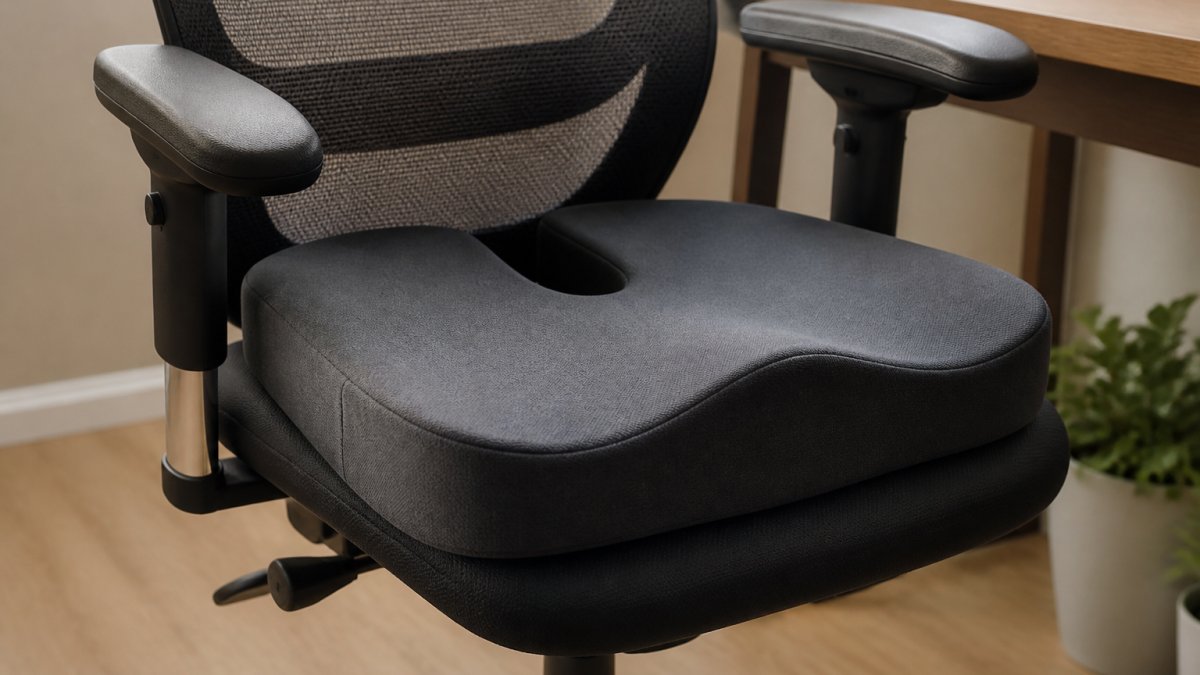
Table of Contents
- Is a Memory Foam Seat Cushion Worth It? The Short Answer
- Memory Foam Seat Cushion Pros and Cons
- Best Seat Cushion for Sitting All Day: What Actually Matters
- Memory Foam vs Gel Seat Cushion: Which One Holds Up
- How Long Does a Memory Foam Seat Cushion Last?
- Cushion or New Chair? A Decision Framework
- Who Should Skip a Memory Foam Seat Cushion
- Conclusion: When a Memory Foam Cushion Earns Its Place
- Frequently Asked Questions
Last Updated: October 9, 2026
Is a Memory Foam Seat Cushion Worth It? The Short Answer
A memory foam seat cushion is worth it if you sit for long stretches on a hard seating surface and need temporary pressure relief at the tailbone or hips.
At Office Furniture Warehouse, we have spent 35 years outfitting workspaces, so we see both sides of this purchase. People buy a cushion hoping to avoid a chair replacement.
Here is the honest version: a good memory foam cushion costs far less than a new ergonomic chair, and for the right person it delivers real comfort improvement.
Memory Foam Seat Cushion Pros and Cons
Memory foam is a viscoelastic material that softens with body heat and molds to your shape. That contouring is the whole point, and it is also where the limitations start.
Where Memory Foam Helps
The material’s strength is pressure distribution. When you sit for eight hours, pressure concentrates at the tailbone and sit bones. Memory foam spreads that load across a wider area.
- Coccyx relief: A cutout or contoured back edge takes weight off the tailbone, which helps with coccyx pain from hard chairs.
- Posture support: A contoured cushion encourages better seating posture than a completely flat surface, according to Wirecutter’s guide to ergonomic seat cushions, which describes thin, dense memory foam as a key material detail.
- Portability: You can move it between your office chair, car seat, and home desk.
Where Memory Foam Falls Short
Heat retention is the complaint we hear most. Memory foam traps body heat, so it runs warm during all-day sitting. That is a real trade-off, not a marketing footnote.
Density is the other issue. Low-density foam softens and sinks over time, which is the opposite of what you paid for. Cushion Lab’s comparison of foam densities notes that high-density foam is intended to hold its shape longer, while cheaper low-density foam breaks down faster.
A cheap memory foam cushion can flatten within months of daily use. If you sit eight hours a day, a low-density cushion often becomes a flat cushion, and you are back to square one with less money in your pocket.
Best Seat Cushion for Sitting All Day: What Actually Matters
The best seat cushion for sitting all day is one that matches your body size, your chair, and your sitting duration.
Four factors do most of the work:
Cushion thickness. A two-inch cushion suits most office chairs. Thicker cushions raise your seat height, which can throw off your desk ergonomics and cut off circulation behind the knees. If your chair has adjustable seat height, you can compensate. If it does not, thickness becomes a problem fast.
Foam density. Dense foam resists sinking. The comparison from BTOD’s office chair cushion review describes a charcoal-infused memory foam option that maintains its shape longer than cheaper alternatives and is built for all-day use.
Contour vs. flat. A contoured cushion with a tailbone cutout beats a flat cushion for posture and pressure relief. Flat cushions are cheaper but do less.
Fit with your chair. A cushion wider than your seat pan slides around. Measure your chair before you buy.
Check your chair’s seat pan depth before ordering. A cushion that overhangs the front edge pushes your knees up and creates hip discomfort, which defeats the purpose of buying one.
Memory Foam vs Gel Seat Cushion: Which One Holds Up
Memory foam wins on contouring and pressure distribution. Gel wins on heat.
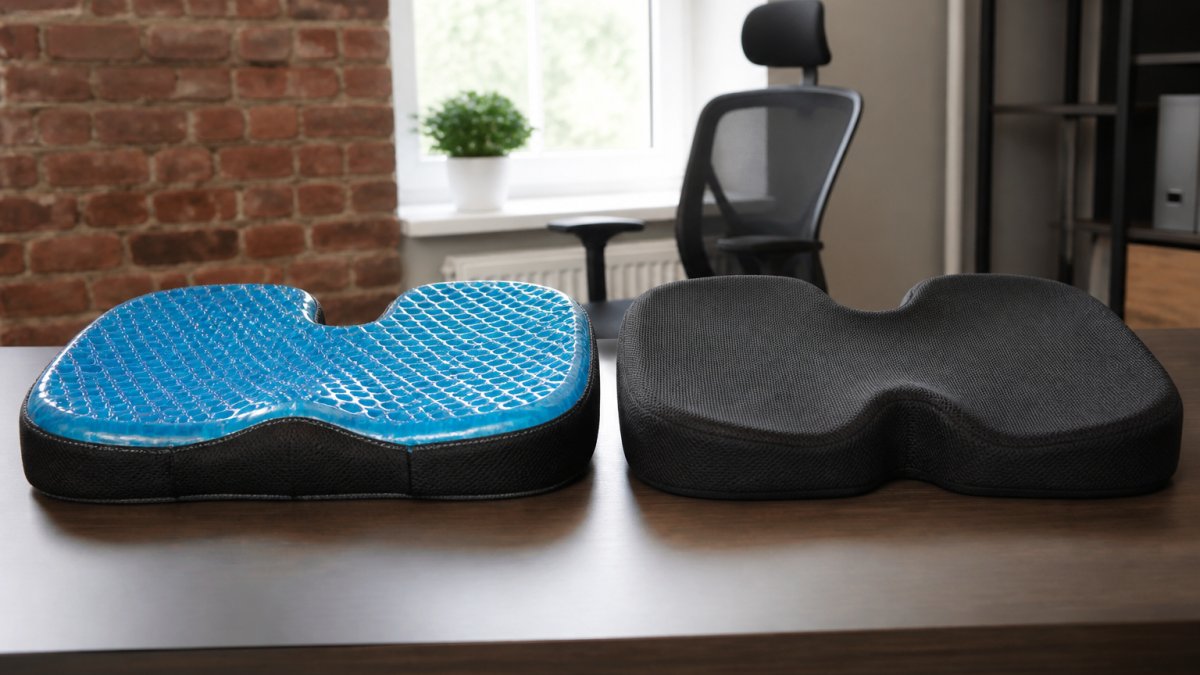
Memory foam molds to your body shape and stays put.
Gel cushions use a gel layer, often over foam, to pull heat away from your body. They stay cooler during prolonged sitting.
| Feature | Memory Foam | Gel |
|---|---|---|
| Contouring | High | Low to moderate |
| Heat retention | High | Low |
| Pressure relief | Strong | Moderate |
| Best for | Tailbone, hip, posture support | Hot sitters, short sessions |
| Durability | Varies by density | Varies by build |
If you sit all day and run warm, a gel-topped cushion may serve you better. If pressure relief is the goal, memory foam still leads.
How Long Does a Memory Foam Seat Cushion Last?
A quality memory foam seat cushion lasts roughly one to three years with daily use. Cheap low-density foam can flatten in months. The more useful question is cost per year of use, because that is what makes the worth-it decision concrete.
Cost Per Year of Use
Divide the price by the realistic lifespan to compare cushions fairly. A cushion that costs more but lasts three times as long can be the cheaper purchase. A common pattern:
- A budget cushion that flattens in six to twelve months of daily sitting costs more per year than a denser cushion that holds up for two to three years, even at double the sticker price.
- A mid-priced dense cushion often lands in the middle: not the cheapest up front, but the lowest cost per year for an eight-hour sitter.
Run the math on your own sitting schedule. Occasional car use stretches any cushion’s life well past the daily-use estimate, so a cushion that seems expensive for a desk can be cheap for a commuter.
What Actually Shortens the Lifespan
- Low density. The single biggest factor. Dense foam holds its structure; cheap foam collapses.
- Long daily sessions. Eight-hour sitting wears foam faster than occasional use.
- Heat and moisture. Body heat and sweat break down foam over time.
Warranty and Return Windows
Warranty length is a rough proxy for how much confidence the maker has in the foam. A one-year warranty on a cushion marketed for all-day office use is a signal. A longer warranty, or a generous return window, lets you test the cushion against your own chair and body before committing. Read the fine print: many warranties cover manufacturing defects only, not the normal flattening that is the most common failure.
How to Tell It Is Worn Out
A cushion is done when it no longer springs back after you stand up, when you can feel the chair’s seat pan through it, or when the tailbone cutout has collapsed into a flat surface.
Higher-priced options are not automatically better. The BTOD comparison flags a higher-priced cushion that it says does not justify its cost, while a mid-priced charcoal-infused option earned a recommendation for all-day use.
Judge a memory foam cushion by density, shape retention, and cost per year, not by price tag. A mid-priced dense cushion often outlasts a pricier one with weaker foam.
Cushion or New Chair? A Decision Framework
Buy a cushion if your chair is structurally sound but uncomfortable. Buy a new chair if the frame, support, or adjustability is failing. That is the line.
Work through this in order:
- Is the chair’s lumbar support still working? If not, a cushion will not fix your back.
- Does the chair adjust for height and tilt? If not, ergonomics are limited no matter what you add.
- Is the seat pan still firm? A collapsed seat pan means the chair is done.
- Is your discomfort localized to the tailbone or hips? A cushion targets this well.
- Is your discomfort spread across your back and shoulders? That points to the chair, not the cushion.
A cushion is a temporary fix. A chair is a long-term solution. If you are patching a failing chair, you will keep buying cushions.
This is where we would point you to a real ergonomic chair.
Anyone whose discomfort is spread across the back and shoulders, or whose chair no longer adjusts, should put the money toward a new or pre-owned ergonomic chair instead of another cushion.
Who Should Skip a Memory Foam Seat Cushion
Some people should not buy one at all. A memory foam cushion can make things worse if it does not fit your body or your chair. Before you buy, run a fit check.
The Fit Checklist
Measure and compare these four things against your chair and your body:
- Seat depth. Your chair’s seat pan should leave about two to four inches between the back of your knees and the front edge. A cushion that overhangs the front edge pushes your knees up and tilts your hips, which can create the very discomfort you are trying to fix.
- Cushion height. A two-inch cushion raises your seat height. If your chair’s height does not adjust, that extra height can leave your feet dangling and cut off circulation behind the knees. Your feet should rest flat on the floor or a footrest.
- Stability. A cushion wider than your seat pan slides around. A cushion narrower than your hips gives you nothing to sit on. Match the cushion footprint to the seat pan.
Skip It If:
- Your chair is failing. A cushion on a broken chair is wasted money.
- You run very hot. Heat retention will make all-day sitting uncomfortable.
- The cushion does not fit your seat. Oversized or undersized cushions create new problems, as the checklist above shows.
When to Seek Professional Advice First
If you have persistent back, hip, or tailbone pain, or numbness, tingling, or weakness in your legs, see a healthcare professional before spending money on a cushion. Those symptoms can point to causes a cushion cannot address, and a clinician can tell you whether a cushion is appropriate support or a distraction from real treatment. The same applies if you have a diagnosed spinal, hip, or circulatory condition, or if you are recovering from surgery or injury.
Do not treat a seat cushion as a medical device. If you have persistent back, hip, or tailbone pain, or numbness or tingling in your legs, see a healthcare professional before buying a cushion that cannot address the cause.
Conclusion: When a Memory Foam Cushion Earns Its Place
A memory foam cushion earns its place when your chair is sound but hard, your discomfort sits at the tailbone or hips, and you want relief without replacing furniture.
It stops earning its place when you are patching a failing chair. Office Furniture Warehouse offers new and pre-owned seating, expert design and layout planning, and flexible pickup or delivery, all backed by 35 years in business.
If you are tired of buying cushions to fix a chair that cannot be fixed, visit our showroom and let our team match you with seating that actually supports you.
Frequently Asked Questions
Why are people no longer buying memory foam?
Heat retention is the main complaint. Memory foam softens with body heat to contour to your shape, which is exactly what makes it comfortable for pressure relief on a hard seating surface, but it also traps warmth during prolonged sitting. Low-density memory foam can also flatten and sink over months of daily use. Neither problem makes memory foam useless, but both explain why some buyers switch to gel cushions or ventilated foam designs.
Can a memory foam seat cushion help with tailbone discomfort?
A contoured cushion with a cutout at the rear can reduce direct pressure on the tailbone, or coccyx, which is the usual goal for people with tailbone soreness from hard chairs. The contour encourages better seating posture and shifts load toward the thighs and hips. It is a comfort measure, not a treatment. If tailbone pain persists or worsens, see a healthcare professional rather than relying on a cushion alone.
How do you choose the right thickness for a seat cushion?
Start with your chair. A two-inch cushion is the common middle ground for office chair use, adding comfort without lifting you so high that your feet dangle or your knees sit above your hips. Thicker cushions, often three inches or more, suit car use and travel but can throw off seat height and armrest position at a desk. Measure your current seat height before buying, and check that any cushion still lets you sit with thighs roughly parallel to the floor.
Is a memory foam seat cushion a long-term fix for back pain?
For many people it is a comfort improvement, not a cure. A cushion addresses pressure distribution on a hard seating surface, but it cannot correct a chair with poor lumbar support, a seat that is too deep, or a height that does not fit your body. If your chair is the problem, a replacement chair is the more worthwhile investment. A cushion works best as a targeted addition to a chair that already fits you reasonably well.
How long does a memory foam seat cushion last with daily use?
Dense, high-quality memory foam typically holds its shape for one to three years of regular eight-hour sitting, while cheap low-density foam can soften noticeably within months. Charcoal-infused and higher-density foams tend to maintain shape longer. Watch for the cushion staying compressed after you stand up, visible flattening in the center, or a return of the pressure you originally bought it to relieve. Those are the signals to replace it.
