Table of Contents
- Is Modular Office Furniture Worth It? The Honest Answer
- Modular vs Traditional Office Furniture: How They Compare
- Modular Office Furniture Pros and Cons
- Modular Office Furniture Cost: Purchase Price vs Total Cost of Ownership
- Modular Office Furniture for Small Offices and Home Workspaces
- Durability, Ergonomics, and Employee Outcomes
- A Decision Framework by Workspace Type
- Conclusion: When Modular Office Furniture Pays Off
- Frequently Asked Questions
Last Updated: October 7, 2026
Is Modular Office Furniture Worth It? The Honest Answer
For most growing businesses, modular office furniture is worth it because it adapts as headcount and floor plans change, which cuts long-term spending on replacements. This guide from Office Furniture Warehouse weighs the real costs, the trade-offs, and where modular systems fall short.
The question “is modular office furniture worth it” rarely has a simple yes or no. It depends on how often your space changes and how long you plan to stay. A startup that doubles in eighteen months gets far more value from a reconfigurable workstation than a firm locking in a ten-year lease with a fixed layout.
Below, we break down the pros and cons, the cost math, and how to decide by workspace type.
Modular systems pay off when your layout changes at least once every two to three years. If your floor plan is fixed for the long haul, traditional furniture can cost less up front.
Modular vs Traditional Office Furniture: How They Compare
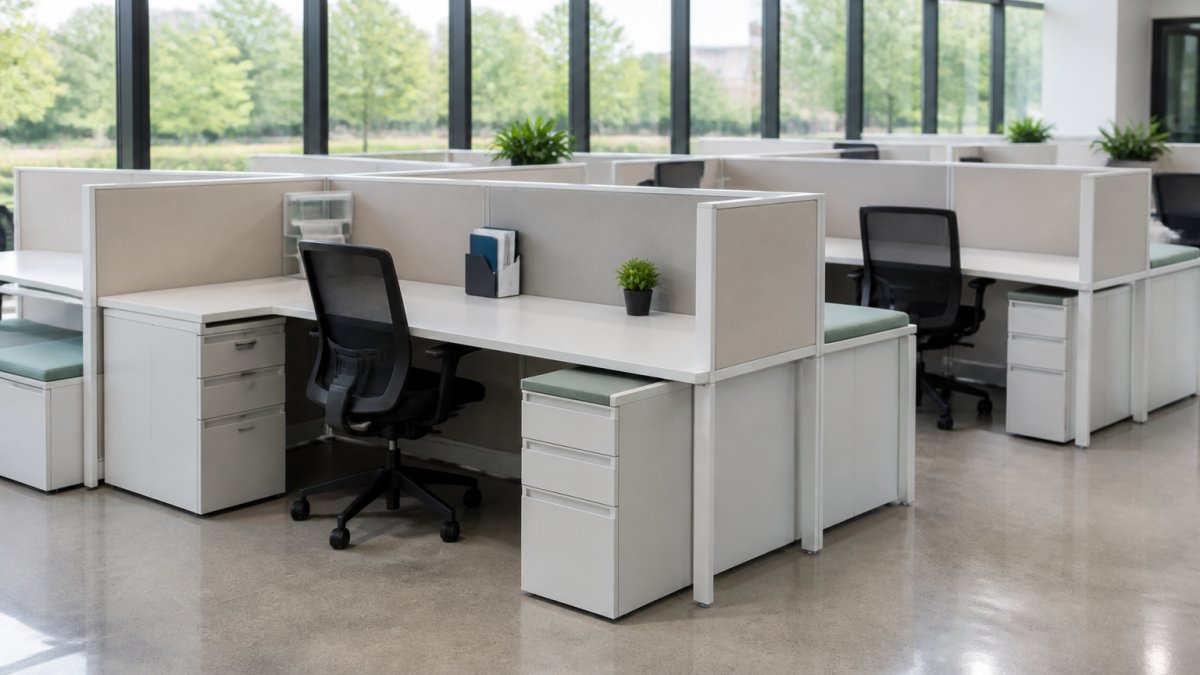
Modular office furniture is built from standardized components, such as panels, desk surfaces, and storage units, that connect in different ways. Traditional furniture is assembled as fixed pieces, so changing the layout usually means replacing whole units.
That difference drives everything else. A modular workstation can shift from a six-person pod to four private desks without new panels. A traditional cubicle system cannot.
For buyers comparing options, the U.S. General Services Administration workplace guidance notes that adaptable layouts support changing team needs. The trade-off is upfront planning. Modular systems reward you when you think about growth before you buy.
Reconfiguration, Installation, and Moving Requirements
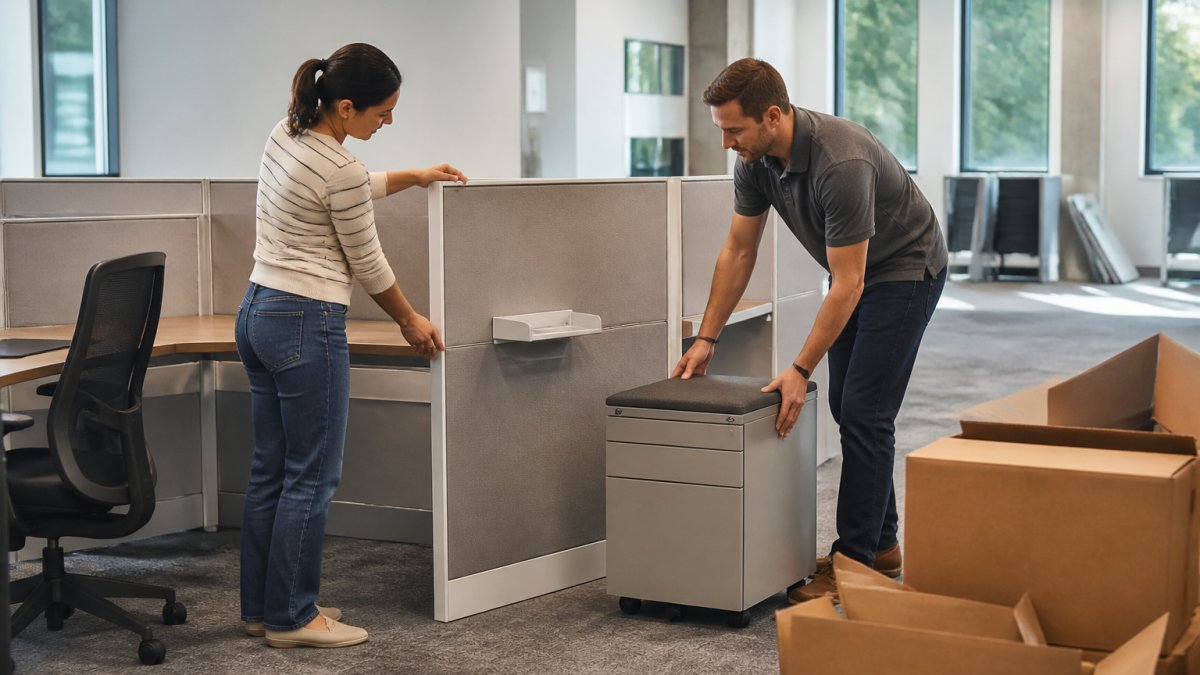
Reconfiguration is where modular systems earn their keep. Most components unbolt, slide, and reconnect with basic tools. Moving furniture within a floor plate takes hours, not a full refit.
Traditional systems are heavier and often wired into the building. Relocating them can mean new electrical work and damaged panels.
A few practical notes:
- Modular panels usually need two people to lift safely
- Keep spare connectors and hardware on hand for future changes
- Label components during a move to speed reinstallation
Modular Office Furniture Pros and Cons
Modular office furniture offers flexibility, better space use, and easier reuse, but it costs more per unit up front and depends on quality components. Here is the honest split.
Pros:
- Reconfigures as teams grow or shrink
- Fits awkward floor plates and odd corners
- Components can be reused across multiple moves
- Storage and filing units integrate into the workstation
- Easier to personalize individual spaces
Cons:
- Higher purchase cost per workstation than basic fixed desks
- Quality varies widely between manufacturers
- Cheap connectors wear out and cause wobble
- Requires planning to avoid mismatched parts
Buying mixed modular components from different makers often fails. Panels and connectors are rarely compatible across brands, so you end up with a sturdiness problem and no way to fix it.
Where Modular Wins: Space Use, Storage, and Collaboration
Space use is the clearest win. Modular systems let you define zones for focused work and collaboration without rebuilding walls. A benching setup can flip to private workstations when a project team needs quiet.
Storage and filing options attach directly to panels or sit under desks, which keeps floors clear. That matters in open offices where clutter builds fast.
For collaboration, modular layouts let you create huddle areas one quarter and expand them the next. The layout adapts to how your team actually works, not the other way around.
Modular Office Furniture Cost: Purchase Price vs Total Cost of Ownership
Modular office furniture costs more per unit at purchase, but its total cost of ownership is often lower because components get reused across moves and reconfigurations. The upfront number is only part of the story. To answer whether it is worth it, you have to price five separate cost events: purchase, reconfiguration, moving, maintenance, and replacement.
Purchase. A basic fixed desk with a laminate top typically runs a few hundred dollars per workstation. A modular workstation with panels, a worksurface, a storage pedestal, and power/data routing commonly runs several times that per position when bought new. The gap narrows sharply on the pre-owned market, where quality systems from Steelcase, Herman Miller, Haworth, and Knoll often sell for a fraction of new list price.
Reconfiguration. This is where modular pulls ahead. Adding a position to an existing benching run usually means buying one worksurface, one leg or panel set, and a connector kit. Changing a fixed layout usually means buying a whole new desk and disposing of the old one. A common pattern is that a single reconfiguration pays back the modular premium.
Moving. Modular panels unbolt and stack flat, so an internal move is labor, not carpentry. Fixed systems are often wired into the building and may need an electrician plus drywall repair. Budget for two people and a few hours per workstation for modular, versus a contractor visit for fixed.
Maintenance. Modular systems fail at the connector, not the panel. Replacing a worn cam lock or bracket is inexpensive. A failed fixed unit often means replacing the entire piece.
Replacement. Fixed furniture is replaced when the layout changes. Modular furniture is reconfigured. Over a ten-year horizon with two layout changes, that difference usually dominates every other line item.
| Cost Factor | Modular | Traditional |
|---|---|---|
| Purchase cost | Higher per unit | Lower per unit |
| Reconfiguration | Low, reuse parts | High, replace units |
| Moving | Moderate, unbolt and shift | High, often rebuild |
| Maintenance | Component-level | Whole-unit |
| Lifespan | Long with reuse | Shorter per layout |
| Resale and reuse | Strong | Limited |
Ask any dealer for a per-workstation quote that includes panels, worksurface, storage, power, and delivery. Comparing a bare desk price to a full modular workstation is the most common budgeting mistake.
How Pre-Owned Inventory Changes the Budget Math
Pre-owned modular inventory is where the math flips. Quality brands like Steelcase and Herman Miller hold up for years, so buying them pre-owned can bring a modular system close to traditional pricing while keeping the reconfiguration advantage.
At Office Furniture Warehouse, we carry over four acres of new and pre-owned furniture, which means buyers can often match components across a whole floor instead of hunting piece by piece. That is the difference between a patchwork office and a consistent one.
A practical way to frame the decision: if you expect at least one layout change within three years, the pre-owned modular route usually beats new fixed furniture on total cost. If your layout is locked for a decade, new fixed furniture can still win on sticker price alone.
Modular Office Furniture for Small Offices and Home Workspaces
Small offices and home workspaces benefit most from modular furniture because a single reconfigurable desk can serve several roles over time. A home office that starts as a desk and shelf can grow into a two-person setup without a full replacement. But the right choice depends on which of three situations you are in.
Home office, one person. Modularity matters less than ergonomics here. A height-adjustable desk and a supportive chair will do more for you than the ability to reconfigure a single room. If you want future flexibility, buy a desk with a standard worksurface size and a leg system that accepts a return or a second position later. Skip panel systems; they eat floor space you do not have.
Small business, two to fifteen people. This is the sweet spot for modular benching. A bench run lets you add or remove positions without touching the rest of the floor. Buy one brand and one finish across the whole office so future additions match. Keep a small stock of spare connectors, brackets, and one extra worksurface on hand; a single missing part can stall a reconfiguration.
Growing team in a leased space. Prioritize components that move cleanly. Panels that unbolt, worksurfaces with removable legs, and freestanding storage all survive a lease change. Built-in casework does not.
A simple decision checklist:
- Will headcount or layout change within three years? If yes, go modular.
- Is the room under 120 square feet? Favor a height-adjustable desk over a panel system.
- Do you need to match existing furniture? Confirm the brand and finish before buying.
- Will you move within five years? Choose components that unbolt.
- Is the space shared? Add freestanding storage instead of built-ins.
For one-person home offices, spend on the chair and desk height first. For small teams, spend on a single modular system you can expand. The mistake in both cases is buying mismatched pieces that cannot grow together.
Remote workers should prioritize ergonomics over modularity alone. A height-adjustable desk and a supportive chair matter more than the ability to reconfigure a single room.
Durability, Ergonomics, and Employee Outcomes
Durability and ergonomics decide whether a modular system is genuinely worth it. Well-built panels and steel frames last years, while cheap connectors fail and create wobble that no one wants to work at.
Ergonomics is a workplace outcome, not a luxury. Desks at the right height and chairs with proper support reduce strain during long days. Modular systems make it easier to adjust workstation design as roles change.
The Occupational Safety and Health Administration workstation guidance covers how workstation setup affects comfort. When durability and ergonomics hold up, employees notice, and so does retention.
A Decision Framework by Workspace Type
Use this framework to decide quickly.
| Workspace Type | Best Choice | Why |
|---|---|---|
| Startup, fast growth | Modular, pre-owned | Reconfigures cheaply |
| Home office | Modular desk, ergonomic chair | Adapts to one room |
| Open office | Modular benching | Defines zones |
| Fixed long lease | Traditional or hybrid | Layout rarely changes |
| Institution or public space | Modular with design help | Handles heavy use |
If your layout changes every couple of years, go modular. If it is fixed for a decade, traditional can win on price.
Conclusion: When Modular Office Furniture Pays Off
The honest answer is that modular office furniture pays off when your space has to change, and costs you more when it does not. Match the system to your growth plan, not to a trend.
If you are furnishing a new office or refreshing an existing one, Office Furniture Warehouse can help. We offer expert design and layout planning, premium brands at up to 80% off, and flexible pickup or delivery options.
Get started with Office Furniture Warehouse and build a workspace that adapts as your team grows.
Frequently Asked Questions
Is modular office furniture more expensive than traditional furniture?
Upfront, modular systems often cost more per workstation than fixed desks and panels because of the connector hardware and interchangeable components. The gap narrows when you factor in reuse: modular pieces can be reconfigured or expanded instead of replaced during a move or headcount change, while fixed furniture often ends up in a landfill. Buying pre-owned modular inventory, including brands like Steelcase and Herman Miller, can bring the purchase price well below new fixed furniture.
How long does modular office furniture last?
Lifespan depends on build quality and how heavily the pieces are used. Commercial-grade modular systems from established manufacturers are built for daily office use, and their steel frames, laminate surfaces, and locking storage typically hold up for years of service. Because components are replaceable, a worn worksurface or broken pedestal can be swapped without retiring the whole workstation. Ask about condition and any warranty or guarantee before buying, especially on pre-owned pieces.
Can modular office furniture be reconfigured or expanded later?
Yes, that is the main advantage. Panels, worksurfaces, storage pedestals, and power modules can be added, removed, or rearranged as your team grows or your layout changes. Reconfiguration usually requires basic tools, some lifting, and a plan for cable and power routing, so it helps to keep the original installation instructions or work with a supplier that offers design and layout planning. Compatibility matters: stick with one system family so new components fit existing frames.
Is modular office furniture a good choice for a small office?
It often is, because small spaces benefit most from flexibility. A modular workstation can shift from two desks to three, add a filing pedestal, or convert a corner into a private workstation without new furniture. For a small office or home office, focus on pieces that define spaces, provide storage, and support focused work without crowding the room. Measure your floor plan first, then buy components that fit the footprint you actually have.
This article was created with Office Furniture Warehouse. For current pricing on new and pre-owned modular systems, visit the Office Furniture Warehouse showroom page or request a quote.
