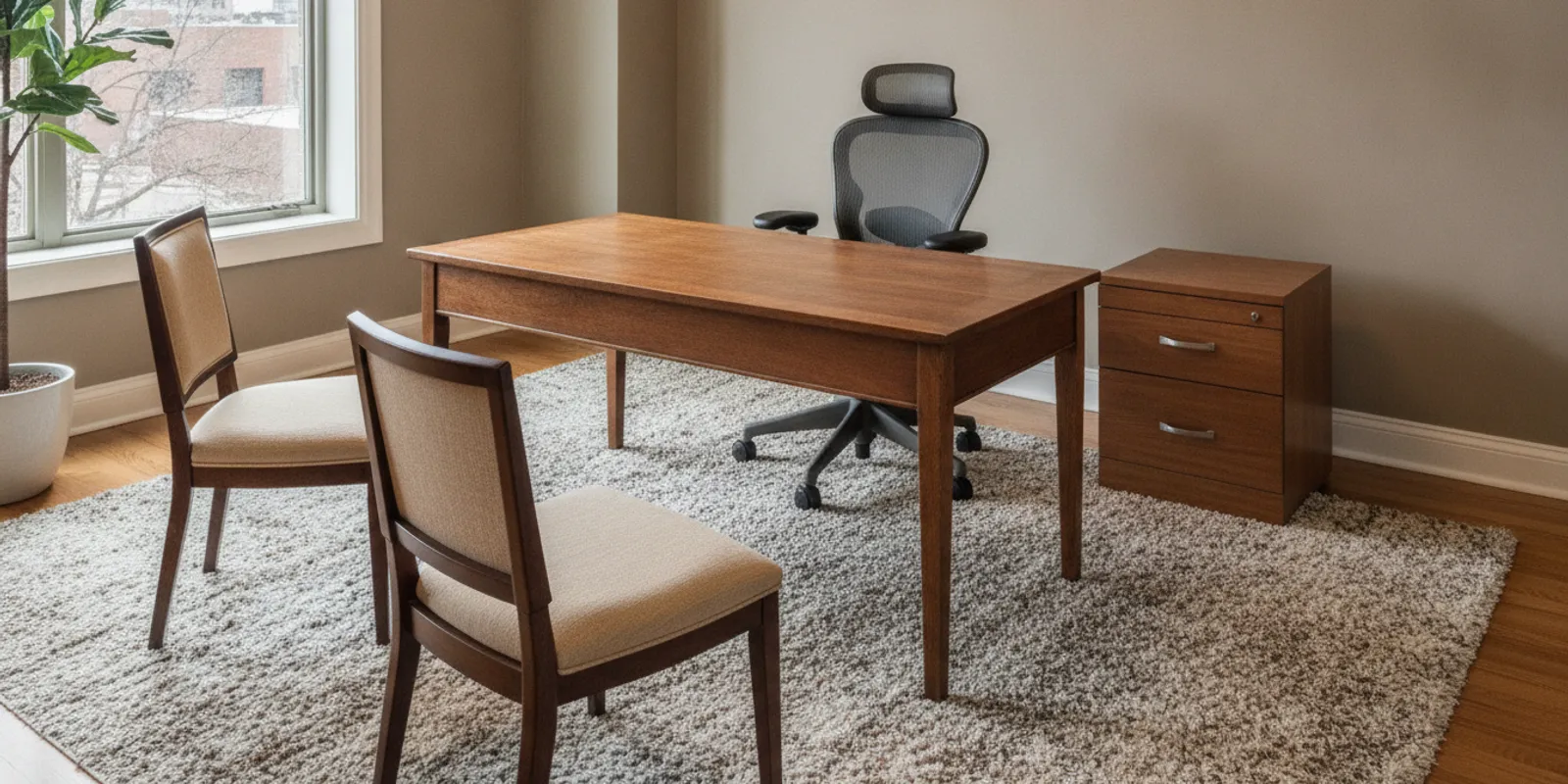
Looking for used private office furniture in Cleveland? Start by listing the work that happens in the room, then choose a desk, chair, storage, and any guest seating to match the space and daily routine. A private office can be furnished a piece at a time or as a coordinated set. Office Furniture Warehouse offers office furniture services in Cleveland, including planning, delivery, setup, and installation support.
Call to discuss your office furniture needs
What furniture does a private office usually need?
A private office is a room assigned to one person or a small number of people, rather than an open workstation area. Its furniture should support focused work first. Depending on how the room is used, it may also need storage, a place to meet a visitor, and space for equipment. Buying used can make it possible to furnish the room with durable pieces while managing the project budget, but the best list depends on the work and the actual room.
Begin with four questions: What tasks happen here? How much paper or equipment needs a home? Do visitors meet with the occupant? What must remain accessible, such as a door, window, outlet, or filing drawer? Answering these before shopping helps distinguish essentials from additions that consume floor space without helping the work.
- Desk or work surface: Choose a size and shape that suits the work, equipment, and available floor area.
- Task chair: Prioritize fit and adjustability because it is used throughout the workday.
- Storage: Add drawers, lateral files, shelves, or cabinets according to what the occupant needs to keep nearby.
- Guest seating: Add one or two visitor chairs when conversations take place in the office.
- Meeting surface: A small table may help when the office hosts regular reviews or one-on-one meetings.
Not every room needs all five. An office used mostly for computer work may need a desk, chair, and limited storage. A manager who regularly meets with staff may need a guest chair or a separate meeting surface. A room used for records may need more filing capacity and a smaller footprint for other pieces. Build the list around actual use rather than a standard package.
How should you choose the desk and chair?
The desk and chair form the core work area. For the desk, consider the equipment that must fit at once: computer or monitors, keyboard, phone, documents, and any writing space. Measure the desk surface in person when possible. A wide top can feel useful, but it can also crowd the room and make movement difficult. Check legroom, drawer placement, and whether a modesty panel or return would interfere with the chair or storage.
There are several common desk forms. A straight desk is simple to place against a wall or in the room. An L-shaped configuration adds a return for paperwork or equipment but needs more floor area and careful corner measurement. A desk with integrated drawers provides nearby storage, while a clean work surface paired with a separate file cabinet can be easier to rearrange. Browse the available office desks to compare styles, then verify dimensions and configuration before deciding.
For a pre-owned chair, test the parts that affect daily use rather than judging it by appearance alone. Sit in it and check whether the seat height, back support, armrests, and recline controls work as expected. Look for uneven wear, tears, loose components, or a base and casters that do not roll smoothly. If several people may use the chair, consider whether the adjustment range accommodates them. The right choice is the one that fits the user and work pattern, not simply the chair with the most controls.
Office Furniture Warehouse lists seating options, including office chair and seating selections. Product availability and condition can vary, so check the current item details or call before making a trip for a particular piece.
Which storage and visitor pieces are worth adding?
Storage should solve a specific problem. Before choosing a cabinet, estimate how much must be stored and whether the occupant needs daily access or only occasional retrieval. A vertical file cabinet uses less floor width, while a lateral file can double as a low surface but needs enough clearance for its drawers. Shelving can keep reference materials visible, but it should not block circulation or become a place to accumulate items without a plan.
With a used cabinet, inspect the condition and operation of every drawer. Open and close them fully, check alignment, handles, and interior space, and make sure the unit will fit where planned. Also consider how the furniture will move through doorways, corridors, and elevators. A cabinet that fits the office but cannot get through the route into it is not a workable choice.
Guest seating should suit the kind of conversation. A single visitor chair can be enough for a brief discussion. Two chairs may help when the occupant regularly meets with a pair of colleagues. If meetings are frequent or need a shared writing surface, consider whether a small table is more useful than additional chairs. A separate meeting area is not necessary for every private office.
For the office that needs a visitor or meeting surface, compare dimensions and shapes in the office and conference table selection. Think about chair pull-out space and the route around the table, not only the tabletop itself. The table should work with the room layout once people are seated.
How do you check whether used furniture will fit?
Measure the room before shopping, and write down the dimensions rather than relying on memory. Record wall lengths, ceiling height if tall storage is under consideration, door and window locations, and the position of outlets or other fixed features. Measure the entry route as well: doorway width, turns, hallways, stairs, and elevator openings can all affect delivery or placement.
Then sketch a simple layout. Mark the desk, chair clearance, storage, and visitor area. Leave a clear path from the door to the main work area. Account for drawers and cabinet doors when open; a piece can fit within the room’s dimensions and still block a walkway when in use. If a desk will sit near a window, consider glare on screens and whether it will obstruct access or natural light.
When assessing a used piece, confirm its exact width, depth, and height, along with any return, modesty panel, or attached storage. Ask whether components are included and whether pieces can be separated for transport. For a chair, try the adjustments. For a desk, inspect the top, edges, supports, and drawers. For storage, test the doors or drawers. A quick, consistent inspection makes it easier to compare unlike options and catch issues before arranging delivery.
Privacy needs can influence furniture choices too. The South Dakota state office-space policy notes that furniture systems can be used in private spaces where walls are needed for visual and sound privacy. That is a specific planning consideration, not a requirement for every private office; use the state office-space principles as a reference when evaluating whether a partitioned furniture system fits your situation.
How do used private office furniture options compare?
Use this comparison to prioritize what to inspect and what each option adds. It is a planning aid, not a fixed package or price list. The right combination depends on the room, user, condition of each item, and any services required.
| Furniture option | Best suited to | Check before buying | Space consideration |
|---|---|---|---|
| Desk and task chair | Daily computer, phone, and paperwork tasks | Desk dimensions and condition; chair fit, adjustments, and moving parts | Allow room to sit, stand, and move the chair |
| Desk with return or L-shaped desk | Work that needs separate equipment or document areas | Configuration, connection points, return orientation, and surface condition | Measure both sides and preserve a clear route |
| File cabinet or storage unit | Work requiring accessible records, supplies, or reference materials | Drawer or door operation, alignment, interior capacity, and stability | Include clearance for open drawers and doors |
| One or two guest chairs | Short conversations with visitors or colleagues | Seat condition, stability, and comfort for intended use | Leave space for chairs to pull out |
| Small meeting table | Regular discussions that need a shared surface | Top condition, base stability, dimensions, and chair compatibility | Measure the table with chairs in use, not just the bare footprint |
How should you compare the full cost?
Compare the complete setup rather than the sticker price of one item. A desk that seems inexpensive may require a separate return, storage, or delivery. A more complete used workstation may cover more needs at once, but only if its dimensions, condition, and configuration fit the room. Write down the items required, then compare alternatives against that same list.
Include the practical costs and effort involved in getting the furniture ready to use. Ask about delivery, setup, installation, and any planning support that may apply to the project. If pickup is being considered, confirm that the furniture can be transported safely and that someone can handle loading and placement. A lower item price may not be the most economical option if it adds unplanned work or does not suit the space.
For pre-owned furniture, condition is part of value. Note visible wear and confirm that the item operates correctly. With a group of pieces, check whether the finish and dimensions are consistent enough for a coordinated office. It may be sensible to mix a pre-owned desk and storage with a different chair if that better serves the user. Matching every finish is less important than fit, function, and a clear plan.
Premium pre-owned names such as Herman Miller, Steelcase, and Haworth may be available at value pricing, with savings of up to 80% off retail on some items. That is a ceiling, not a promise for every product or purchase. Compare the specific piece, condition, and included components rather than assuming that every model or set will carry the same discount.
Office Furniture Warehouse provides delivery, setup, installation, and space-planning services alongside new and used furniture. Ask which services make sense for the pieces and location involved, and confirm the details before committing to a plan.
How can Cleveland-area buyers make the process easier?
Local shopping can be useful when condition, fit, and immediate availability matter. A showroom lets a buyer see pieces in person, compare options, and test seating before making a decision. Office Furniture Warehouse has more than four acres of showroom and warehouse space in Cleveland, with new and pre-owned furniture and service support for Northeast Ohio buyers. Inventory changes, so call ahead if you have a specific piece or brand in mind.
Prepare a short visit list:
- Bring room and doorway measurements, including the intended desk location.
- Write down the work tasks, equipment, storage needs, and number of regular visitors.
- Set a working budget for furniture and the services needed to place it.
- Identify must-haves and items that could be added later.
- Take notes on dimensions, condition, configuration, and availability for each option.
If you are outfitting more than one office, list the rooms separately. A uniform layout can simplify ordering, but the same furniture package may not suit every person or room. First identify shared requirements, such as desk size or storage type, and then note where a room needs a different layout or extra visitor seating. This avoids ordering pieces based only on the first room inspected.
For a small office with one occupant, a compact desk, adjustable chair, and a file cabinet may cover the essentials. In a larger private office where the occupant regularly meets with colleagues, use a layout that separates the primary work zone from the visitor area. Keep the desk positioned for comfortable access to the chair and storage, and leave enough clearance for visitors to sit without blocking the doorway. A room that is long and narrow may work better with the desk along a longer wall and storage near the entry, while a square room may allow a small visitor table. These are starting points only: door swing, windows, outlets, and actual furniture measurements determine what works.
Consider the order of decisions, too. Confirm the room’s purpose and measurements first, then settle on the largest pieces, such as the desk and cabinet. Add chairs and small surfaces after checking how much floor area remains. If delivery and installation are part of the plan, discuss the intended placement and access route before scheduling. This sequence reduces the chance of choosing attractive pieces that conflict with one another or discovering that a large item cannot be moved into the office. Keep a written list of the pieces still needed and mark each item as selected, checked, or confirmed so the project stays organized.
For a larger refresh, planning help can connect the furniture list to the floor plan and delivery sequence. Discuss room measurements, timing, access constraints, and installation requirements before the order is finalized. Office Furniture Warehouse’s local office furniture service team can be a starting point for questions about planning and setup.
Explore office furniture services and plan your next step
Frequently asked questions
What is the first piece to buy for a private office?
Start with the desk and chair if the office is primarily for individual work. Choose their size and fit based on the person, equipment, and room, then add storage or visitor seating according to actual needs.
Is pre-owned furniture a reasonable choice for a professional office?
It can be, when the condition, function, and dimensions meet the requirements. Inspect each item, test moving parts, and confirm the configuration before purchase. A showroom visit can help you assess pieces directly.
Should I buy a matching desk, chair, and cabinet set?
Only if the pieces fit the room and do the jobs needed. A coordinated group can simplify planning, but selecting compatible pieces individually may make better use of space and budget. Compare function and condition before prioritizing a matching finish.
Can I furnish a private office without a conference table?
Yes. Many offices need only a desk, task chair, and suitable storage. Add a meeting table when the room regularly hosts conversations that benefit from a shared surface and there is enough room to use it comfortably.
What should you do before you buy?
Make a measured furniture plan, choose the essentials, and inspect each used item for fit and working condition. Compare the total setup, including delivery or installation where needed, and verify current availability before making a trip. With those details in hand, you can furnish a practical Cleveland private office without buying pieces the room or workday does not need.
