
Table of Contents
- Prioritize Essential Furniture First
- Benefits of Pre-Owned Office Furniture
- Space Planning and Layout Efficiency
- Best Ergonomic Chairs for Remote Workers
- How to Choose Office Furniture for Startups
- Cable Management and Technology Setup on a Budget
- DIY Storage Solutions and Upcycling Ideas
- Conclusion
Last Updated: August 25, 2026
Prioritize Essential Furniture First
When furnishing an office on a budget, start with essentials rather than buying everything at once. Your foundation consists of three pieces: a desk, a chair, and storage. Everything else is secondary. A desk needs to be sturdy enough to hold your monitor and keyboard. A chair needs to support your back during eight-hour workdays. Storage needs to keep papers, supplies, and cables organized.
Once these three are in place, you can add task lighting, shelving, or decor. This approach saves money by preventing overspending on unused items and allowing you to invest more in essentials, a better chair now prevents back problems and replacement costs later.
Start by measuring your space: square footage, ceiling height, and natural light availability. These measurements determine desk size, shelf height, and whether you need supplemental lighting. Document what you already own that could transition into your workspace. This inventory prevents duplicate purchases and keeps initial costs down.
Before buying anything, sit in the space for a week. Work from different spots. Notice where you naturally gravitate, where glare hits your screen, and where you’d want to store frequently used items. This real-world observation is worth more than any checklist.
Benefits of Pre-Owned Office Furniture
Pre-owned office furniture is a strategic advantage when you understand what to look for. Commercial furniture from brands like Steelcase and Herman Miller is engineered to last 10-15 years of heavy use (steelcase.com). A five-year-old chair from these manufacturers often has more life remaining than a new budget chair will ever have.
The cost difference is substantial. Pre-owned pieces typically sell for 40-60% below retail while delivering the same construction quality and ergonomic design (peer-reviewed research). Office Furniture Warehouse maintains a 4-acre inventory of pre-owned furniture from corporate liquidations and decommissioning projects, professionally cleaned and inspected before resale.
Quality commercial furniture has features budget alternatives lack: adjustable lumbar support, seat depth adjustment, and armrest height control. A pre-owned Herman Miller Aeron chair with these features costs less than a new budget chair without them. Over a year of daily use, the difference in your back health and productivity justifies the choice.
Pre-owned furniture also means you can afford to furnish more workstations. If your startup needs to outfit 15 desks and chairs, buying pre-owned lets you furnish all 15 with quality pieces instead of compromising on several. This matters when you’re trying to look professional to clients and retain employee comfort.
Pre-owned commercial furniture from established brands delivers better ergonomics, durability, and cost-effectiveness than new budget alternatives. The real advantage is getting professional-grade equipment at a fraction of retail.
Space Planning and Layout Efficiency
Your office layout determines whether your workspace feels cramped or productive. Efficient layout starts with understanding traffic flow and work zones.
Divide your space into zones: a focused work zone (your desk), a collaboration zone (if applicable), and a storage zone. In small spaces, these zones can overlap. The key is preventing your work area from becoming a thoroughfare. Position your desk perpendicular to windows to minimize screen glare, or face the window if natural light is limited. If you’re in a room with a door, position your desk so you can see the entrance to reduce the startle factor of unexpected interruptions.
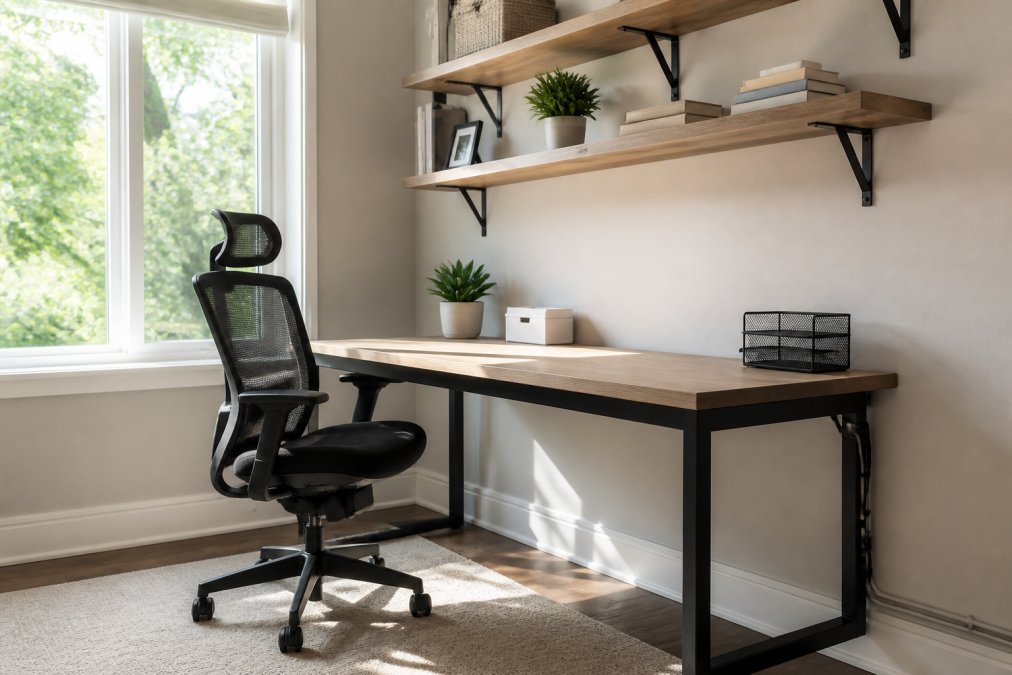
Vertical space is your budget multiplier. Floating shelves cost far less than filing cabinets and give you more storage per square foot. Wall-mounted pegboards hold supplies without consuming desk real estate. A tall, narrow bookcase tucked in a corner provides storage without eating floor space.
Cable management prevents visual clutter that makes spaces feel disorganized. Use cable clips, sleeves, or trays to route wires along desk edges and down the back of furniture. This takes 30 minutes and makes your workspace look intentional rather than chaotic.
Lighting placement affects both productivity and perceived space size. A single overhead light creates harsh shadows and makes rooms feel smaller. Task lighting at your desk combined with ambient lighting creates depth and reduces eye strain. Position task lighting to the side of your monitor, not directly behind it, to prevent glare.
Overcrowding your space with too much furniture makes it feel smaller and reduces productivity. Every piece should serve a function. If you can’t articulate why a piece is there, it’s taking up space you need for actual work.
Best Ergonomic Chairs for Remote Workers
Your chair is the single most important furniture purchase you’ll make. You spend 8+ hours in it weekly. A bad chair causes back pain, neck strain, and reduced focus. A good chair supports your spine and prevents long-term injury.
The best ergonomic chairs have five adjustable features: seat height, lumbar support, armrest height, backrest recline, and seat depth. Lumbar support and seat height are non-negotiable. Your feet should rest flat on the floor with your knees at a 90-degree angle (osha.gov). Your lower back should have support that doesn’t flatten your spine.
Herman Miller and Steelcase chairs dominate the ergonomic category because they’ve invested decades in biomechanical research. An Aeron chair or Leap chair provides support that cheaper alternatives can’t match. Pre-owned versions cost 50-70% less than retail and still have years of life remaining.
If you’re starting with a true budget constraint, look for used office chairs from reputable manufacturers with at least basic lumbar adjustment. A $200 pre-owned chair with lumbar support beats a $150 new chair without it. Office Furniture Warehouse stocks pre-owned ergonomic chairs from multiple brands, so you can test different styles before committing.
Mesh backs keep you cooler during long work sessions. Armrests should adjust in height and width; fixed armrests force your shoulders into unnatural positions. Swivel and tilt function should feel smooth, not sticky or loose.
Treat your chair as a long-term investment, not a temporary solution. You’re living in it for eight hours daily. Spend more on your chair than you think you should. Your back will thank you, and the chair will outlast cheaper alternatives by years.
How to Choose Office Furniture for Startups
Startup furniture decisions differ from remote worker decisions because you’re outfitting multiple workstations and creating a cohesive environment. Clients and potential employees notice whether your space feels intentional or haphazard.
Start with a color scheme and stick to it. Gray desks, black chairs, and natural wood accents feel cohesive. Mixing five different wood tones and multiple chair colors looks chaotic. A limited palette makes a small space feel larger and more professional.
Buy desks that serve your actual workflow. If your team collaborates constantly, long tables work better than individual desks. If people need focus time, individual desks with separation matter more. For startups with tight budgets, modular desk systems let you start small and expand as you hire. Pre-owned modular systems from companies like Steelcase are available at Office Furniture Warehouse at a fraction of new system costs.
Storage should be distributed, not centralized. Use smaller storage units near work areas rather than one large filing cabinet. This reduces visual clutter and keeps frequently used items accessible.
Consider cable management during initial setup, not as an afterthought. Run power and data cables through the wall or along baseboards before furniture arrives. This prevents tangled messes and looks more professional to clients.
Multi-functional furniture maximizes startup budgets. A desk with integrated shelving provides storage without additional pieces. A table that converts from standing to sitting height serves multiple purposes. These pieces cost more upfront but reduce the total number of items you need to purchase.
Lighting should feel welcoming, not institutional. Combine task lighting at desks with ambient lighting in common areas. This creates a space where people want to work, which matters for employee retention and client impressions.
Startups with 5-15 employees needing to furnish multiple workstations without breaking budget. Pre-owned modular systems let you create a professional, scalable workspace while staying within tight constraints.
Cable Management and Technology Setup on a Budget
Cable chaos makes any workspace look unprofessional and wastes time troubleshooting connections. Strategic cable management costs almost nothing but transforms how your setup looks and functions.
Start with a cable audit. Trace every cable from its source to where it plugs in. Document what you have: power cables, USB, HDMI, Ethernet, monitor cables, and charging cables. This inventory reveals redundancies and consolidation opportunities.
Use cable clips or adhesive-backed sleeves to route cables along desk edges and down the back of furniture. These cost a few dollars and take 30 minutes to install. Route cables behind monitors and down the desk leg, not across the top where they’re visible.
Power strips with surge protection prevent electrical hazards. A quality power strip costs $15-30 and protects your equipment from power surges. Place it behind or under your desk, not in the middle where it creates a tripping hazard.
Cable sleeves bundle multiple cables together, reducing visual clutter. Fabric sleeves look more professional than exposed cables. A $10 sleeve can transform how organized your desk looks.
Label cables at both ends so you know what each one does. This takes five minutes and saves hours of troubleshooting later. When you need to unplug something or troubleshoot a connection, labeled cables prevent guessing.
Monitor arms free up desk space and improve ergonomics. A monitor should be at eye level, about arm’s length away. Pre-owned monitor arms are available at Office Furniture Warehouse at significantly lower cost than new versions.
DIY Storage Solutions and Upcycling Ideas
Storage is where budget creativity pays dividends. Commercial storage solutions are expensive, but functional alternatives exist if you’re willing to think creatively.
Pegboards are your budget storage secret. A pegboard costs $20-40, and hooks run $1-3 each. You can create custom storage for office supplies, cables, and small tools. Paint the pegboard to match your aesthetic, and it becomes decor rather than just functional storage.
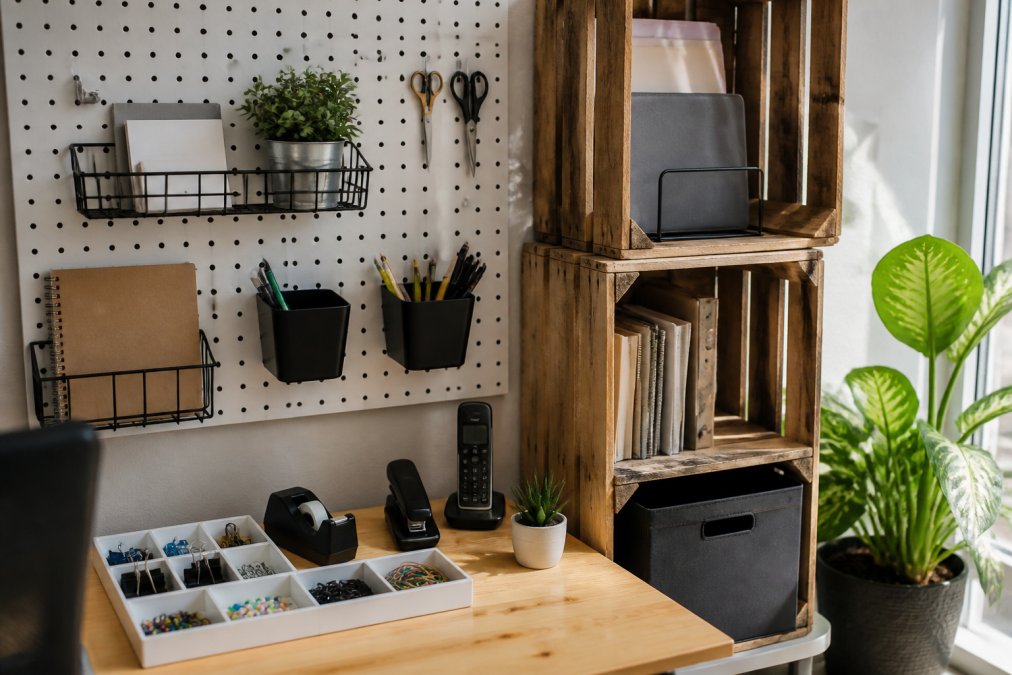
Drawer dividers transform junk drawers into organized systems. Cardboard dividers cost almost nothing and prevent pens, cables, and small items from becoming chaotic. If you have existing drawers, dividers multiply their functional capacity.
Wooden crates can be stacked as vertical storage or used as desktop organizers. Crates from hardware stores cost $10-20 each and can be painted to match your space. They’re sturdy enough for books, supplies, or archived documents.
Repurposed furniture extends your budget further. An old bookcase becomes office storage. A small dresser becomes a filing solution. A wall-mounted shelf from a thrift store becomes display storage. Secondhand furniture stores offer pieces that cost 70-80% less than new alternatives.
Cable boxes and organizers prevent cables from tangling in drawers. A $5 cable box keeps power cables, USB cables, and charging cables contained and accessible.
Floating shelves are more affordable than you might think. Basic floating shelves cost $15-30 per shelf, and installation takes 30 minutes. They create storage without consuming floor space and can display plants or decor alongside functional items.
Tension rods create hanging storage in closets or against walls. A tension rod costs $10-15 and can hold hanging files, cables, or bags. This is especially useful if you have wall space but limited floor space.
Baskets and bins organize supplies while looking intentional. Woven baskets cost $10-20 and contain clutter without requiring permanent installation. Label baskets clearly so anyone can find what they need.
Before buying new, ask whether something you already own could serve the purpose. That bookcase from your bedroom could become office storage. That small table could become a printer stand. This mindset reduces costs and gives your space personality.
Creating a professional office on a budget requires strategic prioritization, not sacrifice. Start with essentials, a quality desk, ergonomic chair, and basic storage, then expand methodically. Pre-owned commercial furniture from Office Furniture Warehouse gives you access to professional-grade equipment at a fraction of retail cost. Space planning, vertical storage, and cable management cost almost nothing but transform how your workspace functions and looks. Visit the Office Furniture Warehouse showroom today to explore pre-owned options that fit your budget and your space. Our team can help you plan layouts, find ergonomic pieces, and maximize your square footage with delivery and pickup services available throughout the region.
Frequently Asked Questions
Q: Is it better to buy new or pre-owned office furniture?
A: Pre-owned furniture often delivers better value when you furnish an office on budget. Quality used pieces from brands like Steelcase and Herman Miller can cost up to 80% less than new equivalents while maintaining durability and professional appearance. Pre-owned items work well for startups and remote workers prioritizing ergonomic support without overspending. Inspect condition carefully before purchasing to ensure pieces will last.
Q: How do I prioritize furniture purchases for a new office?
A: Start with ergonomic essentials: a supportive office chair and desk that fit your workspace dimensions. Add task lighting and ambient lighting next to reduce eye strain and create a professional video conferencing background. Storage solutions and additional seating come after these core items. This phased approach spreads costs over time while ensuring your workspace remains functional and healthy from day one.
Q: What are some budget-friendly ways to improve my office appearance?
A: Use monochromatic color schemes and textiles like throw pillows or a small rug to create visual cohesion without major purchases. Floating shelves and pegboards provide storage while adding visual interest. Incorporate second-hand or refurbished pieces strategically as accent furniture. Good task lighting and cable management hidden behind desks instantly elevate the professional appearance of any workspace, even on minimal budgets.
Q: How can I make my office ergonomic without spending a lot?
A: Prioritize an adjustable office chair that supports your lower back, this single investment prevents long-term health issues. Pair it with a desk at the correct height so your elbows rest at 90 degrees when typing. Add a monitor arm or stack books to position your screen at eye level. These fundamentals cost far less than treating repetitive strain injuries and make remote work sustainable over months and years.
This article was written using GrandRanker
