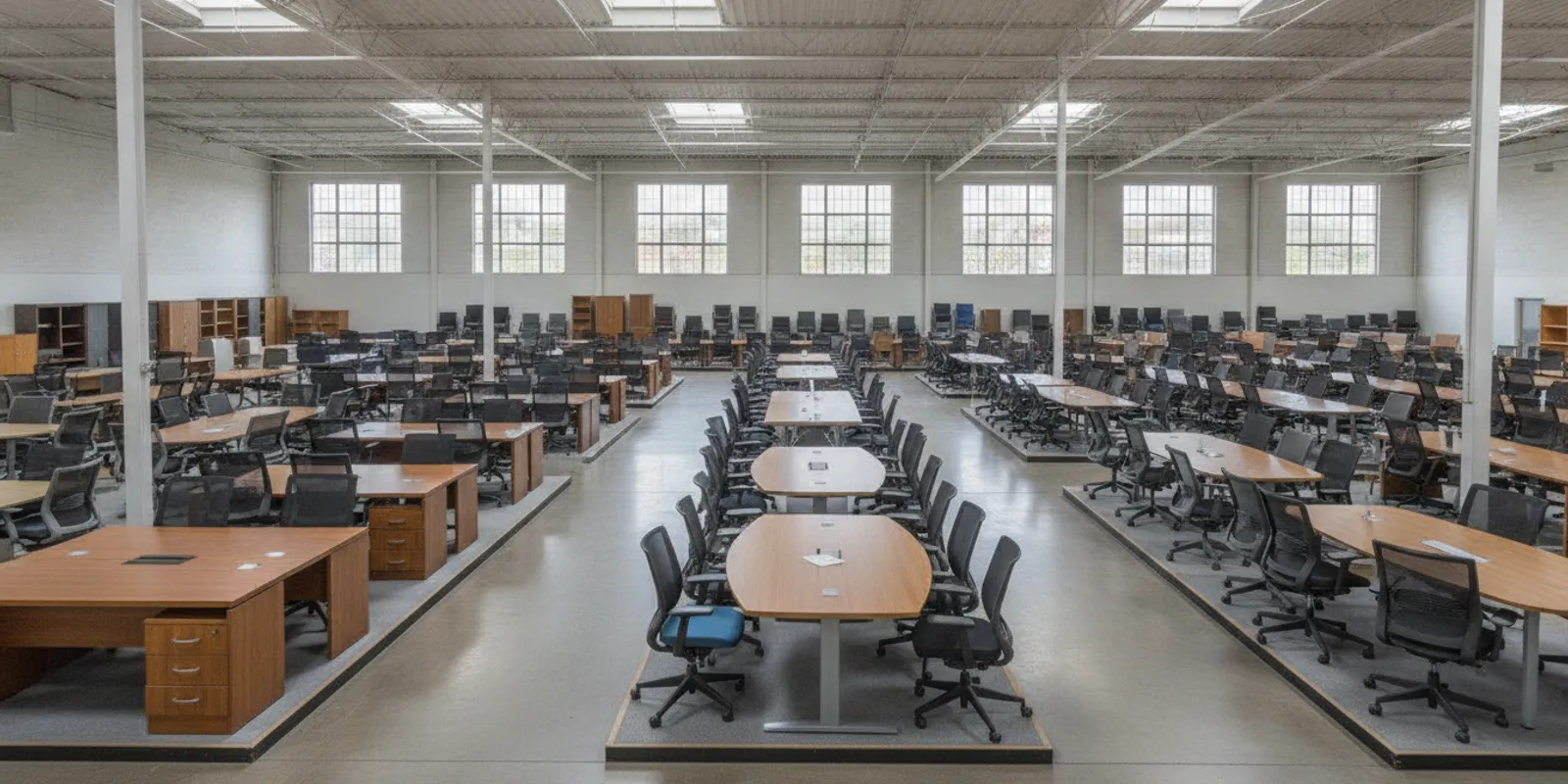
Choosing 2 hand office furniture can help you furnish a workspace with useful desks, seating, and storage while keeping more options open for your budget. The key is to compare each piece for fit, condition, and value, not just the label or price. If you are furnishing a Cleveland-area office, start by listing what the space needs and reviewing the local office furniture services available for planning and setup.
Call to ask about current inventory
What Does “2 Hand Office Furniture” Mean?
“2 hand office furniture” is another way buyers refer to second-hand or pre-owned office furniture. It generally means the furniture has had a previous owner or use. It does not describe one specific condition: a pre-owned desk might show little wear, while another may have visible marks or need attention. Ask about the actual piece, not only the category name.
Pre-owned furniture can include desks, chairs, tables, filing cabinets, storage, and workstations. A local seller may have different pieces available from week to week, so treat online listings as a starting point and confirm availability, condition, dimensions, and pickup or delivery details before making plans. Some buyers choose pre-owned pieces throughout an office; others combine used furniture with new items where a particular size, finish, or quantity is needed.
For a broader view of available office furniture, browse the Office Furniture Warehouse shop. A listing can help you narrow the category, but measurements and a direct conversation are especially useful when you are furnishing several work areas.
How Should You Decide What to Buy?
Begin with the work the space needs to support. A reception area, private office, open work area, and conference room have different requirements. Write down the number of people and the activities each area supports before you compare furniture. That makes it easier to see which pieces are essential and which can wait.
- Count the users: Note how many individual work surfaces and seats you need now, and whether a planned move or hiring change affects that number.
- Measure the room: Record usable wall lengths, doorways, aisles, and any columns or fixed equipment. Include clearances needed to open drawers and move chairs.
- List the tasks: Decide whether people need computer work surfaces, meeting space, paper-file storage, shared touchdown areas, or a combination.
- Set priorities: Identify what must be purchased first and which features can be flexible, such as finish, matching pieces, or extra storage.
- Set a working budget: Include delivery, setup, installation, and any needed accessories in addition to furniture prices.
Make a simple floor sketch, even if it is only a hand-drawn plan. Mark the location of doors, windows, outlets, and existing equipment. It helps you avoid buying a desk that blocks an aisle or a storage unit that cannot pass through the entrance. If a project covers several rooms or a larger floor, ask whether space planning and furniture services could help you think through layout and installation needs.
How Do You Compare 2 Hand Office Furniture Options?
There is no single right answer for every office. Compare options by the job each piece has to do, the condition you can verify, the quantity you need, and how soon you need it. Pre-owned furniture may offer value and local availability; new furniture can make sense when you need a particular configuration, finish, or repeatable quantity. A mixed plan can balance those priorities.
| Option | What to compare | May fit when |
|---|---|---|
| Pre-owned | Actual condition, dimensions, matching quantity, availability, and delivery or setup | You are open to available models and want to compare value in person |
| New | Configuration, finish choices, lead time, total project needs, and quoted cost | A specific style, specification, or repeat quantity matters most |
| A mix | Which pieces need to match and where different finishes or models are acceptable | You need to balance a consistent look with flexibility in selection |
When comparing prices, use the same checklist for each option. Include all pieces needed, their condition, and any services required to make them usable in the space. A lower sticker price is not the whole decision if dimensions do not work or the furniture needs an unplanned repair. Likewise, do not assume every pre-owned item is automatically the best value; compare the specific item and its intended use.
For buyers considering pre-owned seating, inspect the chair itself rather than relying only on its brand or appearance. OFW lists office chairs and seating among its product categories. A showroom visit lets you assess fit and condition directly, while a call can help confirm which items are currently available.
What Should You Inspect Before Buying?
Give each piece a practical inspection. Look at the surfaces, moving parts, joints, hardware, and stability. For a group of similar items, check several examples if possible; condition can vary even among pieces that look alike at a glance.
Desks and work surfaces
- Check the top for deep scratches, chips, swelling, stains, and loose or lifting edges.
- Look underneath for stable legs, secure fasteners, and signs of damage or unsteady movement.
- Open and close drawers. Check that they move smoothly and that handles and locks, if present, work as expected.
- Confirm the surface height, width, and depth suit the equipment and tasks planned for it.
- For desks with built-in cable openings or other features, check that those details fit your setup.
If you are comparing desk choices, use the desk category as one way to see what is listed, then verify the exact item’s dimensions and condition directly.
Office chairs
- Sit in the chair and check whether the seat feels appropriate for the intended user and task.
- Test adjustments that are present, such as seat height, tilt, or arm movement. Do not assume every model has the same features.
- Check casters, the base, armrests, upholstery, and seams for wear or damage.
- Listen for unusual movement and confirm the chair feels stable when you shift position.
Comfort is personal, and a short sit test cannot predict every long-term preference. Still, trying a chair is more informative than judging a photo alone. A Western Connecticut State University office furniture standard discusses keeping the head upright and centered over the spine when seated; use its office furniture ergonomics reference as general background, not as a substitute for evaluating your own needs.
Tables and storage
- Check table tops, edges, bases, and legs for damage or wobble.
- For conference or meeting tables, confirm the shape and footprint leave enough space for chairs and circulation.
- Open storage doors and drawers; inspect hinges, tracks, shelves, and handles.
- Measure the route from the loading area to the room, including corners and elevators.
For meeting-room options, review the office and conference table category and compare its available pieces with your room measurements. If you need a particular size or seating count, confirm the details before arranging transportation.
How Can You Check Whether the Furniture Fits the Office?
One useful way to evaluate a pre-owned purchase is to separate the decision into three checks: function, condition, and logistics. Function asks whether the piece supports the work. Condition asks whether the actual item is sound enough for the intended use. Logistics asks whether it can be obtained and installed on the schedule and in the location you need. A piece should pass all three checks before it goes on your shortlist.
For example, imagine you need several desks for a growing team. Start by confirming the desk surface sizes and the number of units available. Check each desk for stability and usable drawers. Then make sure the desks can fit through the building entrance and into the planned work area. If the available units differ, decide whether the differences matter to employees or to the room’s appearance. This is more useful than comparing a single low price with a new desk before confirming either option meets the requirement.
When several pieces are under consideration, use a short comparison sheet. Give each item a line and note:
- Type, quantity, and dimensions.
- Condition observations from your inspection.
- Features that matter to the users.
- Availability and the expected pickup or delivery arrangement.
- Quoted item and service costs.
- Any open question you need answered before purchase.
This record makes it easier to revisit a choice after leaving the showroom or discussing the project with coworkers. It also helps distinguish a true requirement from a preference. For instance, a matching finish may be essential in a customer-facing reception area but less important for individual desks in a back office. A particular drawer arrangement may matter for one role but not another.
Think about future flexibility as well. If your team may grow, ask whether additional matching pieces are available or whether you would accept a different model later. Do not assume that an exact pre-owned item will remain available without confirmation. If uniformity is critical, confirm the quantity and identifying details before coordinating the rest of the project. If function matters more than matching appearance, write down the acceptable alternatives so you can compare them clearly.
A good piece can still be the wrong choice if it does not fit the room or the way people work. Measure both the furniture and the path it must take into the building. Include hallways, door openings, stairwells, elevators, and turns, not only the final room.
On your floor sketch, place desks and tables to scale if you can. Mark the chair pull-back area and the space needed to reach storage. Leave practical routes between work areas. For team layouts, check that desks do not interfere with doors or shared equipment. For a conference room, map the table and chairs together rather than treating the table footprint as the whole requirement.
Also consider whether the room needs a consistent appearance. Matching furniture may be important in a front-facing space, while a back-office area may allow more variation. If you are mixing new and pre-owned items, compare color and finish in person where possible. A small difference that looks minor in separate online photos may be more noticeable when pieces sit side by side.
How Do You Compare the Total Cost?
Ask for a complete, comparable picture of the purchase. Furniture prices alone may not cover the work needed to get items into their intended rooms and ready for use. The specific cost depends on the pieces and project, so request details rather than relying on a general assumption about used or new furniture.
- Item price and quantity, including any differences in condition or features.
- Pickup or delivery arrangements, and whether delivery includes placement in the room.
- Setup or installation needs for workstations and other multi-piece configurations.
- Any space-planning, refinishing, or other service requested for the project.
- Timing, availability, and what happens if the exact item or quantity is not on hand.
For desks, compare the required configuration and size rather than treating every desk as interchangeable. A basic work surface and a desk with additional storage serve different needs. Review available desks for sale alongside your measurements and required quantity, and ask about the details of the individual pieces under consideration.
Furnishing more than one room? Ask about planning, delivery, and setup support before settling on a furniture mix.
What Should You Ask a Local Seller?
A short list of questions can make supplier conversations more useful. It also helps you compare offers without relying on broad claims about price or quality.
- Is this exact item available? Confirm the model or description, quantity, and current availability.
- What is its condition? Ask about visible wear, function, repairs, and anything you should inspect in person.
- What are the measurements? Get dimensions for the item and any components that affect fit.
- Can I see or try it? Ask whether you can inspect the furniture or test a chair at the showroom.
- What delivery and setup options apply? Confirm service scope, destination, timing, and any project details that affect the quote.
- What if I need a different mix? Ask whether new and pre-owned options can be compared for the pieces you still need.
Office Furniture Warehouse serves Cleveland and Northeast Ohio with new and pre-owned furniture, plus delivery, setup, installation, and planning services. A local showroom can help you see actual pieces rather than make a decision from a product description alone. The Library of Congress overview of office furniture and workspace history offers historical context on how furniture and workplace design have changed; for your purchase, focus on the requirements of your own office and the condition of the specific items.
How Should You Handle Timing and Availability?
Second-hand inventory is made up of the specific pieces on hand, so a good planning habit is to confirm what is available before you build a schedule around it. If you have a move-in date, tell the seller when the furniture needs to be usable. Ask whether the quantity, condition, and timing you discussed apply to the exact items you viewed, and clarify the next step if you need time to get approval.
For a multi-room project, make a priority list rather than treating every item as equally urgent. Identify essential work surfaces and seating first, then note storage, meeting furniture, and items that can be added later. This helps you compare a complete mix with a phased purchase. Before choosing a phased approach, check that the later purchases do not depend on matching a model or finish that may no longer be available.
Coordinate the furniture plan with building access and the people who will receive it. Confirm where items should be placed, who can provide access, and whether there are delivery restrictions such as limited loading times or elevator access. For workstations or larger groups of furniture, ask what setup or installation involves and what needs to be ready at the site. Clear details reduce avoidable surprises on delivery day.
If you are furnishing an occupied office, consider how the work will affect employees. Determine whether furniture can be moved in stages, whether old pieces need to be moved out of the way, and whether the room must remain in use during setup. Share those constraints when discussing the project. The right arrangement depends on the building, the furniture, and the services requested, so confirm the scope rather than assuming that every delivery includes the same tasks.
How Should You Prepare for a Showroom Visit?
Bring enough information to make the visit productive, but you do not need a finished design plan. A few measurements and priorities are often enough to narrow the choices.
- A list of furniture types and quantities needed.
- Room measurements and a simple sketch with doors, windows, and fixed obstacles.
- Photos of the space and existing furniture, if they help explain the project.
- Your must-have dimensions, features, and finish preferences.
- A realistic budget range and a target date for use.
- Notes about delivery access, stairs, elevators, or other building constraints.
If you are looking for more than one piece, prioritize what you want to compare first. You may find that an available desk or chair meets the need even if it differs slightly from the item you initially had in mind. Keep flexibility where it will not affect function, and be specific about the requirements you cannot compromise.
Call to discuss your furniture list and showroom visit
Frequently Asked Questions
Is “2 hand office furniture” the same as used office furniture?
Yes. Buyers commonly use “2 hand” to mean second-hand or pre-owned. Since condition varies by item, ask about and inspect the specific furniture you are considering.
Can I combine new and pre-owned office furniture?
Yes. A mixed selection can work when some pieces need a specific size or finish and other needs allow more flexibility. Compare dimensions, condition, appearance, quantity, and total project needs across the options.
What is most important to check on a used office chair?
Check stability, upholstery, casters, the base, and any adjustments the chair has. Sit in it and test its moving parts. Confirm that the fit and features make sense for the person and work involved.
Should I visit a showroom before buying?
Seeing furniture in person can help you assess condition, scale, and comfort, especially for chairs and larger pieces. Bring your measurements and call ahead to confirm that the items or categories you want to see are available.
What should I plan for besides the furniture price?
Ask about pickup or delivery, room placement, setup, installation, and any planning or refinishing services you need. The right details depend on your project, so get the scope and cost clarified before you finalize the purchase.
Make a Practical Furniture Shortlist
Start with a measured list of what the office needs, inspect the actual pieces, and compare total costs and logistics before you decide. That process helps Cleveland-area buyers make a clear choice between pre-owned, new, or a mix, and move forward with furniture that fits the work and the space.
