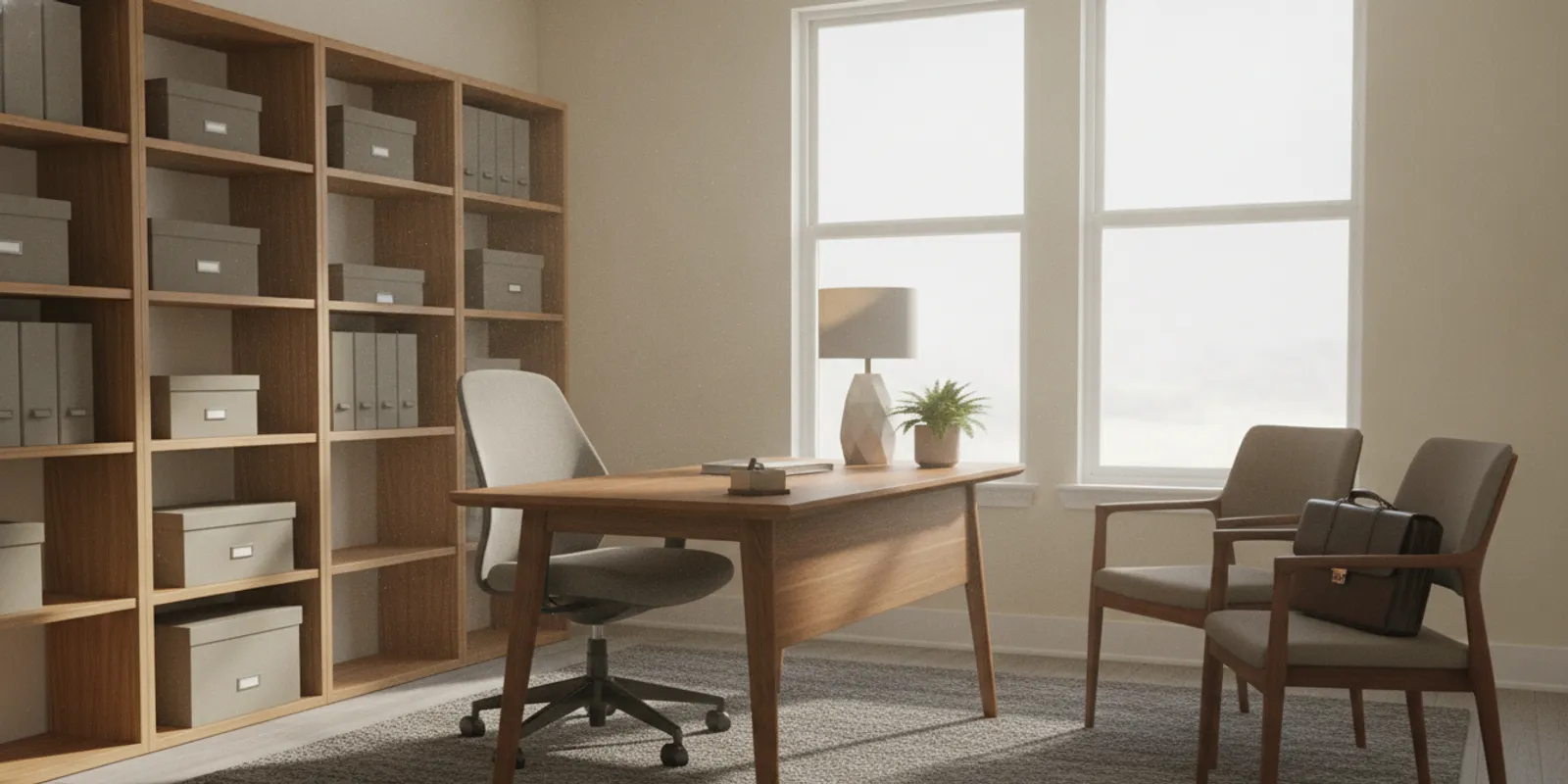
Choosing office furniture small legal office buyers can use comfortably starts with the work the room needs to support, not the number of pieces that can be squeezed inside. A small law office may need focused desk work, private client conversations, and dependable file access in the same footprint. Begin with a measured plan, then compare furnishings against real daily tasks. For Cleveland-area planning and support, see Cleveland office furniture services.
Call to discuss your office furniture needs
What should you decide before shopping?
Write down the jobs the room must handle before browsing desks or chairs. A solo attorney who works mainly at a computer has different needs from a small team that reviews paper files together or meets clients throughout the day. Identify which activities happen every day, which happen occasionally, and which can take place in another room.
Start with a short needs list. Include the number of people who use the office at once, how many visitors typically sit down, the volume of active records, and the equipment that must remain close to the desk. Note whether the space is used for confidential conversations, video calls, writing, or reviewing large document sets. These details affect furniture size and placement.
- Work surface: List the monitor, keyboard, phone, printer, and paperwork that need a stable place.
- Seating: Count the daily users and the usual number of client seats.
- Storage: Separate active records and supplies from materials that can be kept elsewhere.
- Privacy: Consider sightlines, conversation distance, and where papers are left during meetings.
- Timing: Decide which pieces are needed right away and which can be selected later.
Mark each item as essential, useful, or optional. That simple ranking helps prevent a compact room from becoming crowded with furniture that looks appropriate but does not support the actual routine. It also makes it easier to compare a complete setup rather than choosing unrelated pieces one at a time.
How can you measure a small legal office?
Measure the room’s length and width, then note doors, windows, outlets, radiators, built-ins, and any projections that affect placement. Measure the office entrance and the route from the building entrance, including hallways, elevators, and tight turns. Large furniture must fit both the room and the path used to bring it in.
Draw a basic floor plan on paper. Add the door swing and likely walking routes from the entrance to the desk, storage, and visitor chairs. Mark a proposed footprint for each piece, then check what happens when a desk chair is pulled out or a file drawer is open. If a route becomes difficult to walk through on the drawing, changing the layout before purchase is easier than working around the problem later.
Do not measure only the furniture’s width and depth. Ask for its full dimensions and consider the clearance needed to use it. A cabinet can fit against a wall but still be hard to access if a desk blocks its drawers. A guest chair can fit in a corner but leave too little room for someone to enter or stand up comfortably. Confirm the delivery path with the actual item’s dimensions, especially for large desks and cabinets.
For a first layout, consider placing the main work surface where the user can work without sitting in the path to the door. Put visitor seats where clients can reach them without crossing behind the desk chair. This is a starting point rather than a fixed formula: room shape, light, outlets, privacy, and accessibility needs should guide the final arrangement.
Which desk and chair fit the daily work?
Choose a desk by considering the equipment and paperwork used together. A laptop-based setup may need less surface area than a desk routinely used for reviewing files, taking notes, and working with a monitor. Measure devices and any desktop accessories, then allow space for the work that must happen at the same time. A clear surface is often more useful than extra desk storage that consumes floor area.
Compare desk shape as well as dimensions. A straight desk may be easier to fit along a wall, while a return can create separate computer and paper-work zones but uses more floor space. Pedestals and built-in drawers can keep supplies nearby, but check that drawers open fully and that the desk still leaves a usable route through the room. Browse office desks to compare available styles and sizes; confirm the measurements and configuration of the specific item.
Pair the desk with a task chair that suits the person and the working surface. Where possible, sit in the chair and check how its seat height, back, armrests, and movement feel during normal work. Make sure it can roll or turn without striking a cabinet or blocking the entrance. If more than one person shares the workstation, adjustability can help accommodate different users. The Haworth furniture selection is one place to compare available examples, including pre-owned options when offered.
When considering pre-owned furniture, inspect the particular chair or desk rather than relying only on the maker’s name. Look for a stable base, working adjustments, intact surfaces, and drawers or moving parts that operate as expected. Ask what components are included, what condition the item is in, and whether the displayed dimensions describe the exact piece. Premium brands such as Herman Miller, Steelcase, and Haworth may be available pre-owned at value pricing; the exact model, condition, and availability can vary.
What storage makes sense for legal files?
Start with the records and supplies that need to be reached during a typical workday. Estimate the number and size of active files, identify their format, and decide whether they need to be arranged vertically, laterally, or on shelves. Then compare cabinet dimensions, drawer configuration, and the floor space required to access each drawer. A cabinet that holds the files but cannot open fully in its assigned location is not a workable solution.
Think about where storage belongs in the work sequence. Daily records near the desk can reduce interruptions, while less-used reference material may fit on a farther wall or in shared storage. A lateral cabinet can offer a broad top surface but may need more wall width; a taller unit can use vertical space but should not block a window, door, or important sightline. Open shelving makes frequently used reference books visible, but loose materials can make a small room feel busy.
Furniture alone does not establish records security or confidentiality. Follow the firm’s procedures for record access, retention, and secure handling when deciding how files should be stored. Keep especially sensitive paperwork out of visitor reach, and plan where documents will go during a client meeting. The right cabinet is one part of an office routine, not a substitute for that routine.
How should you arrange a client seating area?
Choose client seating based on how many people usually attend a meeting and how much room the chairs occupy when in use. Two guest chairs may be enough for a solo practice, while a different meeting arrangement may suit a small team. Check width and depth, and leave a clear way to sit down and get up without shifting the desk chair or blocking the office door.
A small side table can hold a notebook or documents, but add one only if the floor plan still leaves clear movement. Choose upholstery that can be maintained for regular use and consider whether its finish works with the rest of the room. Comfort, a sensible conversation distance, and an uncluttered route matter more than adding decorative pieces. For seating comparisons, browse available office seating and verify the exact dimensions of any option under consideration.
Consider what a visitor sees from the chair. If the desk is used for confidential work, avoid making active paperwork the focal point of the visitor area. A modest arrangement with a clear place to sit and enough space to converse can feel more welcoming than a crowded room with extra furniture.
How do new and pre-owned options compare?
Either new or pre-owned furniture can be suitable for a small legal office. Compare the exact piece, its condition, size, cost, and timing together. New options may provide more choices in finish or configuration, while pre-owned pieces may offer value and local availability. Neither category should be assumed to be immediately available or configurable in every way; verify the particular item before organizing the room around it.
| Option | What to compare | Questions to ask |
|---|---|---|
| New furniture | Dimensions, finish, configuration, expected lead time | What is the expected arrival timing? Which details can be selected? |
| Pre-owned furniture | Condition, model, dimensions, included components | Can I inspect this specific item? Is it currently available? |
| Mix of new and pre-owned | Fit, appearance, compatibility, full project cost | Will the desk, chair, and storage work together in this layout? |
For a mixed setup, compare function before trying to match every finish. A pre-owned desk may work well with a new task chair if the sizes and working heights suit the user. Conversely, a low-cost piece that forces a poor layout or cannot hold the needed equipment may not be the best value for the project. Review available office furniture and ask about the specific items that fit your measurements. A showroom visit can make it easier to inspect surfaces, try seating, and compare scale in person.
Office Furniture Warehouse serves Cleveland and Northeast Ohio with new and pre-owned office furniture and services that include delivery, setup, installation, and planning. For practical local guidance, review the office furniture services overview and ask about the needs and timing of your project.
Explore planning, delivery, and setup services
How can you estimate the full project cost?
Budget for the complete working room rather than the desk alone. List the desk, task chair, records storage, visitor seating, and any table or accessories. Add delivery and setup considerations if they apply. This helps avoid comparing a one-piece price with the cost of a complete, usable setup.
Ask for a clear description of what a quote includes. Confirm item names or descriptions, quantities, condition where relevant, delivery arrangements, and any assembly or installation work expected. Costs vary by product, condition, and project scope, so a quote tied to the actual selection is more helpful than a generic estimate. If the budget is limited, identify the pieces that directly support daily work and client meetings; consider optional additions after the essentials are covered.
A simple planning worksheet can make comparisons fair. Use the same categories for each option: item cost, delivery or setup, measurements, condition, availability, and what is included. If one option appears cheaper, check whether it includes the same number of chairs or the same storage capacity. Comparing complete alternatives makes trade-offs visible without assuming that one type of furniture is always the least expensive.
How should you plan delivery and setup?
Before the delivery date, clear the route and confirm building access, loading arrangements, and any scheduling requirements. Remove old furniture that blocks the planned location, and decide where each new piece goes. If installation or assembly is needed, agree on its scope in advance. These preparations help reduce disruption and make it easier to put the office back to work.
For a project with several pieces, label their intended positions on the floor plan and share the sketch during planning. Recheck the final dimensions and delivery route for large items. Consider what needs to be moved first: a cabinet may need to go in before a desk takes up the access route. If the office is in Northeast Ohio, ask about local pickup or delivery and what support is available for the specific project.
Also plan for the workday around setup. Decide where staff can work if the room is temporarily unavailable, and identify any records or equipment that should remain accessible. Once furniture is in place, test that drawers open, chairs move, and the usual route between the entrance, desk, and visitor seats remains clear. A few checks at the end can catch practical issues before the office returns to normal use.
What should Northeast Ohio buyers ask before visiting?
A little preparation can make a showroom conversation more focused. Bring a floor plan with measurements, the list of essential items, and photos of the office entrance and any tight delivery turns. If possible, note preferred finishes and the range of pieces you want to compare, but stay open to alternatives that meet the dimensions and use requirements.
Ask whether the particular furniture you want to see is available, what its measurements are, and whether the displayed configuration matches the item being discussed. For pre-owned choices, request details about condition and included parts. For a planned delivery, discuss the route and setup expectations. These questions make it easier to distinguish between an attractive piece and one that fits the real project.
You can also ask how the available services fit your needs. Office furniture planning, delivery, setup, and installation may be relevant when a room has several pieces or a tight schedule. Review professional office furniture services and bring specific questions rather than assuming every project includes the same work.
What should you check before choosing?
Use this checklist to review the plan before committing:
- Measure the room, doors, hallways, and the complete delivery route.
- List the daily tasks, number of office users, and usual number of visitors.
- Prioritize the desk, task chair, active file storage, and necessary guest seating.
- Mark furniture footprints and check chair movement, drawer access, and walking routes.
- Compare new and pre-owned pieces by actual condition, dimensions, included components, and availability.
- Estimate the complete project, including delivery or setup where applicable.
- Follow the firm’s procedures for storing and handling sensitive records.
- Keep the floor plan and item list available when discussing options with a furniture provider.
For further options, compare office desk styles against your measured layout, then consider the table selection only if a meeting surface fits the room’s actual use. Make the final choice based on function, fit, and the full project plan rather than adding furniture just to fill empty floor space.
For general workplace safety and ergonomics resources, consult the U.S. Occupational Safety and Health Administration. Apply the firm’s own policies and seek qualified advice for specific workplace requirements; furniture selection by itself does not determine compliance.
Discuss your office furniture plan and service needs
Frequently asked questions
What furniture is essential in a small legal office?
Begin with a desk and task chair suited to the daily work, storage for active files, and enough visitor seating for typical meetings. Add a table or additional storage only when the room and work routine justify it.
Should a small law office choose new or pre-owned furniture?
Either may work. Compare the specific item’s condition, dimensions, configuration, availability, and cost. New options may offer different finish or configuration choices, while pre-owned pieces may provide value and local availability. Confirm details for each item.
How can I tell whether a desk will fit?
Measure the room, desk, doorway, and full delivery path. Mark the desk footprint on a floor plan, then check chair movement, drawer access, and walking routes. Include the space needed to use the furniture, not just its parked dimensions.
What should I ask about a used chair or cabinet?
Ask to inspect the specific piece, confirm its dimensions and included parts, and check moving components such as chair adjustments or cabinet drawers. Availability and condition can vary by item, so avoid basing the decision on a brand name alone.
Can a local furniture provider help with planning and delivery?
Office Furniture Warehouse offers services that include delivery, setup, installation, and space planning. Ask which services fit the items, location, and timing of your particular project.
What is the best next step?
Measure the room, write down the tasks it must support, and decide which pieces are essential first. With that plan in hand, compare furniture by fit, comfort, storage, condition, and timing, then contact a local provider to discuss options for your small legal office.
