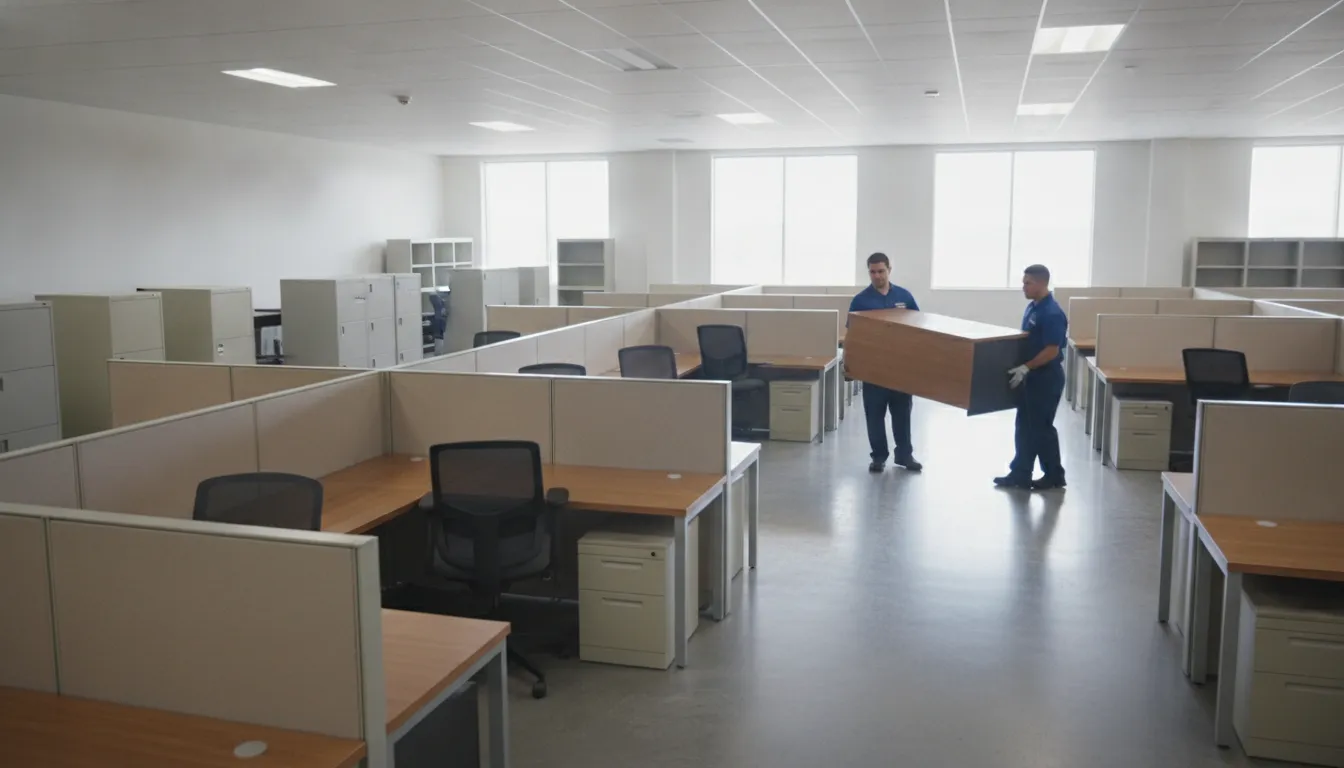
When a Cleveland business moves, downsizes, or closes, desks, chairs, workstations, conference tables, and storage can become a logistical problem. A planned liquidation gives those assets a clear path while helping the company prepare the space for its next use.
Call Office Furniture Warehouse at 216-431-2700 to discuss your liquidation needs.
This guide explains what office furniture liquidation Cleveland Ohio businesses should expect. It covers what affects value and how to prepare for a smooth project.
Office furniture liquidation Cleveland Ohio is the organized evaluation, sale, removal, and possible reuse of workplace furniture when a business changes location or operations.
The outcome depends on condition, completeness, quantity, demand, and site logistics. A local review helps determine which items may be purchased, placed on consignment, reused, or handled through another disposition option.
Office Furniture Warehouse has served Northeast Ohio since 1990. Its Cleveland operation is at 4100 Payne Avenue and includes more than four acres of showroom and warehouse space.
The company began by handling furniture from Cleveland bank mergers. It then expanded into a full-service provider for businesses and organizations across the region. For a broader overview of related support, read the Office Furniture Services in Cleveland guide.
Who Needs Office Furniture Liquidation Cleveland Ohio Services?
Office furniture liquidation Cleveland Ohio services help businesses manage surplus workplace furniture during a move, downsizing, closure, redesign, or ownership change. The work may cover one department or a full facility, with options shaped by the inventory, condition, timing, ownership, and building access requirements.
Liquidation is useful whenever a business has more office furniture than it needs, or when existing furniture no longer fits the next stage of operations. The project can cover one department, one floor, or an entire facility. It can also be part of a larger relocation, ownership change, business closure, or office redesign.
Businesses that commonly request liquidation
- Relocating companies: A new office may have a smaller footprint, a different floor plan, or furniture requirements that do not match the old space.
- Downsizing organizations: Fewer employees can leave surplus desks, workstations, chairs, filing cabinets, and conference furniture behind.
- Closing businesses: Furniture disposition belongs in the closeout schedule, especially when a lease, sale, or building handoff has a firm deadline.
- Facility and office managers: A local partner can help organize inventory, evaluate options, and coordinate the physical work of clearing a space.
- Companies replacing an outdated setup: A business may want to remove older furniture before installing a new layout.
What kinds of furniture can be included?
Typical inventory includes desks, ergonomic chairs, cubicle workstations, conference tables, reception furniture, bookcases, filing cabinets, training tables, and storage. Modular systems may be more useful when matching panels, worksurfaces, bases, and hardware stay together. A basic list should identify the category, quantity, location, condition, and any missing components.
Liquidation can also connect sellers with buyers. Cleveland startups, established employers, schools, government organizations, nonprofits, and home-office users may be looking for quality pre-owned furniture. A local facility makes it easier to inspect available pieces instead of relying only on photographs or an online description.
How Does Office Furniture Liquidation Cleveland Ohio Work?
Office furniture liquidation in Cleveland usually begins with a project description and inventory, followed by a furniture review, an agreed disposition arrangement, and a coordinated removal plan. Sharing the timeline, quantities, condition, access details, and photos early helps the team evaluate practical next steps.
A successful project starts with accurate information and ends with a clear removal plan. The exact steps vary by inventory and site, but most Cleveland commercial liquidations follow a similar sequence.
- Describe the project: Share the reason for liquidation, the building address, the desired completion date, and whether the company is moving, downsizing, or closing.
- Prepare an inventory: List furniture by category and location. Include quantities, known brands, approximate ages, matching sets, and visible damage.
- Review the furniture: The liquidation team may use the inventory, photographs, or an on-site review to determine what can be evaluated and how the project should be handled.
- Discuss the arrangement: Depending on the furniture and project scope, the available path may include a direct purchase, consignment, reuse, or another disposition option. Do not assume every item will have the same outcome.
- Plan access and removal: Confirm elevators, stairs, loading areas, building rules, disassembly needs, and any restrictions on work hours.
- Complete the closeout: Remove the agreed furniture, confirm what remains, and keep records that support the broader move, sale, or closure plan.
Start the conversation early when a lease deadline or move date is involved. More time allows the business to correct its inventory, separate personal property, resolve building requirements, and make decisions about items that are incomplete or damaged.
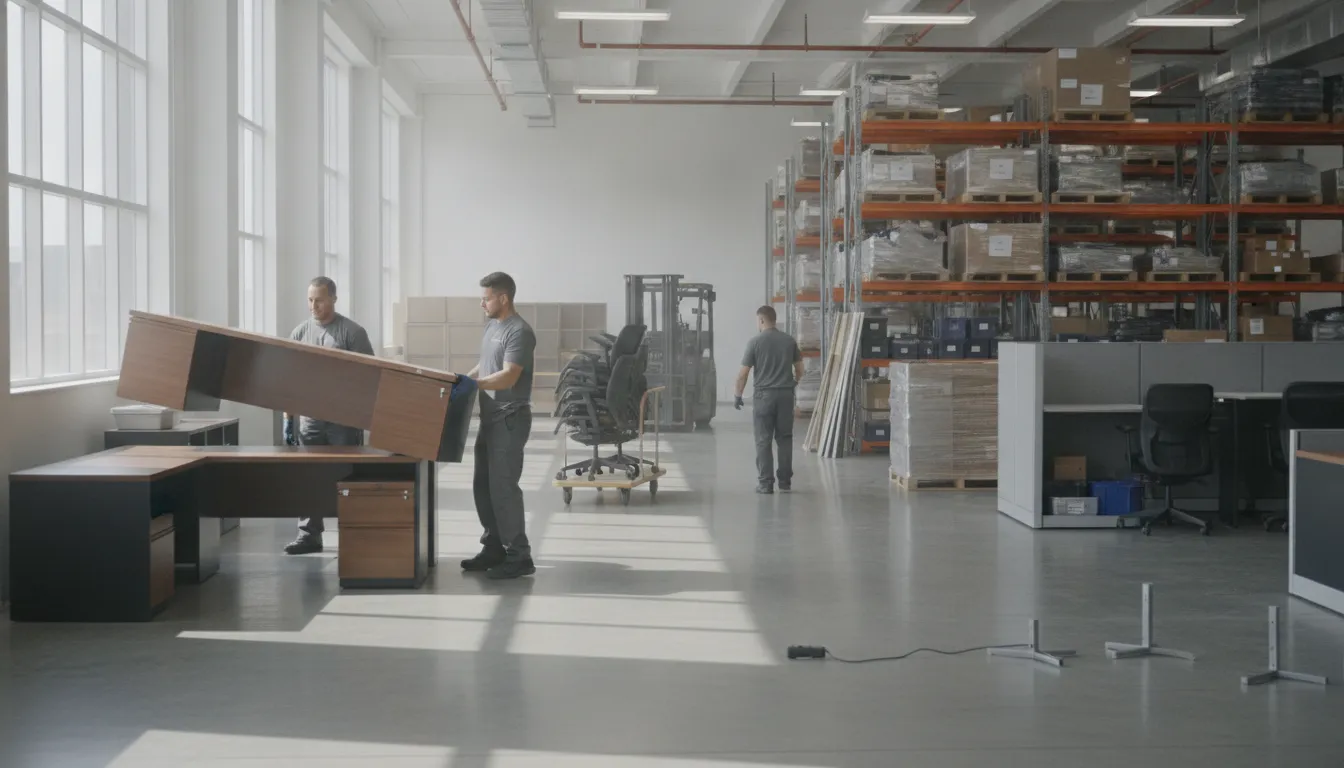
What Happens to Furniture During a Commercial Liquidation?
Commercial liquidation is more than moving unwanted items to a loading dock. Each piece must be considered in relation to condition, usefulness, completeness, demand, and the work required to handle it. The goal is to create a practical disposition plan rather than treating every desk or chair as identical.
Furniture is assessed and sorted
Usable furniture is usually easier to evaluate when it is clean, accessible, and grouped with related pieces. Matching workstations, conference furniture, storage runs, and seating collections can be reviewed as sets. Items with missing hardware, severe damage, or unclear ownership should be identified before the review.
Brand information can help, but brand alone does not determine an outcome. A recognized commercial manufacturer may attract buyer interest, yet size, finish, condition, configuration, and current demand still matter. Clear photos of representative pieces can make the initial conversation more efficient.
Removal is coordinated with the business transition
Removal planning should account for the company schedule. A business may need some furniture to remain in place until employees move, while other items can be removed earlier. The plan should also consider elevators, loading docks, door widths, stairs, security procedures, parking, and building management requirements.
Office Furniture Warehouse provides delivery and installation services throughout Northeast Ohio. Discussing the site conditions early helps the team understand the physical work involved. Large tables, modular workstations, and file storage may require disassembly or special handling before they can leave the building.
Usable items may be resold or reused
Furniture that remains functional can often serve another workplace. Resale and reuse extend the useful life of commercial pieces and give local buyers another option besides purchasing everything new. That does not mean every item can be reused. The final path depends on the condition, completeness, demand, and project economics.
For businesses planning a sale or closure, the U.S. Small Business Administration recommends organizing business assets as part of the transition process. Review its business closing and sale guidance with your legal and financial advisors as appropriate.
How Much Can You Get for Used Office Furniture in a Liquidation?
There is no universal liquidation price for used office furniture. Potential value depends on condition, brand, completeness, quantity, configuration, local demand, and the effort required to inspect and remove it. A Cleveland-area review is more reliable than applying a generic online estimate.
There is no responsible universal price for a liquidation project. The value of a group of desks or chairs depends on the same factors a buyer considers: condition, quantity, configuration, completeness, brand, local demand, and the effort required to inspect and remove the furniture.
| Factor | Why it matters | What to prepare |
|---|---|---|
| Condition | Clean, functional pieces are generally easier to place than furniture with major wear or damage. | Clean the furniture, identify defects, and separate items needing repair. |
| Brand and type | Commercial desks, seating, storage, and modular systems may have different buyer demand. | Record manufacturer names and model details when known. |
| Quantity | A consistent group can be more useful than a small assortment of unrelated pieces. | Count items by room, floor, department, and category. |
| Completeness | Missing panels, hardware, keys, or worksurfaces can reduce usability. | List included components and separate incomplete sets. |
| Configuration | Furniture that fits common office layouts may be easier to reuse. | Note sizes, finishes, colors, and workstation arrangements. |
| Access and logistics | Stairs, elevators, loading restrictions, and heavy pieces affect removal work. | Share the address, access rules, floor details, and loading information. |
Think of the inventory as a package, not only as individual items. A group of matching workstations may have a different outcome from a mixed collection of damaged desks. Accurate records help the evaluator understand what is available and help the business plan for furniture that is not accepted.
Office Furniture Warehouse carries both new and pre-owned office furniture. Its inventory includes commercial seating, desks, storage, conference furniture, and other workplace categories. Current inventory changes, so buyers and sellers should confirm availability and project details directly with the Cleveland team.
Why Cleveland Businesses Choose Office Furniture Warehouse
Local experience matters when a liquidation involves more than a few pieces. Office Furniture Warehouse has served Cleveland and Northeast Ohio for more than 35 years, and furniture liquidation was part of the company’s original business. That history gives local businesses a practical starting point when they need to evaluate, remove, or find another use for office assets.
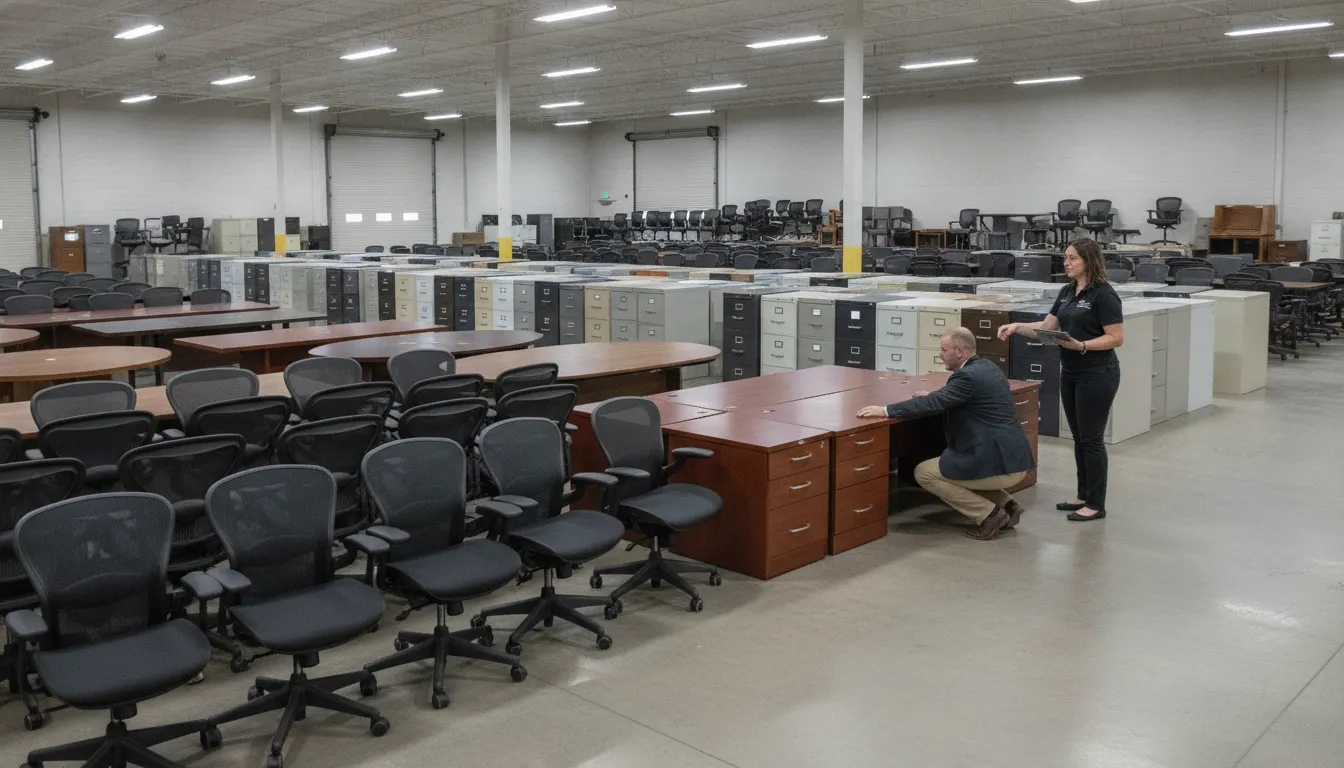
A large Cleveland showroom and warehouse
The facility at 4100 Payne Avenue includes more than four acres of showroom and warehouse space. A large operation can be useful when a project includes several categories at once, such as desks, chairs, conference tables, workstations, and filing cabinets. Sellers can discuss available options with a local team, while buyers can visit a physical showroom to compare pre-owned pieces.
Support across Northeast Ohio
Office Furniture Warehouse serves Cleveland, Akron, Canton, and surrounding Northeast Ohio communities. The company also offers delivery, installation, space planning, refinishing, electrostatic painting, and rental support. Connecting liquidation with related services can simplify a move or redesign when the business needs to clear one space and furnish another.
Businesses looking for replacement seating can also review the office seating category. Companies planning a full transition should compare liquidation needs with the complete office furniture services available from the local team.
What Should You Include in a Liquidation Request?
A clear request helps the liquidation team understand the project before an assessment. It does not need to be a formal appraisal. A useful first message or call should include the following details.
- Location: Provide the Cleveland-area address, building name, floor, and loading instructions.
- Timeline: State the preferred review date, move date, lease deadline, or final cleanout date.
- Reason: Explain whether the company is relocating, downsizing, closing, selling, or replacing furniture.
- Inventory: Give approximate quantities by category, including desks, seating, workstations, storage, and conference furniture.
- Condition: Note damage, missing pieces, stains, broken components, or furniture that is already disassembled.
- Photos: Include wide room views and close photos of representative pieces, labels, damage, and access points.
- Ownership and restrictions: Identify leased furniture, landlord-owned fixtures, items reserved for reuse, and any building rules.
These details reduce avoidable delays. They also make it easier to separate furniture that belongs in the liquidation conversation from equipment, electronics, personal property, or fixtures that require a different plan.
How to Request Office Furniture Liquidation in Cleveland
Begin by contacting Office Furniture Warehouse with the basic project information. The Cleveland team can discuss the inventory, the location, the timeline, and the options that may fit the furniture and site. Because every liquidation is different, a specific review is more useful than relying on an online estimate.
The showroom and warehouse are located at 4100 Payne Avenue in Cleveland. Businesses across Akron, Canton, and Northeast Ohio can ask about available service coverage, removal logistics, and related office furniture support. If the project includes a future office setup, mention that during the first conversation so the team can understand the full transition.
Frequently Asked Questions
What is office furniture liquidation?
Office furniture liquidation is the organized evaluation, sale, removal, reuse, or other disposition of workplace furniture when a business moves, downsizes, closes, or changes its operations. The result depends on the furniture and project details.
How does office furniture liquidation work in Cleveland?
The process usually starts with a project description and inventory. The furniture is then reviewed, options are discussed, and access and removal are planned. Office Furniture Warehouse can discuss Cleveland-area projects from its Payne Avenue showroom and warehouse.
What furniture can be included?
Common categories include desks, office chairs, cubicle workstations, conference tables, reception furniture, filing cabinets, bookcases, and storage. Matching and complete groups are easier to evaluate, but every project is different.
Does every piece have resale value?
No. Condition, completeness, demand, quantity, configuration, and removal requirements affect the outcome. Some items may be purchased or consigned, while others may need reuse, donation, recycling, or another disposition plan.
How do I request a liquidation review?
Contact Office Furniture Warehouse with the property address, timeline, furniture categories, approximate quantities, condition details, photos, and access requirements. The team can then discuss the next step for the Cleveland-area project.
