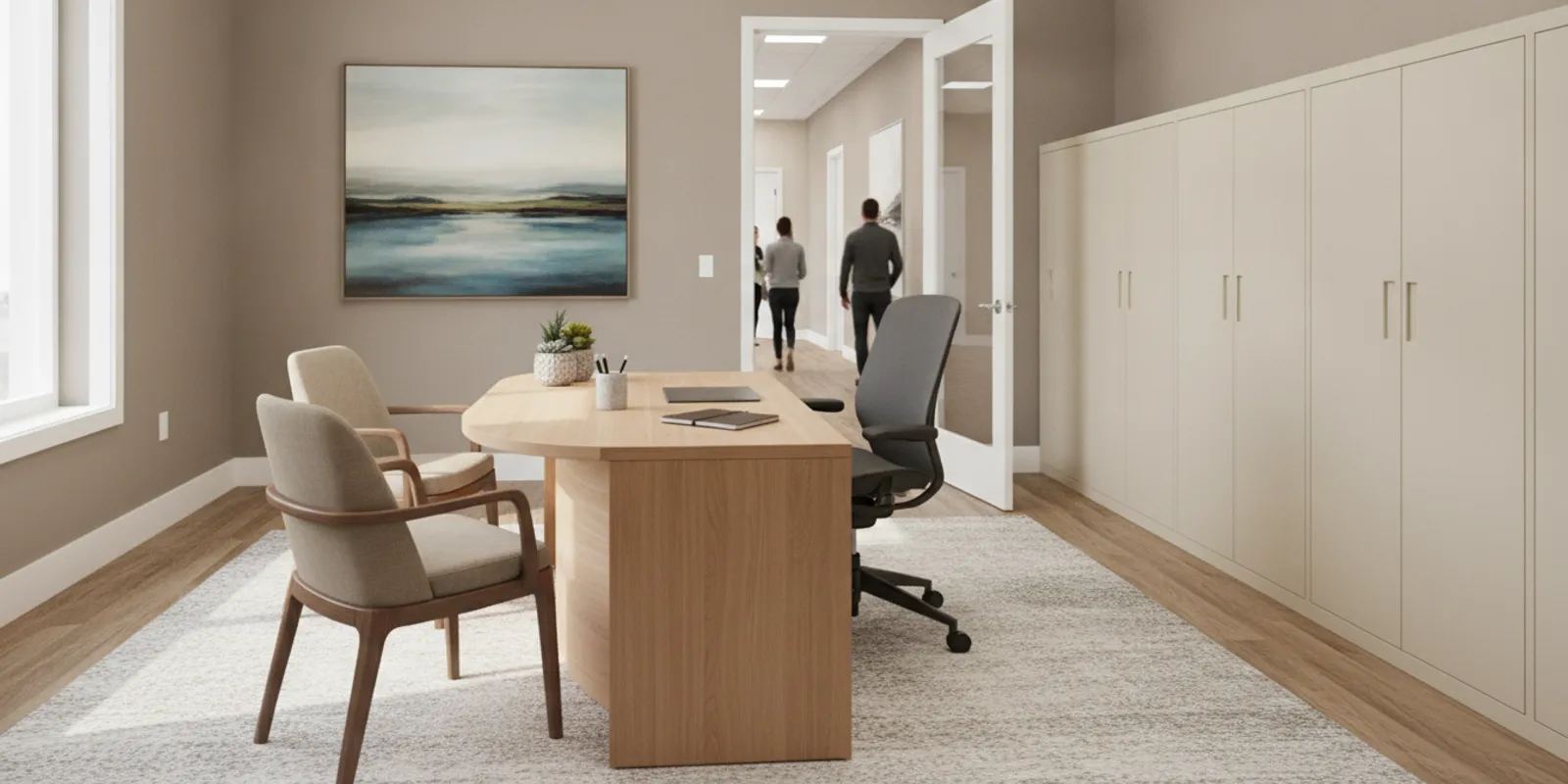
Choosing office furniture for HR office use means planning for more than a desk and chair. Human resources teams may need a productive workstation, a comfortable place for private conversations, visitor seating, and storage that suits their records practices. Start with the work the room must support, then match furniture and layout to the people using it. Office Furniture Warehouse provides office furniture services in Cleveland, including planning and installation support. For help with a local project, review the available services and talk through your needs.
Contact Office Furniture Warehouse or call 216-431-2700 about your HR office
What should an HR office support?
Before you shop, list the activities that take place in the room during a typical day. One HR office may be a quiet space for administrative work. Another may host interviews, employee check-ins, benefits conversations, and meetings with managers. These uses affect what furniture belongs in the room and how it should be arranged.
Write down the room’s main jobs and who uses it. For example, an HR office shared by two staff members may need separate work surfaces, while a small single-user office may need one desk and a flexible visitor area. Consider:
- Focused work: Computer use, writing, scheduling, and reviewing documents.
- Private conversations: One-on-one discussions that benefit from a calm, separate seating area.
- Visitor meetings: Interviews or employee visits that need comfortable, appropriately sized guest seating.
- Organization: Space for current paperwork, office supplies, and equipment.
- Movement: A clear route from the entrance to the desk and guest chairs, without squeezing past furniture.
Not every room needs every item. A small HR office could use two guest chairs beside a desk rather than a separate meeting table. A larger office with frequent interviews may benefit from a distinct conversation area. Prioritize what happens most often instead of filling the room with occasional-use pieces.
How can you plan the room before choosing furniture?
Measure the room before comparing desks or storage. Record the wall lengths, ceiling height if relevant, doorway width, window locations, and any fixed features such as radiators, columns, or built-in cabinets. Note the direction doors swing and where power and data connections are located. These details help prevent a desk, cabinet, or chair from blocking access or creating an awkward route.
Sketch a simple floor plan and mark the entrance, windows, and fixed obstacles. Then set aside areas for the primary workstation and any visitor seating. Leave usable space to open drawers and doors, pull chairs out, and walk through the room. When in doubt, test the arrangement with approximate furniture dimensions on paper before ordering.
Think about privacy as part of layout. A desk facing the doorway may make it easier to greet a visitor, while a side-on arrangement may support focused computer work. For confidential discussions, place guest chairs so people can speak without sitting directly in the main path through the office. Furniture alone does not guarantee sound or visual privacy, so consider the room’s existing walls, doors, and workplace policies too.
Planning a larger room or several adjoining work areas? The Cleveland office furniture services team can discuss space planning and project support. For a broader look at product options, browse office furniture available through the showroom.
Which furniture belongs in an HR office?
Choose pieces according to daily tasks, available floor area, and the number of people using the room. An HR office often benefits from a dependable workstation, supportive seating, a small meeting setup, and appropriate storage. The right mix is the one that fits the actual work, not a standard package.
Desk and work chair
Choose a desk with enough usable surface for a computer, documents, and routine work materials without overwhelming the room. Consider where monitors and equipment will sit and whether drawers are needed at the workstation. If more than one person will use the desk, consider the range of tasks and users rather than assuming one configuration fits all.
Pair the desk with a work chair that suits the user and the amount of time spent seated. Check that its base and movement fit the available floor space and that the chair can be adjusted for the user. Office furniture is best assessed in person when possible: a showroom visit lets a buyer compare dimensions, seating feel, and condition directly.
Visitor and interview seating
Guest chairs should fit the room and the people who will use them. Two chairs are often a practical starting point for one-on-one discussions. Measure their footprint and allow room for a person to sit down and stand up. If the office is small, consider compact seating that does not crowd the workstation or doorway.
A separate meeting table is useful only if the room has space and the work calls for one. For short check-ins, guest chairs placed near a desk may be enough. For interviews that involve paperwork or multiple visitors, a small table can provide a shared surface, but it should not compromise clear movement around the room.
Storage and work surfaces
Match storage to the items staff actually need to keep close at hand. A pedestal or lateral file may work for frequently used materials; shelves or cabinets may suit supplies and reference materials. Check the width and depth of the available space and confirm that cabinet doors or drawers can open fully. Place storage where it is accessible without making the visitor area feel cramped.
Choose storage based on the organization’s records policies and access needs. Furniture selection does not replace appropriate record-handling procedures. If files contain confidential information, confirm that the storage solution and office practices meet the employer’s requirements before assigning it a role.
How can you make the room comfortable and private?
Comfort comes from a combination of fit, clearances, and sensible furniture placement. Give the person at the workstation enough room to approach the desk, use the chair, and reach commonly used items without having to move guest seating. Keep frequently used supplies within easy reach, but avoid putting every item on the desk. A clear work surface can make daily tasks easier to organize.
Check the relationship between the desk, chair, and screen before committing to an arrangement. The desk should support the equipment and tasks staff actually use, and the chair should fit the workstation without blocking a doorway or cabinet. When shopping, compare the dimensions of the pieces with the floor plan and ask to see how chair adjustments and drawers operate. General office furniture selection guidance from PennEHRS can help buyers think through workstation fit.
For a room used for sensitive conversations, consider the visual experience as well as the seating. Arrange chairs so visitors can speak comfortably and have a clear way in and out. Avoid placing confidential papers in plain view of the entrance or visitor seats. Any screens, locks, or records procedures should follow the employer’s own privacy and information-handling policies; furniture placement alone is not a privacy control.
Noise and interruptions also depend on factors beyond furniture. If the HR office shares a busy area, identify whether a door, existing partition, or another room is needed for conversations that require greater privacy. Choose furniture that supports the intended arrangement, but do not promise that a particular desk, chair, or cabinet will make a room soundproof or secure.
How can you prioritize the purchase?
If the full office cannot be furnished at once, separate essential pieces from helpful additions. A practical first phase may include the work surface, task chair, and the storage needed for current operations. Add guest seating next if visitors meet there regularly. A meeting table, extra cabinets, or additional work surfaces can wait if the room remains usable without them.
Make a simple list with three columns: required now, useful soon, and optional. For each item, record its approximate dimensions, purpose, and any feature that cannot be compromised. This gives you a consistent way to compare alternatives and prevents attractive but poorly fitting pieces from taking priority over essential needs.
When weighing new against pre-owned, compare the actual items available rather than assuming that one category is always the better fit. Consider condition, compatibility, delivery timing, and whether matching pieces are needed. If several pieces must arrive together, confirm that availability and delivery can be coordinated before finalizing the room plan.
Talk with the team about planning your HR office
How do common HR office furniture choices compare?
Use this comparison to set priorities before shopping. Dimensions, features, and condition vary by item, so verify the details of each piece rather than relying on category names alone.
| Furniture choice | Best suited to | What to check | Space impact |
|---|---|---|---|
| Work desk | Daily computer and administrative work | Surface size, drawer needs, equipment fit | Measure chair clearance and drawer access |
| Task chair | Regular seated work | Adjustment, condition, fit for the user | Allow room for movement and pull-back |
| Guest chairs | Interviews and one-on-one conversations | Comfort, size, and ease of getting in and out | Keep a clear path to the door and desk |
| File or storage cabinet | Supplies and records kept in the office | Interior capacity, access, and records-policy fit | Check door, drawer, and walkway clearance |
| Small meeting table | Conversations requiring a shared work surface | Table size and number of regular users | May take space needed for seating or circulation |
How can you compare furniture before buying?
Use the same checklist for each desk, chair, cabinet, or table under consideration. Write down the overall dimensions and compare them with the room plan, including space needed to open drawers and move a chair. Confirm the function of each item: a cabinet should hold the materials intended for it, while a desk should support the equipment and tasks planned for that workstation.
Look closely at surfaces, edges, drawer action, hardware, and stability. For a chair, check seat condition, movement, and any adjustments the user needs. Ask which features are included and whether any visible wear or missing parts affect the intended use. If you are choosing a set, check that the pieces work together in scale and finish, but do not sacrifice fit or function just to make every item match.
Keep a written comparison of the leading options. Note the item, measurements, condition, required setup, and the question still needing an answer. Confirm the final details and current availability with the seller before arranging delivery. This simple record helps a buyer distinguish a suitable piece from one that only looks right in a photo or showroom aisle.
Consider the complete project, not only the individual furniture pieces. Ask what delivery, setup, or installation work is needed and whether it is part of the plan. If the room has a deadline, verify timing for the selected items and the steps needed to make the office ready. The appropriate choice is one that fits the room, supports its work, and can be put in place as intended.
Should you choose new or pre-owned furniture?
Both new and pre-owned furniture can be considered for an HR office. A new piece may offer particular finishes or configurations that suit a planned layout. Pre-owned pieces can be a value-focused option, including premium brands, subject to what is available. Compare the actual item, its condition, dimensions, and suitability for the room; do not assume every used item has the same features or availability.
For pre-owned furniture, inspect the piece and ask about its condition before deciding. Check chair adjustments and movement, desk stability, drawer operation, surface wear, and whether the dimensions fit your plan. Ask which pieces are currently available and whether the selected set can be assembled as a coordinated group. Current inventory can change, so confirm availability directly.
Office Furniture Warehouse offers both new and pre-owned office furniture in the Cleveland area. Explore office desks and office seating as starting points, then verify current product details and fit with the space. The University of Pennsylvania’s Environmental Health and Radiation Safety team also offers guidance on selecting office furniture for general office work.
Ask about current office furniture options
How should you plan delivery and setup?
Furniture selection is only one part of getting an HR office ready. Before purchase, confirm what must happen for the room to be usable: delivery access, removal of existing items if applicable, assembly, placement, and any installation work. Make a list of the pieces and the destination room so the plan reflects the actual project.
Check building access and timing. Measure narrow doors, hallways, elevators, and stair turns along the route to the office. Identify any building rules about delivery hours or loading areas, and decide who can receive the furniture. If the office must stay operational, plan when furniture can be moved and how staff will access essential work materials during setup.
For a multi-piece project, settle the layout before scheduling placement. Mark the intended position of desks and cabinets, and identify which items need to be assembled or arranged together. Office Furniture Warehouse offers local delivery, setup, installation, and planning services; confirm the scope and logistics for your specific project when you inquire.
What should you ask before choosing?
A short set of questions can keep a furniture purchase grounded in the needs of the room:
- How many people work in the office, and how many visitors use it at one time?
- Which activities happen daily, and which are occasional?
- What are the room dimensions and the largest furniture dimensions that will fit?
- Does the workstation need drawers, a particular work surface, or equipment clearance?
- What storage is needed, and what access rules apply to the materials stored there?
- Would guest chairs meet the need, or is a separate table important?
- Are new and pre-owned options both acceptable, and what condition is suitable?
- What delivery access, assembly, and setup steps are required?
- Which items are available now, and what details should be confirmed before arranging the project?
Bring measurements, photos of the room, and a list of must-have functions when you discuss options. These details make it easier to compare suitable pieces and avoid choosing furniture that does not work with the space.
Frequently asked questions
What is the most important furniture for a small HR office?
Start with a usable desk and work chair, then add visitor seating and storage according to the room’s size and daily needs. Measure carefully and preserve a clear route through the office before adding optional pieces.
Does an HR office need a separate meeting table?
Not always. A pair of guest chairs may be enough for brief conversations. A small table may help when visitors need a shared surface or when more than one person regularly joins a meeting, provided the room can accommodate it.
Can pre-owned furniture work for an HR office?
It can be a practical option when the piece’s condition, dimensions, and features meet the office’s needs. Inspect the item, confirm how it operates, and verify availability before making a decision.
What should I bring when looking at furniture?
Bring room measurements, doorway and hallway measurements along the delivery path, photos, a rough layout, and a list of regular tasks. Note the number of staff and visitors and any storage requirements set by your organization.
Plan the room around the work
A well-planned HR office balances focused work, visitor comfort, organization, and movement without adding furniture the room cannot support. Measure first, prioritize the office’s regular activities, and compare each piece against the layout and handling requirements. To discuss options for a Northeast Ohio workplace, contact Office Furniture Warehouse with your measurements and project needs.
